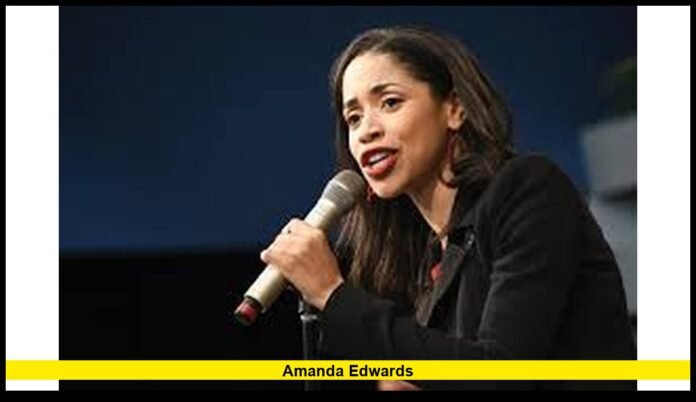

In a pivotal political moment for Texas and Washington alike, amanda edwards suffered a decisive loss in a special congressional runoff election, closing a long chapter of uncertainty for voters in Texas’ 18th Congressional District. The January 31, 2026 runoff election ended nearly a year of vacancy and reshaped the political outlook for one of the state’s most closely watched Democratic districts.
The outcome not only determined who would represent Houston-area residents in Congress but also carried broader implications for party dynamics in the U.S. House of Representatives.
A Long-Vacant Seat Finally Filled
Texas’ 18th Congressional District had remained without representation following the death of longtime Democratic Representative Sylvester Turner in March 2025. The extended vacancy left hundreds of thousands of constituents without a direct voice in Congress, increasing pressure on state officials to complete the special election process.
A crowded special election was held in late 2025, but no candidate earned a majority, forcing a runoff between two Democrats: former Houston City Council member Amanda Edwards and then-Harris County attorney Christian Menefee. The runoff was scheduled for late January 2026, an unusual time that significantly shaped voter turnout.
Runoff Results and Final Vote Count
When ballots were tallied, Christian Menefee emerged with a commanding victory. He secured roughly 68 percent of the vote, while Edwards finished with about 32 percent. The margin made clear that Democratic voters in the district consolidated behind Menefee in the final round.
With the runoff decided, the 18th District officially regained representation in the U.S. House, ending months of legislative absence during a closely divided Congress.
Amanda Edwards’ Political Background
Amanda Edwards is a Houston native with a well-established history in local and statewide politics. She served two terms on the Houston City Council from 2016 to 2020, where her work centered on economic development, innovation initiatives, and long-term infrastructure planning.
Edwards holds a bachelor’s degree from Emory University and earned her law degree from Harvard Law School. Over the past decade, she has built a profile as a policy-focused Democrat with an emphasis on urban development and community empowerment.
Her political résumé includes a run for the U.S. Senate in 2020 and a brief mayoral bid in Houston before shifting her focus to federal office. The special election for the 18th District marked her most recent attempt to secure a seat in Congress.
Campaign Dynamics and Voter Turnout
The runoff election faced a major challenge: voter engagement. Early voting numbers were notably low, with only a small fraction of registered voters participating before Election Day. The Saturday election date, combined with winter timing and limited public awareness, contributed to reduced turnout.
Both campaigns focused on Democratic priorities such as healthcare access, economic growth, and public investment. However, Menefee’s message resonated more strongly with voters who turned out, leading to a decisive final result.
Why This Race Mattered Nationally
While the district is solidly Democratic, the runoff carried national significance. The U.S. House has been narrowly divided, and every seat has the potential to influence legislative outcomes.
Menefee’s win slightly narrowed the Republican advantage in the House, giving Democrats additional leverage in closely contested votes. The election underscored how even district-level contests can have ripple effects across the country.
What the Loss Means for Amanda Edwards
Despite the defeat, Amanda Edwards remains a recognizable figure in Texas Democratic politics. Her campaigns have consistently emphasized economic opportunity, accessible healthcare, education funding, and infrastructure investment.
She is also known for her nonprofit work focused on empowering women, seniors, and community organizations in the Houston area. These efforts have helped maintain her visibility and grassroots support beyond election cycles.
The runoff loss does not necessarily signal the end of her political career. Edwards has demonstrated resilience in past campaigns, and her continued engagement suggests she may seek future opportunities in public service or electoral politics.
Another Election Already on the Horizon
The political story of the 18th District is far from finished. Due to redistricting and election scheduling, a Democratic primary is set for March 2026 to determine the nominee for the full congressional term beginning in 2027.
That primary is expected to include Christian Menefee, Amanda Edwards, and incumbent Representative Al Green, whose district lines were adjusted during redistricting. The crowded field sets up another competitive contest that could again test voter loyalty and turnout.
For Edwards, the upcoming primary represents a chance to reintroduce her message under new district boundaries and a more traditional election timeline.
Key Issues That Defined Edwards’ Platform
Throughout her campaigns, Edwards consistently highlighted several policy themes:
- Expanding economic opportunities for small businesses and working families
- Improving access to affordable healthcare
- Strengthening public education and workforce development
- Investing in infrastructure and long-term urban planning
- Supporting community-driven initiatives and nonprofit partnerships
These priorities helped define her public image and will likely remain central to any future political efforts.
Broader Lessons From the Runoff
The 18th District runoff highlighted a recurring challenge in American elections: voter participation in special contests. Elections held outside standard cycles often struggle to capture public attention, even when the stakes are high.
As Texas prepares for the March primary and future general elections, political leaders and organizers may look for new strategies to engage voters and increase turnout in nontraditional election windows.
Texas Politics Moving Forward
Texas continues to play a growing role in national politics, with urban districts like the 18th serving as bellwethers for Democratic strategy in the state. The outcome of this runoff reinforced existing party dynamics while setting the stage for another closely watched primary battle.
For voters, the focus now shifts from filling a vacancy to shaping long-term representation in Congress.
What are your thoughts on the runoff result and the upcoming primary? Share your perspective and stay tuned as the next chapter unfolds.