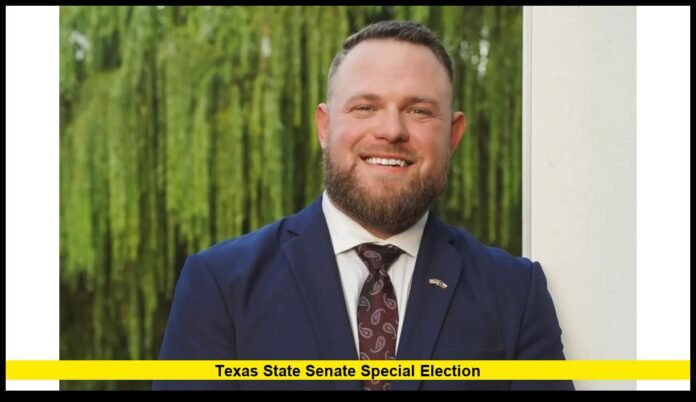

The texas state senate special election in early 2026 produced one of the most consequential state-level political outcomes in recent Texas history, as voters in Senate District 9 elected Democrat Taylor Rehmet in a district long dominated by Republicans. The runoff election, held on January 31, 2026, concluded with a decisive margin that immediately altered expectations about political competitiveness in suburban Texas.
Rehmet captured approximately 57 percent of the vote, defeating Republican candidate Leigh Wambsganss, who finished with about 43 percent. The result stood out not only for its margin, but for where it happened: a district that had reliably favored Republican candidates for decades.
How the Special Election Came Together
The election was called after the previous officeholder resigned in 2025, leaving the Texas Senate seat vacant before the end of the term. Under Texas law, a special election was required to fill the position until the next regular general election scheduled for November 2026.
The contest began with a multi-candidate field in late 2025. When no candidate secured more than half of the vote in the initial round, the top two finishers advanced to a runoff. Rehmet emerged as the leading vote-getter in that first round, setting up a head-to-head matchup that would later draw intense attention.
By the time the runoff arrived, both campaigns had sharpened their messaging and mobilized supporters across the district.
Understanding Texas Senate District 9
District 9 covers a large portion of northern Tarrant County, including parts of Fort Worth and surrounding suburban communities. The area has experienced steady population growth, rising housing development, and demographic change over the past decade.
Despite these shifts, voting patterns had remained largely consistent. Republican candidates historically won the seat by comfortable margins, and the district supported Republican nominees in statewide and presidential elections by double digits.
That background made the outcome of this election particularly notable. Many observers initially viewed the race as competitive but still leaning Republican. The final result challenged that assumption.
Taylor Rehmet’s Path to Victory
Taylor Rehmet entered the race without prior elected office experience, but with a background that resonated with many voters. A military veteran and aircraft mechanic, he later became involved in labor advocacy and union leadership.
His campaign emphasized everyday economic concerns rather than partisan ideology. Rehmet focused on issues that cut across party lines, including affordability, education, and infrastructure.
Key elements of his campaign included:
- Addressing rising costs for housing, groceries, and utilities
- Supporting public schools and teacher retention
- Improving roads and local infrastructure
- Advocating for stable jobs and fair wages
Rehmet spent significant time meeting voters directly, attending community events, and framing the race around local needs rather than national political debates.
The Republican Campaign Approach
Leigh Wambsganss ran on a conventional conservative platform centered on limited government, economic growth, and socially conservative values. She benefited from established political networks and substantial campaign resources.
Her campaign highlighted business-friendly policies and opposition to increased government spending. While those messages aligned with past voting trends in the district, they did not generate enough momentum during the runoff.
Turnout patterns played a critical role. Democratic and independent voters participated at higher-than-expected levels, while Republican turnout appeared softer than in previous cycles.
Why the Margin Mattered
Winning a traditionally opposing district is notable on its own, but the size of the victory amplified its impact. Rehmet’s double-digit margin reduced speculation about recounts or contested outcomes and underscored the strength of his support.
Political analysts pointed to several contributing factors:
- Strong voter engagement in suburban neighborhoods
- Issue-based messaging over party loyalty
- Effective runoff mobilization strategies
The outcome suggested that voter priorities in the district may be evolving, particularly among younger families and moderate voters.
Implications for Texas Politics
The texas state senate special election had immediate and longer-term consequences for both major parties.
A Narrower Senate Margin
Republicans retain control of the Texas Senate, but the result slightly reduced their margin. While it does not shift overall control, it increases the importance of individual votes and coalition-building during legislative sessions.
A closer margin may influence how certain bills are negotiated, especially on topics that divide lawmakers within the majority party.
A Signal to Campaign Strategists
For Democrats, the win provided evidence that targeted, locally focused campaigns can succeed even in districts with long Republican histories. Party leaders described the result as proof that suburban Texas remains in play.
For Republicans, the outcome prompted reassessment. Relying on historical voting behavior alone may no longer be sufficient in fast-growing districts undergoing demographic and economic change.
The Role of Runoff Elections
Runoff elections often produce different dynamics than general elections. Turnout is typically lower, making voter mobilization critical.
In this case, Rehmet’s campaign maintained consistent engagement between rounds, while his supporters showed up again in significant numbers. That consistency proved decisive.
The runoff also allowed voters to focus on a clear contrast between two candidates, rather than a crowded field.
What Comes Next for District 9
Rehmet will serve the remainder of the unexpired term, but the seat will be contested again in November 2026 as part of the regular election cycle.
Both major parties are expected to prepare aggressively for the rematch. The district is now viewed as competitive, rather than safely aligned with either side.
Campaigns in the upcoming election are likely to emphasize:
- Voter turnout operations
- Messaging tailored to suburban concerns
- Candidate visibility and local engagement
The next election will test whether this result reflects a lasting shift or a unique alignment of circumstances.
Broader Trends in Suburban Texas
District 9 is not alone in experiencing political change. Across Texas, suburban areas have become more fluid in their voting behavior, particularly in regions with growing populations and diverse economic bases.
Factors influencing these shifts include:
- Rising housing costs
- Education policy debates
- Transportation and infrastructure demands
- Workforce stability
These issues often transcend traditional party lines, giving candidates room to appeal to a broader audience.
Legislative Expectations Going Forward
When the Texas Legislature reconvenes, Rehmet’s presence adds a new voice shaped by labor advocacy and community-level concerns. While party leadership remains unchanged, individual lawmakers may carry more weight in close votes.
Observers expect renewed debate around:
- School funding formulas
- Property tax relief
- Infrastructure investment
- Workforce development programs
The special election result ensures that these debates will unfold in a slightly more competitive environment.
Why This Election Resonates Nationally
Although the race involved a single state senate seat, its significance extended beyond Texas. National political strategists watched closely for signs of voter sentiment ahead of the 2026 midterms.
The result reinforced a key lesson: localized issues, candidate credibility, and turnout strategy can overcome long-standing partisan advantages. That lesson is likely to influence campaign planning in other suburban districts across the country.
Looking Ahead
The texas state senate special election in District 9 reshaped expectations and challenged assumptions about political alignment in North Texas. It demonstrated that voter behavior continues to evolve and that no district can be taken for granted.
As the next election approaches, District 9 will remain under close watch from both parties and political observers nationwide.
Do you believe this result signals a lasting change in Texas politics, or was it shaped by unique local conditions? Share your perspective and stay engaged as the 2026 election season unfolds.