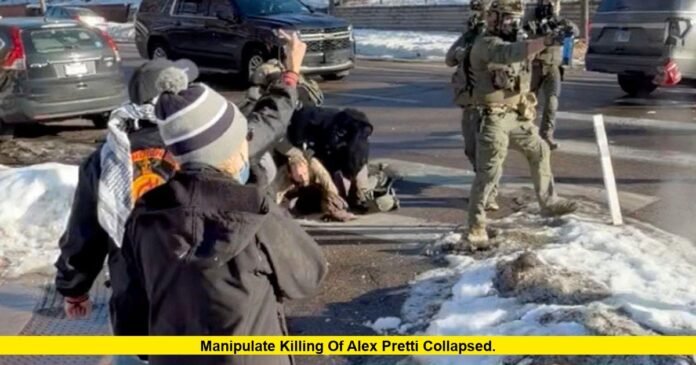

In the wake of a highly scrutinized and deadly encounter between federal agents and a Minneapolis man, efforts to manipulate killing of Alex Pretti collapsed after footage torpedoed ‘domestic terrorist’ claim have reshaped the national conversation about federal law enforcement, public safety, and transparency. The tragic death of 37-year-old ICU nurse Alex Pretti on January 24, 2026, at the hands of United States Customs and Border Protection (CBP) agents has generated widespread outrage, intense political debate, and now a major federal civil rights investigation. What began as a contentious clash during heightened immigration enforcement in downtown Minneapolis quickly escalated into a flashpoint over truth, narrative control, and accountability in modern policing.
Federal and local investigations, newly released and widely circulated videos, and official statements have all played major roles in how this case is being understood across the country. In the days following the shooting, initial government characterizations of Pretti as a threat planning violence against officers were met with undeniable video evidence showing a much more complex scene. That shift in public awareness helped derail early official claims and further intensified scrutiny of how powerful narratives are shaped in moments of crisis.
CALL TO ACTION: Scroll down to get the latest factual developments and understand what this means for federal law enforcement and civil rights in America.
The Shooting Incident and What Video Revealed
On the morning of January 24 in Minneapolis, CBP agents were deployed as part of “Operation Metro Surge,” a controversial immigration enforcement initiative that had already stirred tensions in the Twin Cities. Alex Pretti, a licensed handgun owner and respected nurse at the Veterans Affairs hospital, was documenting law enforcement activity and assisting a woman when federal agents confronted him. Multiple bystander videos clearly show Pretti holding a cellphone at one point, attempting to help a fellow demonstrator, not brandishing a weapon. Shortly after agents engaged him, he was pepper-sprayed, forced to the ground, and ultimately shot. Footage suggests that at least one agent removed a gun away from Pretti before another agent fired the fatal shots. Pretti was pronounced dead at a local hospital shortly afterward.
This visual record contradicts early statements from the Department of Homeland Security (DHS) that Pretti posed an imminent violent threat or acted as a “domestic terrorist,” and shows why the initial narrative was challenged almost immediately by eyewitnesses and media analysis.
Government Statements Versus Observable Evidence
In the immediate aftermath of the shooting, senior federal officials, including DHS Secretary and White House aides, described Pretti as aggressively resisting law enforcement and brandishing a firearm. Some even invoked terminology suggesting domestic terrorism. However, widely viewed footage undermined those claims, depicting Pretti holding only a cellphone in the moments before being subdued by multiple agents. Expert analysts emphasized that he never drew a weapon, and that he was legally permitted to carry a firearm under Minnesota law.
As the contradiction between official rhetoric and visual evidence widened, the administration’s messaging underwent multiple revisions, leading to public inconsistency and broader questioning of federal statements surrounding the incident.
Federal Civil Rights Investigation Takes Center Stage
Amid national outcry, the U.S. Department of Justice announced a federal civil rights investigation into the killing. The FBI now leads the inquiry, which aims to determine whether the use of lethal force by Border Patrol agents constituted a violation of Pretti’s civil rights. This represents a major escalation in official scrutiny, moving beyond routine internal reviews typically conducted by Homeland Security or local law enforcement. The DOJ decision underscores the seriousness with which the shooting is being examined, especially given conflicting accounts and the public availability of bystander footage.
Family members and legal representatives have called for accountability and transparency, urging investigators to consider all available evidence and to ensure that individuals involved in the encounter are held to legal standards applicable to federal agents.
Public Reaction and Political Fallout
The shooting and its aftermath have spurred widespread public reaction. Demonstrations took place across the Twin Cities and in other major cities, with protesters demanding justice for Pretti and calling for the removal of federal immigration enforcement from Minneapolis. Leaders from both major political parties expressed concern about the incident, although they differed sharply on interpretations and policy implications.
Critics of the federal response accused officials of rushing to judgment and attempting to control the narrative before all facts were clear. Civil liberties advocates, legal experts, and media analysts emphasized the importance of independent verification of events, particularly in cases involving lethal force by government agents.
Impact on Operation Metro Surge and Federal Enforcement Policy
The Pretti shooting intensifies scrutiny on “Operation Metro Surge,” a large-scale federal immigration enforcement strategy that has deployed thousands of agents to Minneapolis and other cities. Already under fire for what opponents call heavy-handed tactics, the operation now faces renewed calls for reevaluation or scaling back. Some federal officials signaled potential adjustments in deployment, while local political leaders have reiterated demands that federal agents withdraw and let local authorities manage public safety.
Whether the operation will be substantially altered remains uncertain, but the emotional and political weight of this case has undeniably influenced discourse around federal enforcement priorities and community relations.
Legal Implications and Ongoing Proceedings
Legal experts highlight that the DOJ’s civil rights probe is only the beginning of potential proceedings. Should investigators find evidence of misconduct or excessive force, the case could lead to criminal charges, civil litigation, or administrative consequences for the agents involved. Meanwhile, state officials have pursued their own legal actions, seeking to preserve evidence and ensure independent oversight. A federal court ordered the preservation of all body-camera footage and related evidence, preventing tampering or destruction while scrutiny continues.
The chain of custody for key evidence, including Pretti’s firearm and law enforcement footage, has been a topic of concern among legal analysts. Proper handling of such material will be critical in any future legal action that emerges from this case.
Broader Debate Over Law Enforcement Transparency
Beyond the specifics of this incident, the killing of Alex Pretti has contributed to a broader debate about transparency in law enforcement, particularly at the federal level. Calls for wider use of body cameras, unfiltered release of footage, and clearer protocols for interactions between agents and civilians have grown louder in the wake of this shooting. Many civil rights organizations argue that transparency is essential to maintaining public trust and ensuring accountability when lethal force is used.
Civic discourse has also examined how quickly narratives form in high-pressure situations, and how critical independent evidence—like bystander video—is in assessing what really happened. These issues touch on national conversations about policing, immigration enforcement, and the balance of power between federal authorities and everyday citizens.
We want to hear from you — share your thoughts or stay tuned for the latest developments on this evolving story.