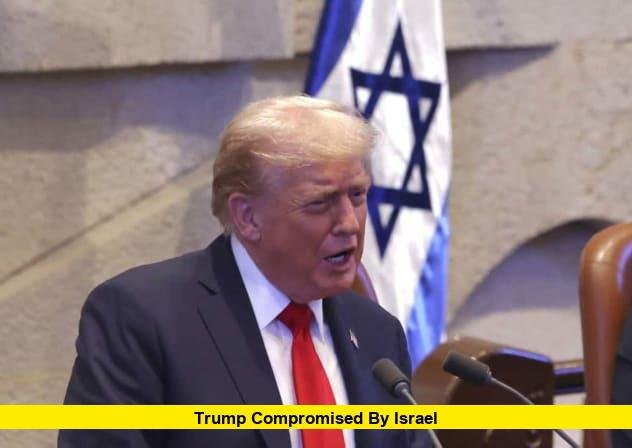

In recent days, the phrase trump compromised by israel has been circulating widely across social media and fringe news platforms, driving intense online discussion and debate about U.S. foreign policy and President Trump’s relationship with Israel. While posts repeating this phrase have proliferated, established national and international news organizations have not published evidence confirming the core allegation. What is clear, based on verified reporting, is that U.S.–Israeli relations remain one of the most consequential elements of American foreign policy, particularly in the context of Middle East peace efforts, military cooperation and regional security.
Want to understand how this claim impacts real diplomatic developments and what is fact versus online chatter? Read on for detailed, factual context rooted in the latest available reporting.
Understanding the Context of the Phrase
The specific term trump compromised by israel first appeared in connection with posts on social media and websites outside the mainstream press. These posts assert that internal, reportedly declassified FBI documents allege that President Trump was influenced or “compromised” by Israeli interests. At this time, neither U.S. government officials nor major outlets with access to government records have confirmed such claims. No U.S. law enforcement body has publicly authenticated any allegation that President Trump was manipulated or controlled by a foreign intelligence service.
What is verifiable, however, is the longstanding close relationship between the United States and Israel. The two countries maintain sustained diplomatic, military and intelligence cooperation that stretches back decades. Their partnership spans security assistance, joint training, strategic coordination and shared interests in counterterrorism and regional stability.
Historical Foundations of U.S.–Israel Ties
For decades, the United States has supported Israel through annual military aid packages, high-level diplomatic engagement and shared intelligence operations. This relationship was strengthened under multiple U.S. administrations, with significant policy moves such as recognizing Jerusalem as Israel’s capital and affirming Israeli claims over the Golan Heights — both steps that drew international attention and controversy.
In 2020, the Trump administration helped broker normalization agreements between Israel and several Arab states, known as the Abraham Accords, which brought diplomatic relations between Israel and countries such as Bahrain and the United Arab Emirates. These agreements represented a pivot in Middle East diplomacy and were widely covered by multiple established news outlets.
Recent Diplomatic Developments and Cooperation
Over the past year, the U.S. and Israel have continued to work closely on several fronts. Among the most prominent recent developments is the United States’ involvement in cease-fire efforts related to the two-year war between Israel and Hamas in Gaza. A phased agreement has moved forward following negotiations involving U.S. diplomatic engagement, and Israel recently retrieved the body of the final hostage held in Gaza — a step that cleared a condition for progressing the peace initiative.
At the United Nations, U.S. diplomats have outlined plans for a Gaza demilitarization program that includes an internationally funded weapons buy-back initiative and a transitional administration framework. These efforts aim to reduce violence and set the stage for reconstruction in the enclave, and they involve cooperation between the U.S., Egypt, Qatar and other regional partners.
Arms Sales and Security Cooperation
In parallel with diplomatic efforts, the Trump administration recently approved substantial arms sales to Israel and Saudi Arabia totaling billions of dollars. For Israel, these sales include attack helicopters, tactical vehicles and support equipment intended to enhance its defense capabilities. U.S. officials describe these transfers as reinforcing regional security and deterrence amid ongoing tensions.
Critics in the U.S. Congress and elsewhere have raised concerns about the timing and scale of such deals, especially given broader debates over congressional oversight of foreign arms transactions. Nonetheless, these sales underscore the depth of military cooperation between Washington and its key regional allies.
Political Debates in the United States
Domestically, U.S. policymakers and commentators continue to debate the nature of America’s alliance with Israel. Some voices on the political right have questioned the extent to which U.S. military involvement in the Middle East reflects American national interests versus alignment with Israeli strategic aims, particularly in relation to conflicts with Iran and Iran-backed groups.
At the same time, others emphasize that shared democratic values and security concerns drive cooperation. In public statements during a recent press briefing, President Trump underscored his support for strong U.S. naval and military posture in the region while also signaling a willingness to negotiate with Iran on conditions aimed at reducing nuclear proliferation and ending hostilities.
The Role of Intelligence Sharing and Espionage History
It is widely acknowledged that the United States and Israel exchange intelligence on matters of mutual interest. This includes early warning of threats, counterterrorism data and strategic assessments related to regional actors such as Iran and extremist organizations. Public records and past reporting show that the two nations maintain robust channels for sharing sensitive information.
There have also been historical episodes of espionage concerns involving a range of countries, including allegations of intelligence gathering by Israeli agents in the U.S. Such incidents have been matters for U.S. counterintelligence and diplomatic channels. What is essential to note is that mutual vulnerabilities and intelligence competition are not unique to U.S.–Israel relations but are common features of global diplomacy.
Claims on Social Media Versus Verified Reporting
The phrase trump compromised by israel reflects a broader trend in which complex geopolitical relationships are distilled into provocative soundbites that spread quickly on social platforms. These phrases can prompt curiosity and concern, but readers must distinguish between unverified claims and what can be substantiated through reliable reporting.
No U.S. law enforcement agency has publicly endorsed the specific claim that President Trump was “compromised” by Israel or any other foreign government. Assertions circulating online about such scenarios remain unsubstantiated. By contrast, the documented history of U.S.–Israel relations encompasses military cooperation, diplomatic negotiations and shared strategic interests, all of which are grounded in official records and statements.
U.S. Strategy in the Middle East Today
As the U.S. continues to engage with regional partners, its policy objectives remain centered on reducing violence, curbing nuclear proliferation and securing diplomatic pathways to lasting peace. Negotiations over Gaza and discussions aimed at shaping relations with Iran illustrate the multifaceted nature of American foreign policy in the region.
The Trump administration’s approach emphasizes a combination of diplomatic pressure, military preparedness and strategic cooperation with allies such as Israel and Gulf states. This multifront engagement reflects the complexity of Middle East geopolitics and the interplay between national interests and international alliances.
Looking Ahead
Understanding the dynamics behind phrases like trump compromised by israel requires separating sensational online narratives from verifiable developments in foreign policy. While social media can amplify dramatic claims, careful examination of factual records, official announcements and credible reporting offers a clearer picture of how nations interact and pursue their interests.
U.S.–Israel relations will undoubtedly continue to shape regional security and global diplomacy for years to come. As policy evolves, the public and analysts alike will scrutinize actions, decisions and rhetoric from all involved leaders.
Join the conversation below and share your perspective on these evolving global relationships and recent developments.