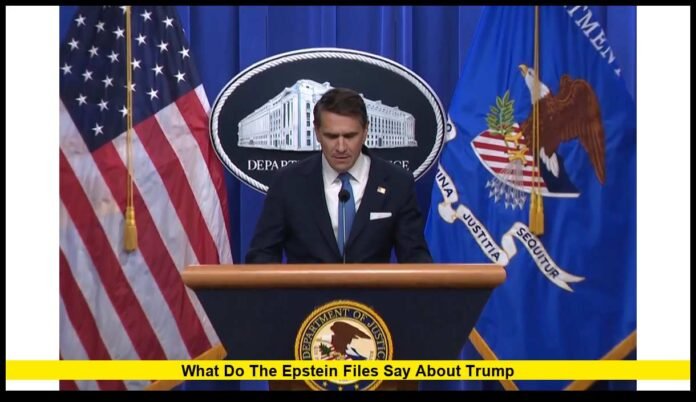

What do the Epstein files say about Trump is a question many Americans continue to ask as official records tied to the Jeffrey Epstein investigations remain under public review. Based on the most current confirmed disclosures available today, the documents that have been made public reference Donald Trump by name, but they do not present verified evidence of criminal conduct, formal accusations, or substantiated findings linking him to Epstein’s illegal activities.
This article explains, in clear and factual terms, what the Epstein files contain regarding Trump, how his name appears in the records, and what conclusions can and cannot be drawn from those materials.
What the Epstein Files Represent
The Epstein files are a broad collection of government records assembled during federal investigations into Jeffrey Epstein and individuals connected to him. These materials span many years and include documents created for different purposes, at different times, and by different agencies.
The files include:
- Investigative notes
- Archived correspondence
- Contact references
- Travel and flight documentation
- Media materials collected by investigators
- Tips and submissions from members of the public
Not all documents carry the same weight. Some are evidentiary. Others are background material. Many exist simply because investigators preserved everything that entered the case record.
Why Trump’s Name Appears in the Files
Trump’s name appears in the Epstein files largely because of his presence in high-profile social circles during the late 1980s and 1990s, a period when Epstein interacted with many wealthy and influential figures.
The records referencing Trump generally fall into three categories:
- Historical media mentions gathered during investigations
- Contextual references tied to Epstein’s known social environment
- Administrative or archival material that names individuals without alleging misconduct
These entries reflect association and visibility, not verified involvement in criminal activity.
No Criminal Findings Involving Trump
A critical point often lost in online discussions is that the Epstein files do not accuse Trump of committing a crime. There are no charges, indictments, or investigative conclusions naming him as a suspect or participant in Epstein’s sex trafficking operation.
Specifically, the disclosed records contain:
- No confirmed victim testimony implicating Trump
- No investigative summaries identifying him as a target
- No legal filings alleging criminal behavior
Mentions alone do not amount to evidence, and the files make a clear distinction between references and findings.
Public Tips and Unverified Allegations
Some documents in the Epstein files originate from tips submitted by private individuals. These submissions were preserved as part of routine investigative procedure but were not verified or validated.
Such materials may include:
- Claims that lack supporting documentation
- Statements that conflict with known timelines
- Assertions that were never substantiated
These entries are not treated as factual conclusions. Their presence reflects transparency, not credibility.
Flight Records and Travel Mentions
Flight records are among the most discussed elements of the Epstein files. While these logs contain names of various individuals, their inclusion does not automatically imply criminal conduct.
In Trump’s case:
- The files do not establish involvement in illicit travel
- Travel references do not link him to Epstein’s criminal acts
- No investigative conclusions connect flight data to wrongdoing
Flight logs alone cannot demonstrate participation in illegal activity without corroborating evidence.
The Nature of Social Associations
The Epstein files confirm what has long been publicly known: Trump and Epstein moved within overlapping social environments for a limited period. Such proximity was not unusual among wealthy figures in New York and Florida at the time.
The records indicate:
- A social acquaintance, not a criminal partnership
- No continuation of association during Epstein’s later legal troubles
- A clear absence of evidence showing operational involvement
Social visibility does not equate to criminal responsibility.
What the Files Deliberately Exclude
The released Epstein files do not include several elements often claimed online.
They do not contain:
- Court judgments against Trump
- Credible witness statements naming him
- Financial records tying him to Epstein’s crimes
- Internal determinations labeling him a co-conspirator
These omissions are significant and consistent across the disclosed material.
Why Inclusion Does Not Mean Implication
Large-scale investigations generate massive records. Investigators collect names, documents, and references broadly to ensure nothing is overlooked.
As a result:
- Many individuals appear without wrongdoing
- Some names are included due to proximity, not conduct
- Context matters more than volume
Legal experts stress that conclusions must rest on verified findings, not raw mentions.
Separating Online Claims From Documented Facts
Social media commentary has amplified speculation about the Epstein files. In many cases, claims circulating online blur the distinction between reference and responsibility.
The actual records show:
- Mentions without accusations
- Context without conclusions
- Documentation without determinations of guilt
Understanding this difference is essential to interpreting what the files truly say.
Trump’s Legal Status in Relation to Epstein
As of today, Trump has not been charged, named as a defendant, or formally accused in connection with Epstein’s crimes. The released records do not alter his legal standing.
No court action has emerged from the files that:
- Identifies Trump as a subject of prosecution
- Reopens past allegations against him
- Introduces new verified claims
The legal picture remains unchanged.
Why Transparency Can Be Misleading Without Context
Public access to raw records increases accountability, but it can also lead to misunderstanding when documents are read without context.
The Epstein files include:
- Draft notes
- Archived material
- Incomplete references
None of these should be interpreted as final judgments.
Key Points Summarized
- Trump’s name appears in the Epstein files
- The mentions are contextual and historical
- No verified evidence links him to Epstein’s crimes
- No criminal charges or findings exist
- Unverified submissions are not factual conclusions
These facts define the current record.
What This Means Going Forward
Ongoing public review of the Epstein files is expected to continue. However, based on confirmed disclosures to date, the documents do not introduce new facts that implicate Trump in illegal activity.
Careful reading and restraint are necessary as attention remains high and misinformation spreads easily.
Final Perspective
The question of what do the Epstein files say about Trump has a clear, document-based answer at this time. His name appears, but the records do not present evidence of criminal behavior or legal responsibility. As scrutiny continues, separating verified facts from speculation remains essential.
Public interest in these disclosures remains strong. Readers are encouraged to stay informed, examine claims carefully, and share thoughtful perspectives as the discussion continues.