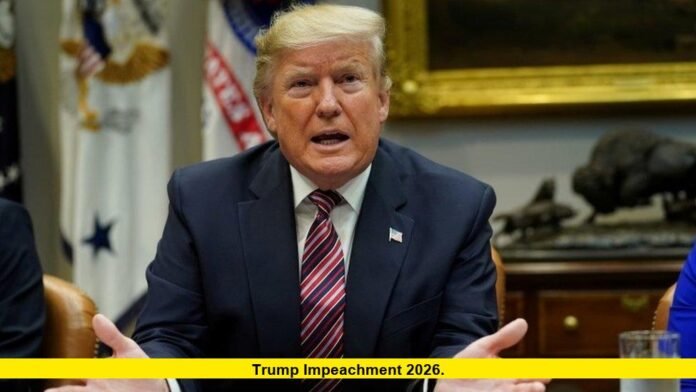

The phrase trump impeachment 2026 has surged back into national conversation as political tensions rise in Washington and both parties prepare for a high-stakes election cycle. While impeachment is not formally underway, the topic has become a powerful symbol of partisan conflict, campaign strategy, and competing visions for the country’s direction under President Donald Trump’s current term.
As of now, no impeachment articles against the president are moving through Congress. Still, the debate itself is shaping legislative priorities, public messaging, and voter engagement across the United States.
Why Impeachment Talk Has Returned
Impeachment discussions resurfaced after a series of political confrontations involving executive authority, immigration enforcement, and congressional oversight. Democratic lawmakers have sharply criticized several administration actions, arguing that accountability mechanisms must remain available when serious concerns arise. At the same time, Republican leaders have framed impeachment rhetoric as a political weapon rather than a governing tool.
President Trump has directly addressed the issue with allies, warning that control of Congress will determine whether impeachment efforts gain momentum. His statements have elevated the issue from a procedural possibility to a central campaign theme ahead of the 2026 midterm elections.
Share this article with others who want a clear picture of how impeachment talk is influencing today’s political landscape.
Current Status: No Active Impeachment Process
Despite the intensity of public debate, there is no active impeachment resolution against President Trump being considered by House committees. No formal inquiry has been launched, and no vote has been scheduled. Congressional leadership from both parties has acknowledged that impeachment requires broad political alignment, which does not currently exist.
Previous attempts earlier in this term to introduce impeachment measures failed to advance. Those efforts did not gain sufficient backing within Congress and never reached the stage of full debate or hearings.
Democratic Focus Shifts to Executive Oversight
Rather than targeting the president directly, many Democrats have focused on oversight of executive departments and senior officials. Immigration enforcement actions and internal agency decisions have drawn particular scrutiny, leading to calls for investigations and potential disciplinary steps against department leadership.
This approach reflects a broader strategy centered on accountability within the executive branch while avoiding a full impeachment push that could stall legislative progress or polarize voters further.
Republican Strategy: Turning Defense Into Motivation
Republicans have largely dismissed impeachment talk as partisan posturing. Party leaders argue that repeated references to impeachment undermine legislative cooperation and distract from economic and security priorities.
Within Republican messaging, impeachment warnings have been used to energize voters. The argument is straightforward: maintaining congressional majorities prevents what they describe as politically driven attempts to remove a sitting president. This framing has become a rallying cry for candidates in competitive districts.
The Role of the 2026 Midterm Elections
The 2026 midterms are widely seen as the deciding factor in whether impeachment efforts could move forward. Control of the House of Representatives is essential for launching impeachment proceedings, and both parties are treating the election as a referendum on executive leadership.
Campaign advertisements, fundraising appeals, and public speeches increasingly reference impeachment as either a safeguard or a threat, depending on political alignment. As a result, voters are being asked not only to choose representatives but also to weigh in indirectly on the future of impeachment itself.
Public Opinion and Political Polarization
Public reaction to impeachment discussions remains deeply divided. Supporters of the president view impeachment talk as an attempt to overturn electoral outcomes, while critics see it as a legitimate constitutional option in response to disputed actions.
Polling and grassroots activism show that impeachment rhetoric motivates engagement on both sides. Town halls, rallies, and online discussions frequently return to the subject, reinforcing its role as a defining issue of the current political era.
Historical Context Still Shapes the Debate
Trump’s previous impeachments continue to influence how lawmakers and voters approach the topic today. Those episodes left lasting impressions on congressional norms, party unity, and public trust in political institutions.
For some lawmakers, history has made impeachment feel normalized. For others, it has raised concerns about overuse and long-term damage to democratic stability. These competing interpretations continue to shape internal discussions within both parties.
Legal Thresholds Remain High
Impeachment is a constitutional process with strict requirements. Even if articles were introduced, passage would require majority support in the House and a two-thirds vote in the Senate for removal. Given current political divisions, reaching that level of agreement would be extremely difficult.
This reality has tempered expectations among lawmakers who acknowledge that impeachment, while powerful, is not easily achieved without overwhelming consensus.
Media Attention Keeps the Issue Alive
Coverage of impeachment debates ensures the topic remains in the public eye, even without formal proceedings. Political commentary, televised debates, and social media discussions amplify every statement related to impeachment, keeping it relevant in daily news cycles.
This constant attention contributes to a feedback loop where political actors respond to public interest, further elevating the issue.
What Trump Impeachment 2026 Means Going Forward
The continued prominence of trump impeachment 2026 reflects more than a single political outcome. It highlights deeper questions about executive power, congressional oversight, and the limits of partisan conflict in modern governance.
Whether impeachment ever advances beyond rhetoric will depend on election results, internal party dynamics, and unfolding political events. Until then, the debate itself will remain a central force shaping policy discussions and voter decisions nationwide.
What do you think this ongoing impeachment debate says about the future of American politics? Join the conversation and stay tuned as events continue to unfold.