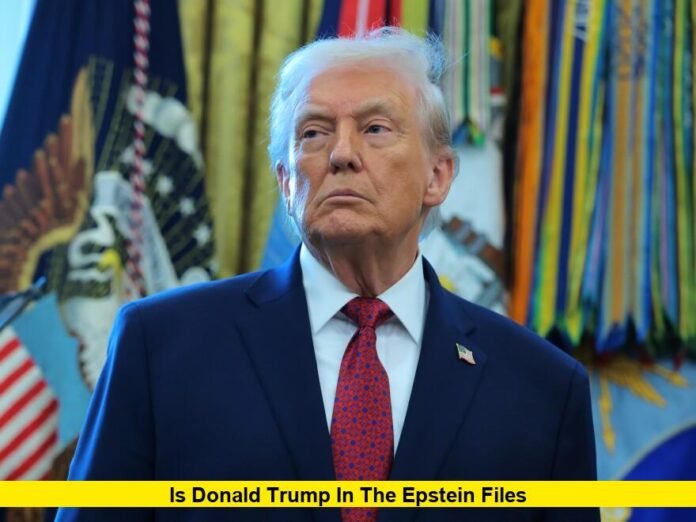

In the ongoing public debate over is Donald Trump in the Epstein files, the most recent release of documents from the U.S. Department of Justice has intensified scrutiny and conversation. Hundreds of thousands of pages have been made available under a federal transparency law, and while former President Donald Trump’s name appears in many entries, the records do not accuse him of criminal conduct and reflect years of legal and political context surrounding Jeffrey Epstein’s crimes and circle.
As of today, the Justice Department has published more than three million pages of materials tied to the late financier Jeffrey Epstein, including emails, images, videos, court records, and FBI files. This massive disclosure offers the deepest public look yet into Epstein’s networks and interactions with high-profile figures, including Trump. Is Donald Trump in the Epstein files? has become one of the most searched questions among Americans frustrated by redactions and headlines. The answer from the courts and federal officials is clear: Trump’s name appears in the released files, but the documents do not show evidence that he committed offenses connected to Epstein’s criminal activities.
The debate has drawn intense commentary from lawmakers, survivors, and civil liberties advocates, and the story continues to evolve as experts and journalists sift through the newly published information. Take a closer look at what the latest wave of records shows, what isn’t in them, and why this matters in 2026.
How the Epstein Files Were Released
The release of these documents traces back to a federal law enacted in 2025 that required the Department of Justice to publish records in its possession tied to Epstein’s criminal case and related inquiries. The law was signed by Donald Trump in November 2025, and after a series of deadlines and partial publications, the department issued millions of additional pages on January 30, 2026.
These records include more than two thousand videos and roughly 180,000 still images seized from Epstein’s properties, devices, and communications. DOJ officials have stated that certain materials were withheld or redacted to protect victims’ privacy and because of ongoing legal obligations. Review teams spent months preparing the files for public release.
Where Trump’s Name Appears in the Files
Among the pages now available, Trump is mentioned multiple times in emails, media clippings, and records collected by investigators. Documents show references to interactions from decades ago between Trump and Epstein when the two moved in overlapping social circles. At the same time, officials from the Department of Justice have emphasized that the files do not contain records showing Trump engaged in illegal conduct related to Epstein’s abuses.
The released material includes:
- Emails referencing Trump in the context of Epstein’s communications with associates. These entries do not outline any crimes by Trump but reflect social or professional mentions in correspondence among Epstein’s contacts.
- News clippings and records collected as part of routine investigations where Trump’s name appeared because of his prior public association with Epstein.
- Media and public submissions that included references to allegations or claims about Trump, some of which federal authorities have categorized as unverified and not supported by evidence.
Federal officials have been explicit that many of these entries contain “untrue and sensationalist claims” about Trump that were submitted to the FBI by members of the public during earlier election cycles and political controversy. Investigators also noted multiple mentions of Trump in archived documents that were part of Epstein’s existing files, but none equated to formal charges or credible evidence of participation in Epstein’s criminal enterprise.
What the Documents Do Not Show
Critically, the United States Department of Justice and its top officials have stressed that despite the extensive documentation, there is no indication within the newly disclosed files that Trump was criminally involved in Epstein’s sex trafficking ring or related offenses.
Officials have explained that:
- No criminal charges against Trump related to Epstein’s crimes are contained in the documents.
- The files contain no evidence of proven wrong-doing by Trump within the context of federal investigations into Epstein.
- Most references to Trump are contextual or observational, tied to social associations or external media references that were part of the broader investigative record.
Even as journalists and commentators comb through the massive volume of files, the absence of any formal findings of criminal conduct by Trump in the released records is consistent with public denials of wrongdoing by Trump and with official statements from federal law enforcement.
Survivors, Transparency Debates, and Redactions
The release has not been without controversy. Survivors of Epstein’s abuse and some lawmakers have criticized the Justice Department for redacting or withholding substantial parts of the total 6 million pages of potentially responsive material. Critics argue that more unredacted documents are necessary to truly understand the full extent of Epstein’s network and potential enablers.
Survivor advocates have also expressed frustration that some identifying information about victims appeared in earlier releases before adequate protection measures were implemented, and that key documents remain inaccessible without special congressional review arrangements.
Even outside the context of is Donald Trump in the Epstein files, the broader question of public access to all relevant records continues to animate political and legal discussions. Some members of Congress are seeking unredacted access to certain records not yet published, while others call for additional legislative oversight.
How Trump Has Responded Publicly
Donald Trump has addressed the ongoing release of Epstein-related records and the mentions of his name within them, pushing back against interpretations that suggest wrongdoing. Throughout 2025 and into 2026, Trump publicly dismissed aspects of the record as political attacks or mischaracterizations, arguing that some narratives around Epstein were used to score partisan points rather than reflect factual inquiry.
Officials close to Trump’s administration, including the Justice Department’s leadership during the document review process, have reiterated that there was no effort to withhold records for the purpose of protecting him. Instead, federal authorities pointed to legal obligations to protect victim privacy and to manage sensitive material appropriately.
Why This Matters Today
The question is Donald Trump in the Epstein files resonates because of the ongoing intersection of criminal justice, political accountability, and public transparency. Epstein’s crimes shook public confidence in elite networks and raised long-standing questions about how powerful figures are scrutinized and held responsible.
The newly released documents are significant for several reasons:
- They represent the broadest disclosure of Epstein-related materials in U.S. history.
- They show how federal investigations gathered and archived references to high-profile individuals who crossed paths with Epstein or were included in communications or social contexts.
- They highlight the tension between protecting victim privacy and ensuring transparency about influential figures connected to the case.
Despite the extensive documentation and Trump’s repeated mentions in the records, there is no substantiated evidence in the current files that Trump engaged in criminal acts with Epstein or acted as a participant in the illicit activities for which Epstein was prosecuted.
What Comes Next
As analysts, legal experts, and the public work through the mountain of released records, the conversation is likely to continue. Some lawmakers are pushing for further unredacted access, while others question how much more can be legally made public without additional court orders or legislative action. Public interest in Epstein’s social networks, and in the role of powerful contemporaries who intersected with Epstein’s life, remains high.
Americans continue to watch for new insights, but based on the latest documents published as of January 31, 2026, the answer to is Donald Trump in the Epstein files reflects presence in historical references and correspondence, not evidence of wrongdoing. The conversation over transparency and accountability will undoubtedly evolve as more pages are reviewed and additional context emerges.
We want to hear your thoughts on this topic—leave a comment or follow for updates as the story develops.