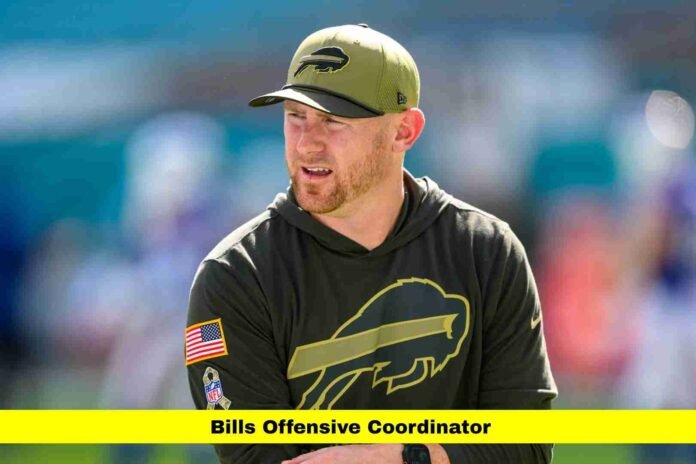

The Buffalo Bills have entered a new chapter in franchise history, driven by significant coaching changes that will shape the future of their offense and overall team identity. With the departure of their longtime head coach and a dramatic shift in leadership, the role of bills offensive coordinator has evolved in ways that could define the team’s trajectory in the 2026 NFL season and beyond. What fans saw unfold this offseason reflects not just a coaching carousel but a strategic re-alignment centered on continuity, experience, and offensive innovation.
After the Buffalo franchise ended its 2025 campaign in disappointment, the organization moved quickly to address structural changes from the top down. This overhaul began with the departure of Sean McDermott after nine seasons as head coach, during which the Bills experienced a long stretch of playoff appearances and competitive seasons. With McDermott’s firing, Buffalo’s front office pivoted toward stability on offense by promoting from within and then reinforcing that move with a major external hire.
In the pages that follow, we’ll unpack exactly how the Bills reshaped their coaching staff, who is stepping into key roles, how the offensive philosophy may shift, and what all of this means for quarterback play, offensive production, and Buffalo’s quest for playoff success in 2026. This deep dive will give fans a complete picture of every major change and its implications.
A Major Transition at Head Coach — The Foundation for a New Offensive Direction
One of the most consequential decisions of the Bills’ offseason was the promotion of Joe Brady from offensive coordinator to head coach. Brady, 36, agreed to a five-year contract to lead the franchise after serving as interim offensive coordinator in late 2023 and then full-time offensive coordinator in 2024 and 2025. His promotion signals the organization’s desire for continuity — particularly on offense — even as it addresses broader leadership needs.
Brady’s rise within the Bills’ coaching ranks has been rapid. Originally hired as quarterbacks coach in 2022, he took over offensive coordinator duties in mid-2023. Under his guidance in 2024 and 2025, Buffalo’s offense ranked among the league’s most productive units, balancing a powerful rushing attack with a dynamic aerial game. During that span, quarterback Josh Allen produced some of the best football of his career, including an MVP season in 2024.
This context is crucial because Brady’s promotion wasn’t just a head coach change. It was a decision rooted in preserving the offensive identity that had flourished under his direction while expanding his responsibilities to oversee the entire team.
Introducing the New Offensive Coordinator: Pete Carmichael Jr.
Following Brady’s elevation to head coach, the Bills moved to fill the vacant offensive coordinator position with a seasoned NFL veteran. Buffalo has hired Pete Carmichael Jr. as the team’s new offensive coordinator, bringing in a coach with deep experience and a well-established resume.
Carmichael, 54, spent the previous two seasons as a senior offensive assistant for the Denver Broncos. His history in the league goes back to 2000, and he’s most notably recognized for his long tenure as offensive coordinator of the New Orleans Saints, where he worked closely with legendary quarterback Drew Brees and under head coach Sean Payton. That era included some of the most consistently potent offenses in the league.
Bringing in Carmichael adds a layer of offensive wisdom and schema knowledge that pairs well with Brady’s youth and familiarity with the Bills’ roster. The two have worked together previously in New Orleans, and that shared background suggests a collaborative dynamic rather than a disconnect between coordinators and head coach.
Carmichael’s role will be central. He will be responsible for crafting offensive game plans, calling plays (if delegated by Brady), and maximizing both established and emerging offensive weapons.
Continuity and Change: What Carmichael Brings to Buffalo’s Offense
Pete Carmichael Jr.’s arrival underscores Buffalo’s commitment to maintaining offensive prowess while reshaping the staff around long-term goals. His credentials include:
- More than two decades of NFL experience.
- Eleven seasons as offensive coordinator for the Saints.
- Extensive work in quarterback development and offensive scheming.
- A shared history with Joe Brady and familiarity with high-tempo, balanced offensive systems.
Under Carmichael’s leadership in New Orleans, the Saints consistently ranked among the league’s better offenses, showing adaptability and strategic creativity. His presence in Buffalo is expected to help maintain consistency in offensive philosophy while offering fresh perspectives on play design and execution.
For quarterback Josh Allen and other offensive playmakers like running back James Cook and the receiving corps, this partnership aims to keep the Bills competitive in an increasingly dynamic offensive landscape across the league.
Why This Coaching Overhaul Matters for Buffalo’s Future
The dual changes — promoting Brady to head coach and hiring Carmichael as offensive coordinator — reflect a broader strategy rooted in balance. The Bills clearly value:
- Offensive continuity, especially in the passing game.
- A robust ground attack that complements aerial efficiency.
- A strategic framework that blends innovation with proven expertise.
This approach could define Buffalo’s identity as it seeks to overcome previous playoff shortcomings and make a deeper postseason run. Keeping offensive structure intact helps minimize disruption for players, particularly those like Allen who have thrived within a familiar system.
Fans can expect a blend of Brady’s innovative tendencies and Carmichael’s ball-control wisdom, creating a hybrid offensive mindset that emphasizes adaptability and execution.
Building Around Josh Allen: Quarterback and Offensive Synergy
Central to all of these coaching decisions is the role of Josh Allen. As one of the league’s most dynamic quarterbacks, Allen’s performance heavily influences the effectiveness of any offensive strategy. Under Brady’s leadership as coordinator, Allen flourished, earning MVP honors and posting some of his most efficient statistical seasons.
Allen’s ability to execute both the run and pass game at an elite level makes him uniquely suited to benefit from Carmichael’s structured offensive philosophies. A quarterback with Allen’s athleticism and versatility demands a coordinator capable of exploiting mismatches, adjusting protections, and designing plays that keep defenses off balance.
Carmichael’s history with complex play designs and Brady’s familiarity with Allen’s strengths could result in a potent offensive partnership. The seamless transition from one offensive mind to another was a priority for the Bills front office, and this shuffle appears designed to deliver that outcome.
Strategic Goals and Expectations for the 2026 Season
Entering the 2026 season, expectations for Buffalo’s offense are naturally high. Following a 12–5 record in 2025 and deep playoff involvement, the team appears positioned to build on success rather than rebuild from scratch. With the offensive staff largely intact in philosophy but expanded in experience, the Bills’ offense will look to:
- Generate consistent scoring opportunities.
- Increase efficiency in explosive plays.
- Maintain ball security and limit turnovers.
- Support defenses with sustained drives and clock control.
The strategic shift also places an emphasis on player development. With a coach like Carmichael working alongside Brady, younger or emerging offensive contributors may benefit from refined techniques and situational coaching that accentuates strengths.
Staff Dynamics: How Coaching Changes Reshape the Locker Room
Coaching transitions are never isolated to titles; they impact locker room dynamics, player relationships, and daily routines. Joe Brady’s promotion to head coach keeps a familiar face in a leadership role, which can help maintain continuity with players who have responded well to his coaching style. His promotion serves as a signal that the organization trusts the existing trajectory while acknowledging the need for greater responsibility and authority.
Meanwhile, Carmichael’s arrival adds a veteran voice with fresh insights that can command respect in meetings, on the practice field, and in game-day strategy sessions. This combination of youth and experience — embodied by Brady and Carmichael — reflects a thoughtful balance that prioritizes both innovation and structure.
Such leadership diversity may help the Bills adapt to changing offensive environments within the league, making them less predictable and more resilient against defensive adjustments.
Comparing Past Offensive Leadership and the New Era
In recent years, the Bills’ offensive leadership has evolved as the roster and league dynamics shifted. Past coordinators and coaches influenced the play style, tempo, and overall identity of the offense. With Brady stepping into greater authority and Carmichael arriving as offensive coordinator, the team now blends historical continuity with seasoned reinvigoration.
This evolution also reflects lessons learned from prior seasons, as offensive efficiency and adaptability remain central to competing at the highest level. The new staff composition aims to retain what worked — dynamic quarterback play, balanced rushing attack — while addressing areas needing refinement, such as play sequencing and situational adjustments.
Alignment With League Trends: Staying Competitive
Offensive styles across the NFL continue to evolve, with teams adopting faster tempos, multiple-set formations, and creative schemes to exploit defensive tendencies. The Bills’ coaching changes position them to stay competitive in this landscape by combining Brady’s modern offensive vision with Carmichael’s structured versatility.
This blend could allow Buffalo to capitalize on mismatches, adjust quickly in game flow, and maintain offensive balance without becoming overly reliant on any single strategy. For fans and analysts alike, the partnership between coach and coordinator represents a forward-thinking approach engineered to compete in contemporary NFL competition.
Looking Ahead: What Fans Should Watch for Next
As the Bills prepare for offseason activities, training camps, and the regular season schedule, several storylines will capture fan attention:
- How the new offensive coordinator system integrates with Brady’s overall leadership.
- The development of young offensive talent within a structured system.
- Josh Allen’s performance under a collaborative offensive plan.
- How the offense adapts to opposing defensive schemes throughout the season.
Each of these elements ties back to the coaching philosophy and staff structure that Buffalo has assembled. While coaching changes often prompt questions, the Bills’ strategy appears rooted in maximizing both continuity and experience.
Fans are encouraged to share their thoughts on the coaching changes, offensive potential, and what they’re most excited to see from the Bills this upcoming season.