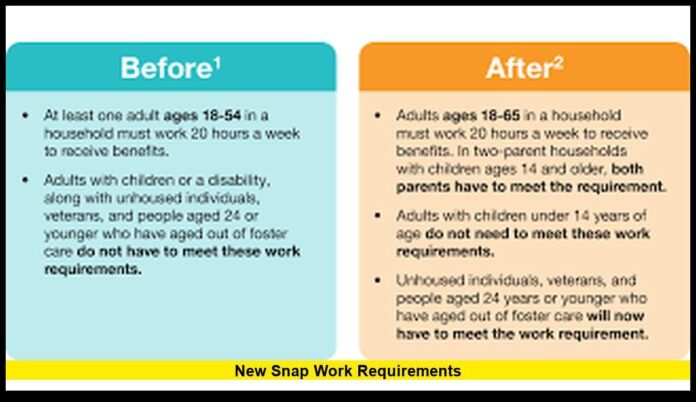

New SNAP work requirements are now in effect across the United States, changing who must work, train, or volunteer to continue receiving food assistance under the Supplemental Nutrition Assistance Program. As of 2026, these updated federal rules expand the number of adults who must meet monthly activity standards and narrow several long-standing exemptions.
The changes affect millions of households and introduce stricter verification, reporting, and time-limit enforcement. For recipients, understanding how the new SNAP work requirements apply is essential to avoid interruptions in benefits.
What Changed in the SNAP Work Rules
The federal government has broadened the group of adults required to meet work conditions to remain eligible for SNAP beyond a short-term period. The updated rules now apply to most adults:
- Between 18 and 64 years old
- Who do not have a dependent child under age 14 in their household
- Who do not qualify for a medical or caregiving exemption
Previously, the core work rule group mainly covered adults ages 18 to 54 without dependents. The 2026 update extends that obligation to older working-age adults and limits automatic exemptions that were in place for certain populations.
Monthly Work and Activity Standard
Under the new SNAP work requirements, affected recipients must complete at least:
- 80 hours per month
- This equals about 20 hours per week
Those hours can come from one or more of the following qualifying activities:
- Paid employment
- Self-employment
- Unpaid work or community service
- Participation in approved job training programs
- Enrollment in qualifying workforce development or education programs
Recipients may combine different activities to reach the 80-hour total. For example, part-time work and approved training hours can be added together to meet the monthly requirement.
Verification and Reporting Rules
States are now required to enforce stricter verification procedures. SNAP recipients subject to the work rules must:
- Report hours worked or completed in training each month
- Provide documentation when requested
- Update their case if their work status changes
Acceptable proof can include:
- Pay stubs
- Employer statements
- Training attendance records
- Volunteer hour confirmations
- Program participation certificates
Failure to report or verify hours on time can lead to a finding of non-compliance, even if the person actually completed the required activities.
Time Limits for Non-Compliant Adults
The three-month time limit remains in place under federal law. Adults who are subject to the work rules and do not meet them may only receive:
- Three months of SNAP benefits within a 36-month period
Once those three months are used, benefits stop unless the person:
- Begins meeting the work or training requirement, or
- Qualifies for a valid exemption
After compliance is re-established, SNAP eligibility can resume, provided all other income and household rules are met.
Who Is Exempt From the Work Requirement
Even with the expanded scope, several groups remain exempt from the new SNAP work requirements. These include individuals who are:
- Medically certified as unable to work
- Pregnant
- Caring for a child under age 14
- Caring for a disabled or incapacitated household member
- Already working enough hours to meet federal standards
- Enrolled full-time in certain education programs
- Receiving disability-related benefits that establish inability to work
States must evaluate exemptions on a case-by-case basis. Documentation is often required to confirm eligibility for these protections.
Older Adults and the New Age Range
One of the most significant changes is the extension of the work requirement to adults up to age 64. Many individuals in their late 50s and early 60s who were previously exempt may now need to:
- Engage in part-time employment
- Enroll in workforce programs
- Participate in community service
Age alone no longer guarantees exemption unless accompanied by a qualifying medical condition or caregiving responsibility.
State-Level Implementation
While the work rules are federal, each state administers SNAP and handles:
- Case processing
- Exemption determinations
- Work program placement
- Sanction enforcement
States are required to offer access to employment and training opportunities for those who must meet the work standard. These may include:
- Job search assistance
- Resume preparation
- Skills training
- Vocational education
- Community work placements
Some states operate large SNAP Employment and Training systems, while others partner with local workforce agencies, community colleges, and nonprofit organizations.
Rural and High-Unemployment Areas
Federal law allows limited flexibility in areas with insufficient job opportunities or training slots. In certain counties, temporary waivers or modified enforcement may apply when:
- Unemployment is persistently high
- Job access is severely limited
- Transportation barriers prevent participation
These adjustments are not automatic and depend on state approval and economic conditions. Recipients must still check with their local SNAP office to determine whether special rules apply in their area.
How Sanctions Are Applied
When a recipient fails to meet the work requirement and does not qualify for an exemption, the state may:
- Count the month toward the three-month limit
- Issue a warning notice
- Reduce or terminate benefits after the limit is reached
Sanctions are not permanent. Benefits can be restored when the individual:
- Meets the 80-hour requirement, or
- Becomes exempt, or
- Moves into a household category that is not subject to the rule
Impact on Households
The new SNAP work requirements mainly affect single-adult households and adults without young children. Families with children under 14 generally remain protected from the work rule, but adults in those households may still be encouraged to participate in voluntary employment and training programs.
Advocacy groups and state agencies alike emphasize the importance of early communication between recipients and caseworkers to prevent unintended benefit losses due to reporting errors or missed deadlines.
Steps Recipients Should Take
To stay compliant under the new rules, SNAP participants should:
- Review their eligibility notices carefully
- Confirm whether the work requirement applies to them
- Enroll in approved training or employment programs if needed
- Track hours consistently
- Keep copies of all documentation
- Report changes in work status immediately
States also provide online portals, phone reporting systems, and in-person assistance to help recipients meet their obligations.
Why These Rules Matter in 2026
The new SNAP work requirements represent a major shift in how long-term eligibility is managed for working-age adults. By expanding the age range and tightening verification, the policy places greater emphasis on employment and workforce participation as conditions for continued food assistance.
For recipients, compliance is now more closely monitored, timelines are more strictly enforced, and documentation plays a larger role than in previous years. Staying informed about local procedures and federal standards is now a critical part of maintaining uninterrupted access to SNAP benefits.
As the new SNAP work requirements continue to shape food assistance policy nationwide, staying informed and engaged will help recipients navigate the system and protect their access to essential support. Join the discussion and stay updated as these rules continue to affect communities across the country.