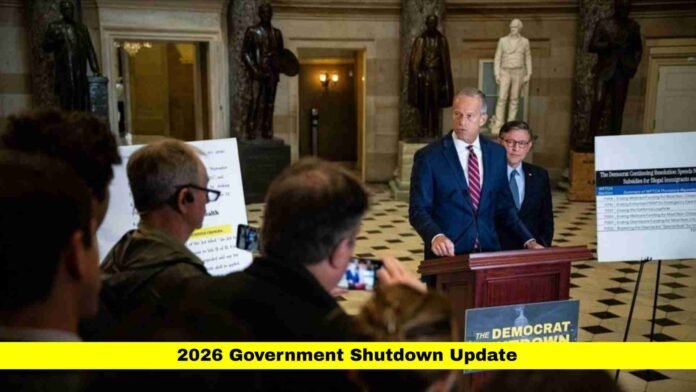

As the January 30 funding deadline approaches, the 2026 government shutdown update shows U.S. lawmakers once again facing a crucial budget decision that could halt or disrupt many federal operations. This situation comes just weeks after the longest government shutdown in modern history ended in November 2025, making the current negotiations and disagreements especially significant for federal employees, businesses, and everyday Americans.
With intense discussions in Congress, partisan disputes over funding priorities, and key deadlines on the horizon, this comprehensive update explains exactly where things stand, what may happen next, and how different parts of the federal government and communities could be affected in the coming weeks.
Why Funding Is Still Unresolved Entering 2026
Federal funding for most agencies currently comes from a temporary extension adopted after a record-long shutdown that stretched from October through mid-November 2025. Under that continuing resolution, most government operations are funded only through January 30, 2026. To prevent another lapse, lawmakers must either pass the remaining annual appropriations bills or agree to a new continuing resolution that extends funding past that deadline.
So far, lawmakers have passed six of the twelve key appropriations bills needed to fully fund the federal government for fiscal year 2026. These include budgets for departments such as Agriculture, Veterans Affairs, and Interior, which are already funded through the rest of the fiscal year. However, six others remain unfinished, covering major agencies like Homeland Security, Labor, Education, Defense, and Health and Human Services.
Without agreements on these remaining bills or a new funding extension before midnight on January 30, funding for those portions of the government will lapse. That lapse could trigger what is widely described as a partial government shutdown — a situation in which many federal operations fall into funding gaps and are forced to scale back or pause their work entirely if no agreement is reached.
What’s Fueling the Current Impasse
At the core of the budget standoff are disputes over how to fund the Department of Homeland Security (DHS) and, in particular, how to provide oversight and accountability for Immigration and Customs Enforcement (ICE). Many Senate Democrats are insisting that reforms be included in DHS funding legislation before they will support it.
Their demands include implementing accountability measures for immigration agents, such as requiring body cameras, banning the use of masks during enforcement operations, and enforcing conduct standards that align with local police guidelines. These requirements follow public outcry over recent incidents during immigration enforcement actions.
Republican leaders have shown some willingness to negotiate on reforms, but they are also pushing their own version of the DHS funding package, which has already passed the House as part of a large spending bill. That proposal includes reductions in ICE funding and new allocations for training but does not meet all the Democratic demands.
Because Senate rules require a broad majority to move most funding bills forward, this disagreement has slowed progress in the upper chamber, raising the risk that no agreement will be reached before funding expires at the end of the month.
How a Shutdown Could Unfold
If Congress fails to enact funding before the January 30 deadline, parts of the federal government will once again face a lapse in appropriations. Agencies without approved budgets would likely begin scaling back operations shortly after midnight on January 31.
Some essential services would continue to operate, but many routine, non-essential functions would be paused, and a significant number of federal employees would be furloughed. A “partial” shutdown typically means that only some departments and functions are affected, based on whether they have funding or are considered essential for public safety.
Which Government Services Could Continue
Even if a funding lapse occurs, several key services would remain in operation. Entities with permanent or advance appropriations, such as Social Security, Medicare, Medicaid, and the U.S. Postal Service, are typically shielded from shutdown impacts and would continue delivering benefits and services. Agencies deemed “essential” for public safety and national security, like components of the Defense Department and certain law enforcement activities, also tend to stay open.
However, some federal departments lacking funding could halt many of their operations. Examples of work that might be affected include passport and visa processing, tax return processing, certain transportation safety screenings, grant approvals, and a variety of administrative and support functions that depend on regular appropriations.
Potential Impacts on Federal Workers
A partial shutdown would once again bring uncertainty for millions of federal employees. In past shutdowns, “excepted” workers — those whose duties are considered critical to safety, security, or health — continue to work, often without pay during the funding lapse. Other workers are placed on furlough, meaning they temporarily stop working and do not receive pay until funding is restored.
During the historic 43-day shutdown in 2025, large numbers of federal employees were furloughed, and many “excepted” workers continued working without pay. When that closure ended, lawmakers approved retroactive pay for both furloughed and excepted employees. The possibility of repeat disruptions has raised concerns among workers who depend on consistent payroll and financial stability.
Economic and Public Service Considerations
In addition to the direct impact on federal workers, a funding lapse could ripple through the broader economy and public services. Businesses that contract with government agencies may face payment delays or slowed work. Tourism and travel services — including national parks and museums — could reduce operations or temporarily close. Regulatory agencies may slow enforcement or approvals that affect industries ranging from agriculture to financial services.
Even social programs that continue during a shutdown can experience administrative delays or slower processing. While benefits like Social Security and Medicare continue to be paid, related services like customer support lines or processing for new applications can slow or pause depending on agency workforce status.
Political Dynamics in the Budget Talks
Lawmakers from both parties recognize the practical disruptions a shutdown causes, but political disagreements over spending priorities and framework remain intense. Republican leaders in the House passed a consolidated funding package that includes DHS funding alongside several other agencies. It is now awaiting action in the Senate.
Senate Democrats are pushing for changes tied specifically to immigration enforcement and accountability before they will agree to advance DHS funding in the Senate. That disagreement has created a situation in which neither side has secured enough votes to move forward, heightening the chances of a funding lapse.
Some senators from both parties have expressed concern about impacts on defense spending and other national priorities, which could factor into negotiations in the final days before the deadline. Opinions in both chambers reflect the challenge of balancing political goals with the need to maintain government operations.
What Happens Next
Congress has only a narrow window — just a few days — to work out remaining differences before funding expires. Lawmakers have several options to avert a shutdown, including:
- Passing the outstanding appropriations bills that would fully fund remaining agencies.
- Enacting another continuing resolution that extends temporary funding while lawmakers continue negotiations.
- Separating contentious funding bills such as DHS from other spending legislation to allow cloture votes and avoid broad shutdown impacts.
Negotiations are intense, and lawmakers on both sides are under pressure to avoid another funding lapse. The outcome of these talks will determine whether the government continues to operate smoothly beyond January 30 or whether millions of workers and essential services face disruptions once again.
What Americans Should Watch This Week
As the deadline nears, several indicators will be important for the public to monitor:
- Public statements from leaders in both the House and Senate on budget negotiations.
- Votes scheduled for final appropriations bills or continuing resolution proposals.
- Shifts in positions by lawmakers who may influence the 60-vote threshold required in the Senate.
- Announcements from federal agencies regarding contingency planning in case of a shutdown.
Federal employees, contractors, and families who rely on government services will be watching closely for developments that could affect payroll, benefits, and public programs.
How Past Shutdowns Inform Today’s Challenges
The government-wide funding lapse in late 2025 became the longest in modern history and demonstrated how prolonged impasses over appropriations can strain services, federal workers, and economic activity. Many Americans are now familiar with the practical consequences of funding disagreements, including furloughs, delays in services, and broader economic uncertainty.
That shutdown ended with a funding extension that carried government operations through the end of January 2026, but unresolved disagreements in Congress have brought the nation right back to another potential brink. This situation highlights ongoing complexities in the federal budget process and the importance of bipartisan cooperation to keep essential services running.
Preparing for Possible Shutdown Outcomes
While lawmakers work toward an agreement, individuals and organizations can consider practical preparations in case funding lapses occur. These may include planning for disruptions to government services, staying informed about federal employee status updates, and understanding how benefits like Social Security and Medicare continue versus areas where delays may occur. Advance planning can help mitigate uncertainty and ensure continuity of personal and professional activities if disruptions take place.
What are your thoughts on how lawmakers should resolve the funding standoff? Share your perspective and stay tuned for ongoing coverage of how this situation unfolds.