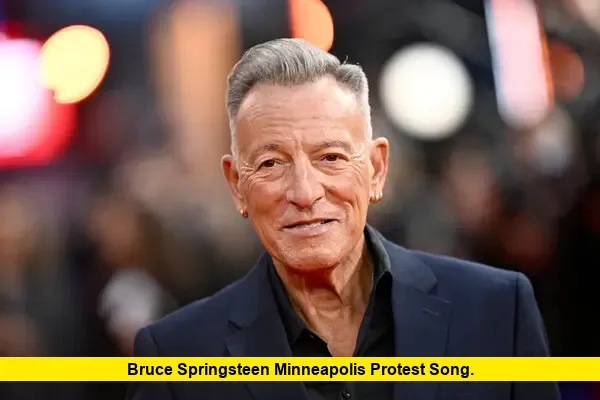

Bruce Springsteen has just released a powerful Bruce Springsteen Minneapolis protest song titled “Streets of Minneapolis,” a new track that has rapidly become the focus of national conversation. The song, written and published this week, responds to recent events in Minneapolis and reflects the nation’s tensions surrounding federal immigration enforcement, civil rights, and local resistance. This article breaks down the story behind the song, the events it references, its musical style, public reaction, and what it means for Springsteen’s legacy as a political artist in the U.S.
From the very first moments after its release, “Streets of Minneapolis” captured widespread attention for its raw songwriting and immediate relevance. Springsteen wrote the song over the weekend, recorded it shortly thereafter, and made it publicly available on January 28, 2026. The rapid turnaround — from writing to release in just a few days — underscores the urgency with which Springsteen approached the subject matter and connects his work directly to events unfolding in real time in Minneapolis.
Take a moment to listen to the song and read the lyrics — many listeners are finding new layers of meaning with every play.
Your thoughts on the lyrics and message are welcome below.
What Sparked the Song? A City in Turmoil
The backdrop to Springsteen’s latest work is a series of highly contentious actions by federal immigration agencies in Minneapolis. Earlier in January 2026, Minneapolis became a flashpoint in national debates over immigration enforcement after several deadly encounters between federal agents and residents of the city.
Two individuals — Renee Good and Alex Pretti — were killed in separate incidents involving U.S. Immigration and Customs Enforcement (ICE) agents and Border Patrol officers during these operations. Their deaths drove protests and community outrage in Minneapolis, with demonstrators calling for accountability and justice. In his song, Springsteen names both Good and Pretti and uses their stories as the emotional core of the lyrics, setting the stage for a broader critique of federal policies and enforcement tactics.
Springsteen has characterized the federal presence in the city as oppressive, framing it as an example of what he sees as excessive force and a threat to civil liberties. By foregrounding the experiences of Minneapolis residents and protestors, the song personalizes a national political debate in a way few artists have done recently.
The Music and Message: Folk-Rock Meets Protest Tradition
Musically, “Streets of Minneapolis” blends folk and rock elements, anchoring its message in a style long associated with political storytelling. The arrangement starts with simple acoustic guitar and Springsteen’s voice, gradually building into a full band sound complete with harmonica and background vocals that elevate key emotional lines.
Lyrically, the song confronts federal agencies — particularly ICE — with unflinching language. It references specific imagery from Minneapolis streets, speaks directly to the experience of local residents, and challenges the narrative presented by authorities about the confrontations that led to the deaths of Good and Pretti.
A refrain in the track includes chants of “ICE out now,” mirroring protest slogans heard at rallies in Minneapolis and other cities. The song’s title also evokes Springsteen’s earlier work “Streets of Philadelphia,” connecting his recent musical response to past moments when he tackled injustice through song.
Springsteen’s Statement and Intent
Springsteen announced the release of “Streets of Minneapolis” on his social channels, sharing that he wrote it “in response to the state terror being visited on the city of Minneapolis.” He dedicated the song not only to Good and Pretti but to the broader Minneapolis community, particularly immigrant neighbors affected by federal enforcement actions.
His intent, as expressed publicly, goes beyond mere commentary. Springsteen positions the song as an act of solidarity, amplifying voices from Minneapolis and highlighting what he views as fundamental issues of human dignity, equality under the law, and the rights of communities targeted by federal policies.
National Reaction: Support and Pushback
The song’s release triggered reactions across the political spectrum. Many music fans, activists, and community leaders praised Springsteen for using his platform to elevate the struggles of Minneapolis residents and for explicitly addressing federal immigration enforcement in his work.
Concertgoers and listeners have pointed out that Springsteen’s vocal stance is consistent with a long tradition of artists who use music to reflect societal tensions. Fans noted that songs like “American Skin (41 Shots)” in the past tackled police violence with a similar directness, and that “Streets of Minneapolis” carries forward that legacy.
At the same time, critics of the song have pushed back. Officials from the Trump administration dismissed Springsteen’s critique as irrelevant to the broader national debate, emphasizing official government descriptions of the enforcement actions and defending the role of federal agents in maintaining public safety and enforcing immigration law. These mixed reactions reflect how politically charged the subject remains and how the song’s release has amplified existing divisions.
Why This Song Matters Beyond Music
“Streets of Minneapolis” is more than just a new track from a legendary artist. Its release at a moment of heightened public scrutiny over federal law enforcement and immigration policy gives it a social weight that few contemporary songs achieve.
For many listeners, the song articulates a sense of urgency around civil rights and immigrant justice that is often absent from mainstream music. For others, it raises questions about how artists engage with politics and whether cultural figures should influence public discourse on divisive issues.
Regardless of individual viewpoints, the song has quickly become part of national conversations about Minneapolis, federal power, and the role of protest art in shaping public understanding. It stands as a contemporary example of how music can intersect with real-world events and reflect the hopes, frustrations, and demands of communities in conflict.
Springsteen’s Legacy and Future Impact
At 76 years old, Springsteen continues to demonstrate that his voice — both musical and political — remains influential. “Streets of Minneapolis” adds to a long catalog of socially conscious works and reinforces the idea that artists can still play a significant role in national debates.
Whether or not the song influences policy or public opinion, its rapid spread across platforms and the wide-ranging reactions it has sparked suggest that it will be studied, debated, and listened to for years to come.
If you’ve heard the song or followed the events that inspired it, what stood out most to you? Share your perspective in the comments — we’d love to hear your take.
Your voice adds to the conversation — drop your thoughts below and stay connected to what comes next.