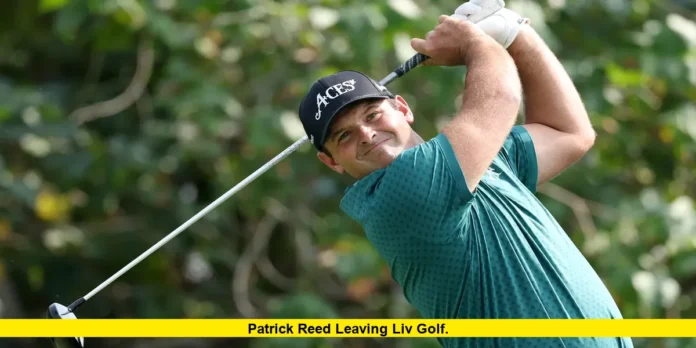

The professional golf world received a major jolt with the news of patrick reed leaving liv golf, a development that marks one of the most significant player moves of the season. The former Masters champion has officially ended his time with the Saudi-backed circuit and has set a clear path back toward traditional tour competition, reshaping conversations about the future balance of power in men’s professional golf.
Reed’s decision is not a rumor, a negotiation leak, or a speculative report. It is a finalized move that places one of the game’s most recognizable and polarizing figures back on a trajectory that aligns with the PGA Tour and the DP World Tour structure, a shift that carries implications for players, fans, sponsors, and the global schedule alike.
Stay with the full breakdown below to understand what this move means for Reed’s career, how it affects LIV Golf, and why it could influence other high-profile players weighing their own futures.
Why Patrick Reed’s Departure Is So Significant
Patrick Reed joined LIV Golf in 2022 as one of the early major champions to commit to the new league. As a Masters winner, Ryder Cup stalwart, and established PGA Tour star, his presence added instant credibility to LIV’s roster. For more than two seasons, he competed in team and individual events, collecting results and remaining visible on the global stage.
Now, his confirmed exit sends a clear message: elite players continue to reassess where they believe their long-term competitive legacy will be best served.
Reed has stated that his decision followed careful evaluation of his career goals, family priorities, and competitive ambitions. His focus has shifted back to a schedule built around traditional 72-hole tournaments, historical venues, world ranking opportunities, and pathways that connect directly to major championships and season-long tour competition.
This is not a short-term pause or a temporary loan arrangement. It is a formal separation from LIV Golf and a strategic realignment with the established tour ecosystem.
Don’t miss how this move could reshape future player decisions and alter the competitive balance of global golf.
The Competitive Path Reed Is Now Taking
Following his departure, Reed is prioritizing full participation on the DP World Tour in the immediate term. As a lifetime member there, he can compete freely across Europe and the Middle East, giving him access to high-level fields, world ranking points, and a structured season that mirrors the traditional tour rhythm.
This approach allows Reed to stay in top competitive shape while positioning himself for broader opportunities in the United States. Under current tour policies, he will be eligible to begin competing in PGA Tour events as a non-member later in the season, using sponsor exemptions and qualifying routes where available.
Looking ahead, his status as a past major champion provides a pathway to full reinstatement, enabling him to re-enter PGA Tour membership categories that allow consistent access to regular-season events and FedExCup competition in future seasons.
The process is structured, rule-based, and already defined within existing tour regulations, making his return pathway clear and official rather than uncertain or conditional.
What This Means for LIV Golf
Patrick Reed leaving LIV Golf represents more than a single roster change. It highlights the ongoing reality that, even with strong financial backing and a global schedule, player loyalty in modern professional golf remains fluid.
LIV Golf still features multiple major champions and high-profile names, but the departures of established stars reinforce that the league operates in a competitive marketplace for talent, not a closed system. Each exit prompts renewed scrutiny of how players evaluate:
- Competitive prestige
- World ranking access
- Major championship preparation
- Historical legacy
- Long-term career security
Reed’s move underscores that traditional tour structures continue to hold strong appeal for players who prioritize season-long competition, statistical recognition, and alignment with golf’s historical record books.
Impact on the PGA Tour Landscape
From a U.S. audience perspective, Reed’s return path brings a familiar and accomplished competitor back into the domestic spotlight. His presence adds depth to tournament fields, increases fan interest, and strengthens competitive storylines across the fall and future regular-season events.
Reed’s career resume already includes:
- A Masters Tournament victory
- Multiple PGA Tour wins
- Ryder Cup appearances
- Consistent performance in major championships
Reintroducing a player of that profile into PGA Tour environments raises the competitive ceiling and enhances event narratives, particularly at courses where he has previously contended.
It also reinforces the Tour’s ability to re-integrate high-level talent under its existing eligibility and reinstatement framework, maintaining continuity while adapting to the evolving professional landscape.
How This Affects the Broader Golf Ecosystem
Professional golf is now operating in a multi-tour reality. Players can compete across:
- The PGA Tour
- The DP World Tour
- LIV Golf
- Major championships governed independently
Reed’s transition demonstrates how careers can now move between these structures, but also shows that the traditional tours remain central hubs for legacy, ranking stability, and historical continuity.
For sponsors, broadcasters, and fans, Reed’s move offers renewed exposure in markets where PGA Tour coverage remains dominant. For tournament organizers, it adds a proven draw who can elevate field strength and spectator interest.
Most importantly, it confirms that competitive ambition, not only financial incentive, continues to drive career decisions at the highest level.
What Comes Next for Patrick Reed
Reed’s competitive calendar will now emphasize:
- Full DP World Tour participation
- Strategic entries into PGA Tour events as eligibility allows
- Preparation for major championships through traditional tour competition
This structure provides him with consistent high-level play, ranking opportunities, and a clear route back into the core schedule followed by the world’s top golfers.
His game remains tournament-ready, and his recent form confirms that he can still contend in strong international fields. The transition period will be closely watched, but the framework for his return is already defined and active.
Why Fans Are Paying Close Attention
Few players generate discussion the way Patrick Reed does. His intensity, confidence, and competitive edge have made him a central figure in major moments over the past decade. Whether supporters or critics, fans recognize that his presence always adds intrigue to a leaderboard.
With patrick reed leaving liv golf and re-entering the traditional tour conversation, storylines around rivalries, Ryder Cup implications, major championship form, and season-long performance will once again feature his name.
This is not simply a roster update. It is the return of a major champion to the core competitive arena that has shaped professional golf for generations.
The Bigger Picture for Professional Golf
Reed’s decision fits into a broader pattern of players reassessing where they want their careers to be recorded, remembered, and measured. Tour affiliation now involves more than contracts; it reflects how players define legacy, competition, and long-term identity within the sport.
As schedules, eligibility rules, and global partnerships continue to evolve, moves like this one will help shape the next phase of professional golf’s structure.
Join the conversation and stay tuned as this career-defining move continues to unfold on the game’s biggest stages.