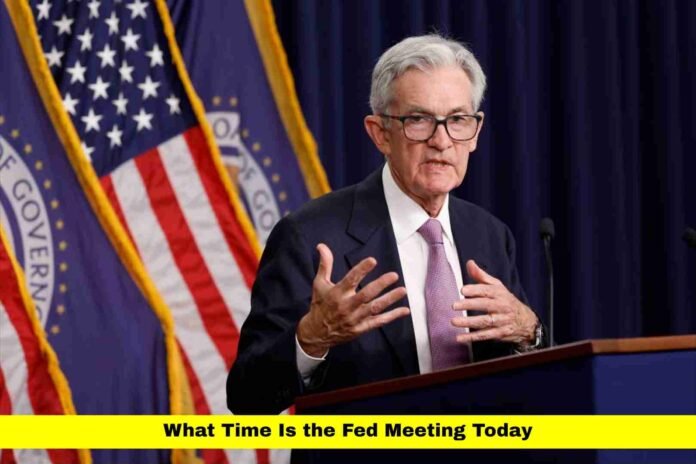

The Federal Reserve is holding a highly anticipated policy meeting today, and many Americans are asking what time is the Fed meeting today. This meeting is a critical event that shapes interest rates, borrowing costs, and financial markets. It is closely watched by investors, businesses, and everyday consumers, as the outcomes of the Federal Open Market Committee (FOMC) meetings directly impact mortgages, loans, savings accounts, and the broader economy.
Today’s session is the first major Fed meeting of 2026, and the decisions made, along with the guidance provided by Fed Chair Jerome Powell, are expected to set the tone for the economic year ahead. Understanding the schedule, implications, and key considerations of today’s meeting can help both individual and institutional participants navigate the financial landscape with more confidence.
Overview of Today’s Fed Meeting Schedule
The Federal Reserve began its two-day policy meeting yesterday and will conclude its deliberations today. The FOMC meets regularly to assess economic conditions, reviewing inflation trends, employment data, and financial stability indicators. This structured approach allows policymakers to determine whether to adjust interest rates or maintain current levels. Today’s meeting is scheduled to culminate with the policy statement at 2:00 p.m. Eastern Time, followed by a press briefing from Chair Jerome Powell at 2:30 p.m. Eastern Time. These moments are critical, as they reveal the Fed’s decision and provide context on the rationale behind it.
The schedule is designed to give markets and the public clear information at a specific time, reducing uncertainty and allowing investors, businesses, and consumers to respond in real time to the Fed’s policy direction.
Morning and Early Afternoon Preparations
Before the public announcement, Federal Reserve officials finalize their analysis and recommendations based on the latest economic data. They consider factors such as employment levels, consumer spending, inflation trends, and global economic conditions. Analysts and market participants monitor these developments closely, making adjustments to investment positions and preparing for potential market volatility. This period leading up to the announcement is often marked by heightened attention and speculation, as participants try to predict whether the Fed will change interest rates or signal future policy moves.
Key Announcement: 2:00 p.m. Eastern
The main answer to the question of what time is the Fed meeting today centers on the 2:00 p.m. Eastern release of the policy statement. At this time, the FOMC communicates its decision on interest rates, as well as its assessment of the economy. Investors and economists watch closely to see if rates are held steady, increased, or decreased. For today’s meeting, the consensus among analysts is that the Fed is likely to maintain its current interest rate, reflecting a cautious approach amid stable economic conditions and easing inflationary pressures.
The statement also provides insight into the Fed’s perspective on key issues such as labor market strength, inflation expectations, and potential risks. The wording of this statement is scrutinized carefully, as subtle changes in tone can signal shifts in future policy direction.
Jerome Powell’s Press Conference at 2:30 p.m. Eastern
Following the policy statement, Fed Chair Jerome Powell will hold a press briefing at 2:30 p.m. Eastern Time. This is an opportunity for the Chair to explain the reasoning behind the committee’s decisions, answer questions from the media, and provide guidance on economic trends and future policy moves. Market participants pay close attention to Powell’s comments, as they can influence expectations for interest rates, market behavior, and economic growth.
The press conference often affects stocks, bonds, and currency markets, as investors interpret the Fed’s tone and outlook for inflation and employment. Chair Powell’s clarity and language are critical in shaping market sentiment and public understanding of economic policy.
Market Reactions and Investor Implications
Financial markets respond quickly to both the policy statement and Powell’s press conference. Stock indexes, bond yields, and currency values often fluctuate significantly in the minutes following the announcement. Investors adjust positions based on the Fed’s guidance, with particular attention to future rate expectations. A steady rate may stabilize markets, while signals of potential increases or decreases can prompt shifts in portfolios and risk assessments.
Bond markets, especially Treasury yields, are particularly sensitive to Fed statements. Changes in interest rate expectations affect borrowing costs, investment strategies, and the broader flow of capital.
Importance of Today’s Meeting
This meeting is particularly significant because it is the first policy review of 2026. It establishes the Federal Reserve’s initial stance on inflation, employment, and economic growth for the year. The Fed’s decisions influence the cost of borrowing for consumers and businesses, impacting mortgages, loans, and other financial products. For investors, the meeting provides guidance on monetary policy that can shape investment strategies and market expectations.
The dual mandate of the Federal Reserve—to promote maximum employment and maintain stable prices—is central to this meeting. Policymakers weigh labor market conditions against inflation trends to determine whether rate adjustments are warranted. Today’s decisions and commentary from the Fed can signal how the committee plans to approach these goals in the coming months.
Global Context and Influences
The Federal Reserve does not make decisions in isolation. Global economic developments, trade dynamics, and international monetary policy decisions all influence domestic choices. Policymakers consider these factors to understand potential risks and opportunities for the U.S. economy. Today’s meeting reflects this interconnected perspective, with attention to global inflation trends, foreign exchange movements, and international financial stability.
The Fed’s approach is therefore informed by both domestic indicators and global developments, making its guidance highly relevant to investors and markets worldwide.
Impact on Consumers and Businesses
Interest rate decisions affect borrowing and saving across the economy. For consumers, the Fed’s stance can influence mortgage rates, car loans, credit cards, and other forms of debt. Businesses also respond to monetary policy by adjusting investment plans, hiring strategies, and pricing decisions. A decision to maintain rates provides stability for borrowers and businesses, while hints at future rate changes can affect economic activity and financial planning.
Understanding the timing and content of today’s meeting helps households and businesses make informed decisions regarding loans, investments, and overall financial strategies.
Future Considerations
Today’s policy meeting also sets expectations for future FOMC sessions. Investors and economists use the information to forecast potential rate adjustments and monetary policy trends throughout 2026. While today’s decision may be a pause in rate changes, the Fed’s commentary about inflation, economic growth, and employment conditions provides critical guidance for planning ahead.
Key Takeaways
The Federal Reserve’s meeting today, with the policy statement at 2:00 p.m. Eastern and the press briefing at 2:30 p.m., is central to the U.S. economic outlook. Investors, consumers, and businesses alike monitor these events to understand interest rate policy, borrowing costs, and market expectations. Preparing for the timing and content of the announcement ensures that financial decisions are based on accurate and current information.
Understanding the process, implications, and potential market reactions helps participants navigate the economy with confidence and clarity.
How are you planning to respond to the Fed’s decision today? Share your thoughts below and stay informed on key economic developments and market trends.