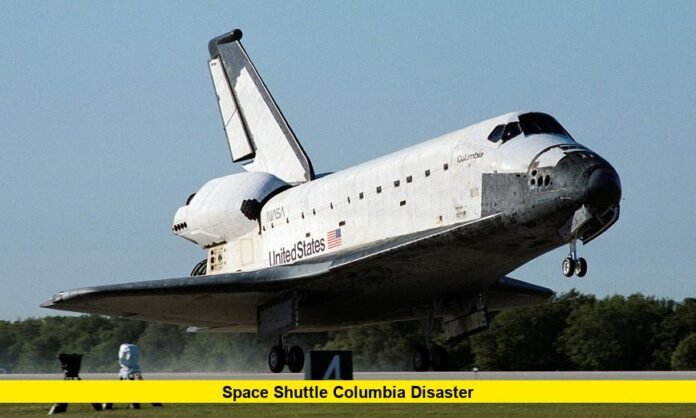

The space shuttle columbia disaster remains a defining moment in the history of human space exploration, a tragedy that reshaped how NASA manages risk, honors its crew, and influences modern aerospace culture. More than two decades after the loss of Columbia and her seven crew members, fresh reflections from across the space community show how the incident’s lessons continue to inform cutting-edge missions and the evolving relationship between the United States and space exploration.
Every year around February 1, memorials and commemorations draw attention to the sacrifice made by the Columbia astronauts, reaffirming the nation’s commitment to both space science and crew safety.
Take a moment to consider how this pivotal event still echoes in today’s spaceflight plans and public imagination.
A Mission of Science and Curiosity
Columbia’s final voyage began on January 16, 2003, when the shuttle launched on STS-107, a mission devoted to scientific research. Unlike many shuttle flights focused on construction or servicing of orbiting platforms, this mission carried a large suite of experiments designed to benefit fields from materials science to biology. The crew worked in two shifts for most of the mission’s nearly 16 days, collecting data and performing investigations in microgravity that researchers hoped would advance fundamental science and terrestrial applications.
The mission stood out because of its intense focus on science, with more than 80 experiments and international participants. Columbia’s crew spent each day in orbit conducting experiments that touched on life sciences, physical sciences, and earth observation, striving to expand human knowledge in ways only possible in space.
What Happened as the Shuttle Returned
Tragedy struck as Columbia prepared to return home. During its launch weeks earlier, a piece of insulating foam had detached from the shuttle’s external fuel tank and struck the left wing, damaging critical heat-shielding protection. This damage was not fully understood or addressed in orbit.
As the shuttle re-entered Earth’s atmosphere on February 1, the damaged area allowed extremely hot gases to penetrate the wing structure. Within seconds, the integrity of the orbiter was compromised, causing it to break apart over portions of Texas and Louisiana just minutes before a planned landing. All seven astronauts aboard — mission commander, pilot, mission specialists, and payload specialist — perished in this catastrophic failure.
The Human Toll and Enduring Loss
The names of the crew members — commander, pilot, mission specialists, and payload specialist — became etched into national memory. These individuals were celebrated for their courage, professional excellence, and dedication to expanding the frontier of human understanding. Their loss dealt devastation to families, colleagues, and the broader public.
Communities across the United States continue to honor these astronauts through annual ceremonies, scholarships, and exhibits that preserve both their work and spirit. These remembrance events emphasize both mourning and gratitude, reflecting a nation still touched by their sacrifice.
How Columbia Changed NASA’s Approach to Safety
In the aftermath of the tragedy, NASA grounded shuttle flights for almost three years as it examined the causes and consequences of the accident. The agency’s internal investigation made clear not only the technical origins of the disaster but also deeper organizational and cultural challenges that had allowed known risks to go unresolved. This comprehensive review led to sweeping reforms in how missions are planned, monitored, and managed.
New protocols were introduced to inspect spacecraft more thoroughly while in orbit, to identify and evaluate potential damage, and to prepare contingency plans that include rescue strategies in extreme circumstances. These processes now play a significant role in assessing safety for all crewed missions. The heightened attention to risk communication and engineering transparency was directly shaped by the lessons of Columbia.
Even beyond NASA, commercial spaceflight companies and international partners study the Columbia incident to ensure they manage risks effectively as human spaceflight grows more frequent and diversified.
Memorials, Rituals, and National Reflection
Communities and institutions across America mark February 1 with solemn reflection and tribute. Space centers, museums, and local organizations host educational events and public gatherings that both remember the Columbia crew and inspire future generations to pursue careers in science, engineering, and space exploration.
Public memorials — from engraved walls bearing crew names to interactive exhibits highlighting scientific achievement — serve dual purposes of remembrance and education. These spaces foster a deeper understanding of the challenges of spaceflight and the bravery required to push dynamic frontiers. They also reinforce the idea that honoring sacrifice and safeguarding future explorers must go hand in hand.
Legacy Lessons for Future Missions
The impact of the space shuttle columbia disaster extends into current and upcoming space programs. Agencies and private partners now emphasize redundancy, early detection of structural faults, and robust communication channels among engineers and mission leadership. These elements are integral to mission planning for crewed flights beyond low-Earth orbit, including lunar expeditions and missions that could one day reach Mars.
Risk management conversations today often reference the need to balance mission ambition with crew welfare, a principle reinforced by Columbia’s end. Exploration programs now incorporate more rigorous verification of spacecraft integrity before re-entry and prioritize transparency in reporting anomalies during flight.
In industry circles, professionals cite Columbia as a pivotal case study in aerospace engineering, management, and organizational behavior. It serves as a reminder that safety culture must thrive at every level for exploration to be both bold and responsible.
Public Memory and Education
Across schools, research institutions, and public forums, Columbia’s story continues to be taught and discussed. Space science curricula often include the mission’s objectives, the technical failures that caused the shuttle’s destruction, and the systemic changes that followed. These lessons emphasize not only the scientific achievements of the mission but also the human element — the courage and curiosity that propelled explorers into space and the imperative to protect those who follow.
Public interest in the Columbia tragedy also helps sustain broader engagement with space policy, technological advancement, and science education. By examining what happened and how society responded, audiences gain a nuanced view of the complexity behind human access to space.
Looking Forward
As the United States and international partners embark on new ventures beyond Earth’s orbit, the legacy of the space shuttle Columbia continues to shape strategy and ethos. Missions are now framed by a deep understanding that exploration inherently involves risk, but that risk must be managed with unwavering attention to safety.
New generations of missions carry the imprint of Columbia’s lessons, from improved spacecraft design to more comprehensive oversight of mission operations. As a result, human spaceflight stands on foundations fortified by past sacrifice and guided by the relentless pursuit of knowledge.
Public commemorations and ongoing discussions ensure that the Columbia disaster remains part of the national conversation about space exploration. It is not merely a chapter of history but a touchstone for ethical decision-making, engineering discipline, and collective remembrance.
Enduring Tribute and National Conversation
Today, the memory of Columbia’s crew fuels reflection and dialogue about how we venture into space and how we honor those lost in pursuit of human advancement. As aerospace technology progresses and missions grow more ambitious, the lessons of that February morning in 2003 resonate with fresh urgency, reminding all Americans of what was lost and what remains at stake.
Share your thoughts on how Columbia’s legacy should influence future space exploration and innovation — engage with our community in the comments below.