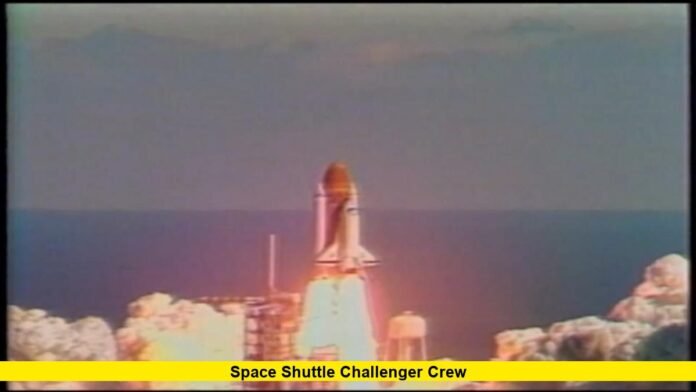

On January 28, 2026, the United States marked four decades since the loss of the space shuttle challenger crew, one of the most defining moments in the history of human spaceflight. The tragedy of 1986 unfolded in front of millions of viewers and left a permanent mark on the nation’s collective memory. Forty years later, the story of those seven astronauts continues to influence space exploration, safety culture, and science education across the country.
The Challenger disaster did more than end a mission. It reshaped NASA’s approach to engineering, decision-making, and risk, and it created a powerful legacy that still guides how America prepares for the next era of exploration beyond Earth.
Take a moment to reflect on the courage of these pioneers and how their story still resonates today.
Join the discussion and share what their legacy means to you.
The Mission That Captured the Nation’s Attention
The Challenger launch on January 28, 1986, drew exceptional public interest. It was the 25th flight of NASA’s Space Shuttle Program and carried a crew that symbolized the future of space exploration and education. The mission, known as STS-51L, was widely followed because it included the first participant from the Teacher in Space Project, a civilian educator selected to bring space science directly into American classrooms.
Seventy-three seconds after liftoff, the shuttle broke apart high over the Atlantic Ocean. The loss was immediate and total. The nation watched in shock as the mission ended, and the space program entered one of the most difficult periods in its history.
Who Were the Seven Astronauts?
The Challenger crew represented a cross-section of American talent, dedication, and ambition.
- Francis “Dick” Scobee, Commander, a veteran astronaut and test pilot known for his calm leadership.
- Michael J. Smith, Pilot, on his first spaceflight, respected for his technical skill and professionalism.
- Judith A. Resnik, Mission Specialist, an engineer and one of the first women to fly in space.
- Ronald E. McNair, Mission Specialist, a physicist and accomplished saxophonist with a passion for education.
- Ellison S. Onizuka, Mission Specialist, the first Asian American astronaut, known for his commitment to teamwork.
- Gregory B. Jarvis, Payload Specialist, an engineer representing private-sector research.
- Christa McAuliffe, Payload Specialist, a high school teacher chosen to represent educators and students nationwide.
Together, they embodied the idea that space exploration belonged not only to scientists and pilots, but to the entire nation.
How the Tragedy Changed NASA Forever
The aftermath of the Challenger accident led to a complete grounding of the Space Shuttle fleet. Investigations revealed that the failure of a component in unusually cold temperatures triggered the breakup, but the findings went far beyond hardware.
The disaster exposed weaknesses in communication, risk assessment, and organizational culture. Engineers had raised concerns about the conditions on launch day, yet those concerns did not carry enough weight in the final decision-making process.
As a result, NASA implemented sweeping reforms:
- Stronger safety oversight independent of program management
- More rigorous launch readiness reviews
- Clearer channels for engineers to voice concerns
- A renewed emphasis on “safety first” in every mission phase
These changes became a foundation for all future human spaceflight programs and remain central to how missions are planned today.
The Impact on America’s Space Policy
Challenger forced the nation to confront the reality that spaceflight, even in routine operations, carries serious risk. The idea of the shuttle as a “space truck” capable of frequent, almost airline-like flights gave way to a more cautious and realistic understanding of what human space exploration demands.
The pause in shuttle flights allowed NASA to redesign critical systems and rethink how it balanced schedule pressures against safety. This shift influenced not only later shuttle missions but also the development of new spacecraft and launch vehicles in the decades that followed.
A Lasting Influence on STEM Education
One of the most enduring outcomes of the Challenger tragedy has been its impact on science, technology, engineering, and mathematics education. Families of the crew worked with educators and space agencies to create learning centers and programs that would continue the mission of inspiring young minds.
These Challenger Learning Centers and similar initiatives provide students with immersive experiences in simulated space missions, problem-solving exercises, and teamwork challenges. They serve as living memorials, ensuring that the crew’s dedication to learning and discovery continues to shape future generations.
Christa McAuliffe’s dream of teaching from space never came to life as planned, but her influence on education expanded far beyond a single mission. Scholarships, schools, and educational programs in her name continue to encourage students to pursue science and exploration.
The Human Stories Behind the Headlines
Beyond the technical lessons and policy reforms, the Challenger story remains deeply personal. Each crew member had a family, a career, and a future they were building.
Ronald McNair’s passion for physics and music, Judith Resnik’s trailblazing role for women in engineering, Ellison Onizuka’s commitment to representing new generations of astronauts, and Gregory Jarvis’s work bridging industry and space research all left lasting impressions on those who knew them and those who learned about them later.
Their stories remind us that space exploration is not only about machines and missions, but about people who accept extraordinary risks in the pursuit of knowledge.
Challenger’s Role in Today’s Space Era
As the United States prepares for long-duration missions to the Moon and, eventually, Mars, the lessons of Challenger remain deeply relevant. Modern programs place heavy emphasis on:
- Redundancy in critical systems
- Extensive testing under extreme conditions
- Transparent communication across all levels
- A culture that empowers anyone to halt a process if safety is in doubt
The memory of Challenger and later tragedies serves as a constant reminder that progress in space must never come at the cost of ignoring warning signs.
Why the Legacy Still Matters in 2026
Four decades after the accident, the Challenger crew continues to symbolize both the promise and the peril of exploration. Their mission demonstrated the power of inspiration, especially when spaceflight connects directly with classrooms and everyday Americans. Their loss underscored the responsibility that comes with pushing the boundaries of technology.
Today’s astronauts train in an environment shaped by the hard lessons learned in 1986. Every countdown, every launch, and every mission review carries the imprint of those reforms.
The story of the space shuttle challenger crew is not only about a single day in history. It is about how a nation learns, adapts, and honors those who ventured into the unknown.
Their courage still guides the path forward—what does the Challenger legacy mean to you today? Join the conversation and stay connected to the story of human space exploration.