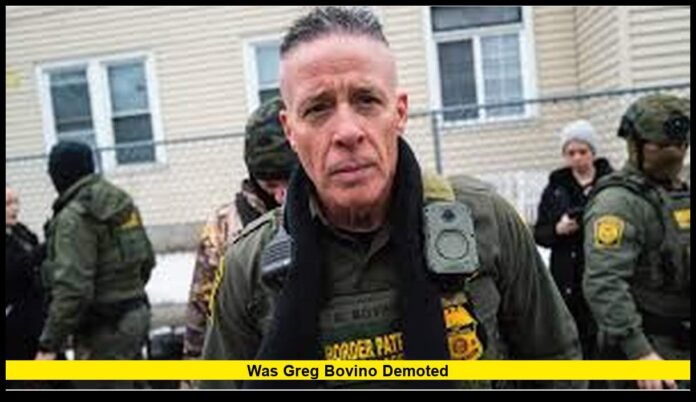

The question was Greg Bovino demoted is now answered with clear developments from January 2026: Gregory Bovino has been removed from his high-profile position as the U.S. Border Patrol “commander at large” and reassigned back to his former role in El Centro, California after months of controversial enforcement actions that drew intense public and political scrutiny. This shift represents a significant change in his career and in federal immigration enforcement strategy in the United States.
Here’s the most current and factual account of what transpired, why the change happened, and how events unfolded around this leadership move.
Who Is Greg Bovino and Why His Role Was Important
Gregory Kent Bovino is a veteran U.S. law enforcement officer who rose through the ranks of the U.S. Border Patrol over decades. By 2025, he became one of the most visible faces of the federal government’s aggressive immigration enforcement campaigns.
Before his most recent role:
- Bovino served in various senior Border Patrol positions, including sector chief roles in places like El Centro, California.
- He was known for directing tactical operations that aimed to disrupt illegal immigration and related criminal activity.
- Under the second Trump administration, his public profile grew dramatically when he was tapped to lead major enforcement efforts in large U.S. cities.
In October 2025, he was assigned the title of “commander at large” for the Border Patrol. In that role, Bovino operated outside traditional command structures and was the public face of high-visibility enforcement campaigns in cities such as Los Angeles, Chicago, Charlotte, New Orleans, and Minneapolis. He became known for frequent media appearances and outspoken public commentary about immigration policy and federal law enforcement tactics.
This prominent leadership position placed him at the forefront of national debates over immigration and public safety.
What Happened: The Answer to Was Greg Bovino Demoted
On January 26, 2026, multiple credible developments confirmed that Bovino was removed from his role as commander at large and sent back to his prior sector role in El Centro, California. This transition was broadly interpreted by observers as a demotion because:
- Bovino’s reassignment took him out of the national spotlight.
- His former position involved directing federal enforcement operations across multiple major cities.
- El Centro is a more conventional sector leadership assignment with far less national visibility and influence.
The change in assignment followed intense criticism of the federal enforcement strategy that Bovino had led, especially after a fatal shooting in Minneapolis that sparked widespread outcry and political pressure. His command was associated with controversial tactics and clashes between federal agents and local communities. This definitive personnel change directly answers was Greg Bovino demoted with current, factual context.
What Led to the Change in Bovino’s Role
The reassignment stemmed from several interconnected developments:
1. Controversial Enforcement Actions in Minneapolis
In late January 2026, federal agents operating under directives connected to federal immigration enforcement were involved in the fatal shooting of Alex Pretti, a 37-year-old U.S. citizen, in Minneapolis. This incident generated national attention and condemnation, particularly around:
- The public outcry over the use of force by federal agents.
- Accusations that the enforcement action was excessively aggressive.
- Questions about whether proper protocols were followed.
The incident intensified scrutiny of leadership decisions guiding federal operations in the area.
2. Political Backlash and Multistate Pressure
Following the Minneapolis incident and earlier clashes in other cities, local and national officials criticized the overall federal enforcement approach. Governors, mayors, and state attorneys general from different states raised concerns about:
- The federal government’s tactics.
- Perceived lack of coordination with local law enforcement.
- Increased tensions between federal agents and community residents.
This growing political pressure created an environment in which changes at the leadership level were seen as necessary to reduce public tensions.
3. Strategic Shifts at the Federal Level
Amid the backlash, federal leadership signaled a reassessment of its approach. The reassignment of command responsibilities in Minneapolis and other cities became part of a broader effort to reposition operational control. Key indicators of this shift included:
- Assignment of other senior federal officials to take over operational leadership in critical areas.
- Rebalancing of enforcement efforts away from aggressive nationwide deployments.
- Official statements indicating changes in tactical priorities.
Taken together, these factors set the stage for Bovino’s reassignment from a national command role to a more traditional sector leadership position.
What the Reassignment Means for Federal Enforcement Policy
Bovino’s reassignment has broader implications for how the federal government approaches immigration enforcement:
Reduced Centralized Command
His removal from the commander-at-large position suggests a step back from a strategy that placed a single official at the helm of multiple nationwide operations. Instead, federal leadership appears to be:
- Empowering other officials to manage local enforcement efforts.
- Increasing collaboration with state and local authorities.
- Reinforcing conventional command structures.
Reevaluation of Tactics
The leadership change signals a recalibration of the tactics used in high-visibility enforcement missions. After a period of aggressive deployments that drew controversy, federal authorities are seen to be reconsidering how operations are executed, particularly in urban environments where public reaction and political pressure are intense.
Impact on Border Patrol Leadership
For Border Patrol as an institution, this shift highlights the challenges of balancing enforcement with public perception and political realities. Changes in leadership roles often reflect internal assessments of what strategies are most effective and sustainable.
How Bovino’s Career Shift Is Being Perceived
Reactions to Bovino’s reassignment are varied across the political and public spectrum:
Supporters of the Move
Some commentators view the reassignment as necessary to:
- Address escalating community tensions in cities where federal agents were deployed.
- Shift toward enforcement strategies that consider local law enforcement integration.
- Respond to public concerns over high-profile use of force incidents.
Critics of the Change
Others see the reassignment differently:
- As politically motivated and not reflective of an operational failure.
- As a symbolic move rather than substantive policy reform.
- As a reallocation of public scrutiny rather than a shift in enforcement priorities.
Regardless of perspective, the reassignment has become a focal point in ongoing debates about immigration enforcement policy in the United States.
What Comes Next for Greg Bovino
Bovino’s return to his former role in El Centro is expected to precede his retirement. Analysts note that:
- El Centro is where Bovino previously spent much of his Border Patrol career.
- The reassignment may serve as a transition toward retirement from federal service.
- His future involvement in other national roles appears unlikely given the current trajectory.
This shift marks the end of Bovino’s tenure as a national face of high-profile immigration enforcement, and it underscores a changed operational landscape within federal immigration agencies.
A Timeline of Key Events
To understand how events unfolded around was Greg Bovino demoted, here is a detailed timeline of the most recent developments:
June 2025 – Bovino leads a major enforcement operation in Los Angeles that draws significant attention.
October 2025 – He is designated Border Patrol “commander at large,” overseeing federal operations across multiple U.S. cities.
January 7, 2026 – ICE agents under federal enforcement efforts are involved in shootings in Minneapolis and other cities.
January 24, 2026 – The fatal shooting of Alex Pretti occurs during a federal enforcement action, intensifying political backlash.
January 26, 2026 – Bovino is formally removed from the commander at large position and reassigned to his former sector role in El Centro.
Final Thoughts
The answer to was Greg Bovino demoted is clear based on the most current developments: Greg Bovino was reassigned from his national operational command role and returned to his former position in El Centro, California, marking a significant leadership change in federal immigration enforcement.
This shift reflects broader changes in strategy, political response, and public attitudes toward enforcement actions across the country.
Share your thoughts in the comments and stay informed as this story continues to unfold.