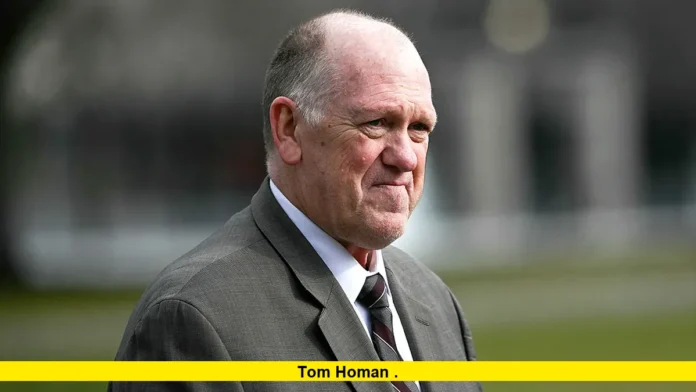

President Donald Trump is sending Tom Homan to Minnesota to manage a rapidly escalating federal immigration enforcement situation that has triggered intense public reaction, political conflict, and legal challenges in the state. Homan, a senior law enforcement official with deep experience in border and immigration operations, will travel to the Minneapolis-Saint Paul area to oversee federal engagement in the wake of two fatal shootings involving U.S. Border Patrol and ICE agents and widespread protests.
Trump announced the deployment of Homan after a weekend incident in which a U.S. citizen, a 37-year-old intensive care nurse, was shot and killed by Border Patrol agents amid demonstrations against the federal “Operation Metro Surge.” The president described Homan as a seasoned and fair law enforcement leader who will report directly to him and evaluate the complex situation on the ground.
Continue reading for full details on the developments and what Homan’s presence means for Minnesota and national immigration policy.
Federal Enforcement and Public Outcry in Minnesota
Minnesota has become the center of a growing political and civil confrontation following a series of federal immigration operations that have drawn national attention. Federal agents from Immigration and Customs Enforcement (ICE), Customs and Border Protection, and Border Patrol have been conducting an expanded enforcement campaign in the Twin Cities, known as “Operation Metro Surge,” which began in late 2025 and escalated in January 2026.
The federal campaign is part of the Trump administration’s broader effort to crack down on undocumented immigration and related criminal activity. Thousands of federal officers are deployed throughout the region as part of what authorities have described as the largest federal immigration operation in the state’s history.
Protests have erupted across Minnesota in response. Thousands of residents have taken to the streets to demand an end to the intensive federal presence, and demonstrations have included a general strike in the state capital and large rallies in Minneapolis. Many protesters cite concerns over federal tactics, community impact, and civil rights.
Fatal Shootings Ignite National Controversy
The situation escalated dramatically when a U.S. Border Patrol agent shot and killed Alex Pretti, a Minneapolis resident and intensive care nurse, during a confrontation in the city. Video footage released by eyewitnesses shows Pretti attempting to de-escalate a situation between federal agents and members of the public when he was subdued, disarmed, and then fatally shot. His death followed the earlier shooting of another Minnesota resident during similar enforcement operations.
These shootings have intensified public outrage and raised serious questions about use of force by federal agents. Public officials, community leaders, and legal advocates have condemned the incidents and demanded transparency and accountability. Local authorities have sought to preserve evidence and pursue legal actions to challenge federal conduct.
Political Tensions Between Federal and State Leaders
The deployment of Homan comes amid deepening divisions between federal leadership and Minnesota state officials. The governor has publicly urged the federal government to withdraw immigration agents and end the enforcement surge, arguing that it has created fear and instability within communities. Local leaders, including city officials and representatives, have echoed these concerns and called for humane and effective policy responses.
In contrast, federal authorities and the Trump administration have defended the operations as necessary to uphold immigration laws and public safety. Trump has reiterated support for robust enforcement while condemning what he labels disorder and blaming opposition figures for resistance to federal actions.
The situation has also drawn responses from lawmakers on both sides of the aisle at the national level. Some Republican figures have urged de-escalation and dialogue, while Democratic legislators have pledged to challenge federal funding for enforcement unless detailed reviews and reforms are undertaken.
Tom Homan’s Role and Mandate in Minnesota
Tom Homan’s arrival in Minnesota marks a significant shift in how the federal government is approaching the crisis. Homan, who has previously served as acting director of ICE and is known for his advocacy of strict immigration enforcement, is charged with coordinating federal efforts on the ground and providing direct updates to the president.
His tasks are expected to include:
- Evaluating current federal operations, including tactics and protocols used during enforcement actions.
- Engaging with state and local leaders to address areas of contention and improve communication.
- Monitoring ongoing protests and community responses to federal presence.
- Assessing legal and operational challenges that have arisen from recent incidents.
Homan’s presence aims to bring senior oversight to a situation that has drawn scrutiny from legal authorities, civil rights organizations, and citizens across Minnesota.
Community Response and Legal Challenges
The public response to federal immigration enforcement in Minnesota has been overwhelming. Residents, religious groups, labor unions, and advocacy organizations have all participated in protests demanding an end to federal actions. Demonstrations have included marches in harsh winter conditions, mass gatherings, and coordinated strikes throughout the state.
Legal challenges have also emerged. State attorneys general and civil rights advocates have filed lawsuits aiming to block certain federal enforcement activities. Courts have issued orders requiring preservation of evidence related to shootings, and legal battles continue over jurisdictional authority and investigative access.
Many community members express frustration that federal agents operating in urban areas lack sufficient training for crowd interactions and civil engagement, intensifying fears and resistance among residents.
Broader Implications for Immigration Policy
The developments in Minnesota have broader implications for national immigration policy and federal-state relations. The controversy has highlighted fundamental disagreements over approach, enforcement techniques, and the balance between federal authority and local autonomy.
How the federal government manages the Minnesota situation — particularly under Homan’s leadership — could influence future administrations’ strategies in other states facing similar tensions. Lawmakers are closely watching the outcome, and debates over homeland security funding and enforcement oversight are likely to figure prominently in upcoming legislative sessions.
As public sentiment varies widely, the situation underscores the complexity of immigration policy in the United States, where enforcement objectives often collide with community concerns, civil rights protections, and political values.
What to Watch Next in Minnesota
In the coming days and weeks, several developments will be key to understanding how the situation unfolds:
- Reports from Homan on his assessments and recommendations.
- Responses from state officials to federal engagement and possible policy shifts.
- Outcomes of legal proceedings related to shootings and enforcement tactics.
- Continued public demonstrations and potential negotiations between community leaders and federal authorities.
These developments will shape not only Minnesota’s immediate future but also national conversations around immigration enforcement, law enforcement accountability, and federal-state cooperation.
How do you think federal immigration enforcement should proceed in Minnesota? Share your thoughts below and stay engaged as this news continues to evolve.