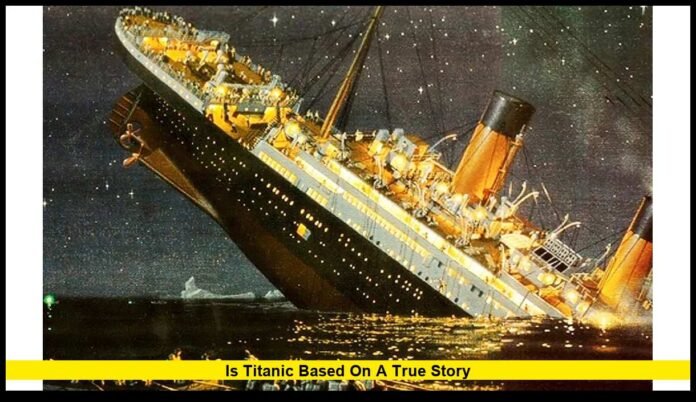

Is Titanic based on a true story continues to draw strong interest in the U.S. as the film remains popular across streaming platforms and social media discussions tied to real historical events.
The 1997 film Titanic, directed by James Cameron, is rooted in one of the most documented maritime disasters in history. However, while the ship, the sinking, and many people shown on screen were real, the movie also uses fictional storytelling to guide viewers through the tragedy. Understanding what truly happened and what was dramatized helps separate historical fact from cinematic narrative.
The Real RMS Titanic and Its Final Voyage
RMS Titanic was a British luxury passenger liner built by Harland and Wolff in Belfast. At the time of completion, it ranked among the largest moving objects ever constructed.
Verified historical details include:
- Titanic departed Southampton on April 10, 1912
- It made stops in Cherbourg and Queenstown
- The ship struck an iceberg late on April 14
- Titanic sank during the early hours of April 15
- More than 1,500 passengers and crew lost their lives
The ship was traveling to New York City when the disaster occurred in the North Atlantic Ocean.
Why Titanic Was Considered Revolutionary
Titanic was marketed as a symbol of modern engineering and luxury.
Key features included:
- Advanced watertight compartments
- Lavish first-class accommodations
- State-of-the-art dining and recreation areas
Despite safety innovations, Titanic did not carry enough lifeboats for everyone onboard, a decision that followed outdated maritime regulations.
Historical Accuracy of the Ship’s Design in the Film
The film’s depiction of Titanic’s interior and exterior is widely regarded as highly accurate.
The production recreated:
- The Grand Staircase
- First-class dining saloons
- Passenger cabins across all classes
Design choices were based on ship plans, photographs, and survivor descriptions. The visual realism remains one of the film’s strongest historical elements.
The Iceberg Collision and Sinking Timeline
The sequence of events surrounding the iceberg strike aligns closely with recorded testimony.
Confirmed facts:
- The collision caused damage along the starboard side
- Multiple compartments began flooding
- The ship remained afloat for nearly three hours
The gradual nature of the sinking, shown in the movie, matches survivor accounts and modern structural analysis.
Real People Portrayed in the Film
Several supporting characters were real individuals who sailed on Titanic.
Historically verified figures include:
- Captain Edward J. Smith
- Ship designer Thomas Andrews
- Margaret “Molly” Brown
- White Star Line executive Bruce Ismay
Their roles in the film generally reflect known behavior, though some scenes were simplified for storytelling.
Who Were Jack and Rose?
Jack Dawson and Rose DeWitt Bukater were fictional creations.
They were designed to:
- Represent different social classes
- Move freely between areas of the ship
- Create an emotional entry point for viewers
Their story does not reflect a documented romance from the voyage.
The Real-Life Name Connection
A passenger with the last name Dawson did exist and was buried in Halifax. However:
- His background differed significantly
- He had no known connection to a first-class passenger
- The similarity was coincidental
The film’s lead characters remain fictional.
Class Differences Shown Onboard
The movie accurately presents social separation aboard Titanic.
Documented realities include:
- Third-class passengers housed lower in the ship
- Limited access to upper decks before the emergency
- Language and navigation challenges during evacuation
However, the idea of deliberate imprisonment during the sinking has been overstated for dramatic effect.
Lifeboat Shortages and Evacuation Chaos
Titanic carried 20 lifeboats, which was legally sufficient at the time but far below actual need.
Key numbers:
- Capacity for about 1,178 people
- Over 2,200 people onboard
Many lifeboats launched with empty seats due to confusion and lack of training.
Who Survived and Why
Survival rates followed a clear pattern.
Factors influencing survival:
- Gender and age
- Passenger class
- Proximity to lifeboats
Women and children in first class had the highest survival rates, while third-class men faced the greatest risk.
Did Titanic Break in Half?
The film shows Titanic splitting apart during its final moments.
This depiction is now confirmed:
- The wreck was discovered in 1985
- The bow and stern lie separately
- Structural failure occurred during sinking
At the time of the movie’s release, this detail was still debated publicly.
James Cameron’s Research Process
The director conducted extensive preparation before filming.
His efforts included:
- Multiple dives to the wreck site
- Study of survivor transcripts
- Consultation with engineers and historians
This research influenced both visual accuracy and narrative pacing.
Scenes That Spark Debate
Some moments remain controversial.
Common criticisms involve:
- Portrayals of certain officers
- Compressed timelines
- Heightened emotional confrontations
These choices aimed to maintain narrative flow rather than rewrite history.
Emotional Truth vs. Literal Accuracy
While the central romance is fictional, many emotional experiences shown are real.
Survivors described:
- Confusion and disbelief
- Acts of heroism
- Families separated in minutes
The film captures these emotional truths effectively.
Cultural Impact in the United States
The movie reshaped public awareness of Titanic.
Its influence includes:
- Renewed interest in maritime history
- Increased museum attendance
- Ongoing debate about historical accuracy
For many Americans, the film became their first exposure to the tragedy.
Why the Question Still Matters
So, is titanic based on a true story? The answer lies in understanding how history and storytelling intersect.
The ship, the disaster, and many individuals were real.
The love story and several plotlines were fictional.
Together, they created a narrative grounded in an authentic historical event.
What Has Not Changed Over Time
Despite new discoveries, core facts remain stable:
- Titanic sank after hitting an iceberg
- Insufficient lifeboats contributed to loss of life
- The tragedy altered maritime safety forever
These truths continue to be taught and discussed today.
Why Audiences Keep Asking
The blend of romance and tragedy invites repeat viewing.
The real-world disaster gives the story lasting weight.
The unanswered human questions keep curiosity alive.
The debate over Titanic’s true story elements continues to engage viewers, and readers are encouraged to share their perspectives or stay alert as interest in the ship’s real history remains strong.