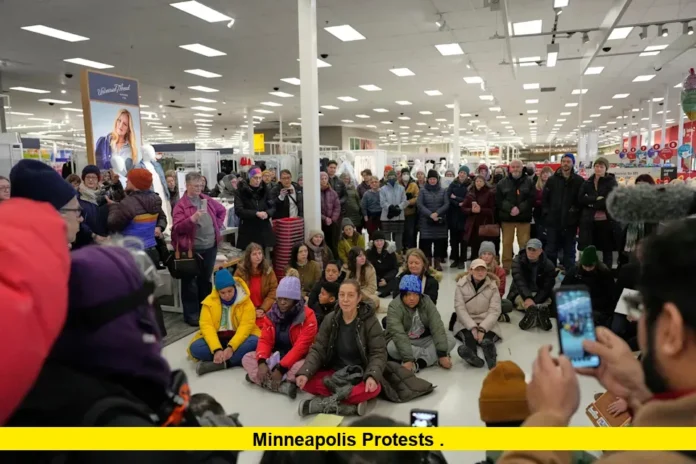

The ongoing minneapolis protests have become a defining moment in the national debate over immigration enforcement, economic disruption, and the broader use of federal power in the United States. What began as demonstrations against intensified ICE operations has grown into a sweeping movement that shut down major business corridors, drew thousands into the streets, and sparked renewed scrutiny of how presidential authority is exercised at a time of heightened political and economic tension.
Why Minneapolis Became the Epicenter
Minneapolis has a long history of civic activism, but the current wave of demonstrations stands out for its scale and economic impact. Protesters flooded downtown streets, airport terminals, and key commercial districts in response to a sharp increase in immigration raids and detention actions. Community organizations, labor unions, faith leaders, and small-business associations joined forces, framing the protests as both a human-rights stand and an economic statement.
Marches quickly evolved into coordinated work stoppages and consumer boycotts. Many participants described the movement as an “economic blackout,” urging residents to avoid spending, stay home from work, and visibly demonstrate how much immigrant labor and immigrant-owned businesses contribute to the local economy.
Hundreds of Businesses Close Their Doors
One of the most striking outcomes of the demonstrations was the widespread closure of shops, restaurants, and service providers. Entire blocks in parts of Minneapolis went dark for days at a time. From family-owned grocery stores to large hospitality venues, owners reported dramatic drops in foot traffic and revenue.
Some businesses closed in solidarity, hanging signs that read “Closed for Our Community” or “No Business as Usual Without Justice.” Others shut down because employees were afraid to travel or had joined the protests themselves. Delivery services slowed, construction projects paused, and airport operations faced disruptions as clergy and activists staged peaceful sit-ins and prayer gatherings.
The financial toll was immediate. Restaurants reported empty dining rooms, retail stores saw sales fall sharply, and tourism-related businesses experienced a wave of cancellations. For many owners, the situation echoed the sudden economic freezes of past national crises, reinforcing how quickly political conflict can ripple through local economies.
The Role of Immigration Enforcement
At the heart of the demonstrations was anger over intensified federal immigration actions. Protesters accused authorities of conducting aggressive raids, detaining long-time community members, and creating an atmosphere of fear in neighborhoods with large immigrant populations.
Community leaders argued that these operations disrupted families, workplaces, and schools, and that the economic consequences extended far beyond those directly targeted. When workers stay home, children miss school, and consumers avoid public spaces, the entire city feels the impact.
Local officials voiced concern that the scale and visibility of enforcement efforts were undermining trust between residents and law-enforcement agencies. Business groups warned that sustained instability could push investment and tourism away from the region, deepening financial losses.
A National Lens: Power, Politics, and Profit
While the protests focused on immigration, they also unfolded against a broader national conversation about how federal power is used and who benefits from it. Recent high-profile financial analyses have drawn attention to the scale of personal wealth growth connected to President Donald Trump during his return to office, reigniting debate over the intersection of political authority and private business interests.
These reports detailed how Trump-linked enterprises expanded rapidly, particularly in sectors such as digital finance, international real estate, and media-related ventures. The discussion has centered on whether holding the nation’s highest office while maintaining close ties to profit-generating businesses creates unavoidable conflicts of interest.
For many demonstrators in Minneapolis, the connection was symbolic but powerful. They argued that aggressive policies affecting vulnerable communities, combined with headlines about massive private financial gains at the top, reflected an imbalance in whose interests are prioritized by the federal government.
Economic Inequality in the Spotlight
The contrast between struggling local businesses and reports of soaring personal wealth at the highest levels of power sharpened public frustration. Small business owners in Minneapolis spoke about razor-thin margins, rising operating costs, and the sudden loss of customers during the protests. At the same time, national discussions highlighted how political influence can coincide with significant financial growth.
This juxtaposition fueled broader conversations about economic fairness. Protest organizers emphasized that immigrant workers and minority-owned businesses often form the backbone of urban economies, yet they bear the brunt of policy shifts and enforcement crackdowns. When those communities are destabilized, the ripple effects touch landlords, suppliers, transportation services, and municipal tax revenues.
Political Reactions and Public Debate
Political leaders at the local and state levels called for dialogue and de-escalation, urging federal agencies to consider the community and economic consequences of their actions. Some lawmakers pushed for stronger oversight of enforcement practices, while others defended the operations as necessary for upholding federal law.
Nationally, the situation intensified partisan debate. Supporters of strict immigration enforcement framed the protests as disruptive and unlawful. Critics countered that peaceful demonstrations and business closures were a legitimate form of civic expression, highlighting the real-world costs of policy decisions made in Washington.
The conversation around presidential business interests added another layer. Ethics advocates called for clearer separation between public office and private profit, arguing that transparency and divestment are essential to maintaining public trust. Supporters of the president maintained that his business success was independent of policy decisions and that existing laws were being followed.
Community Voices from Minneapolis
On the ground, the mood in Minneapolis was a mix of defiance, anxiety, and solidarity. Workers marched alongside business owners. Faith leaders linked arms with students. Families carried signs calling for dignity, safety, and economic stability.
Many residents described the protests as a turning point, not only in the fight over immigration policy but also in how communities assert their influence. By closing shops and slowing commerce, participants sought to demonstrate that economic power can be a form of protest just as potent as occupying streets and public squares.
Long-Term Implications
The events in Minneapolis may leave lasting marks on how cities respond to federal actions that disrupt local life. Economists note that even short-term shutdowns can have lingering effects, particularly for small businesses that operate on limited cash reserves. Rebuilding customer confidence and restoring normal operations can take months.
Politically, the protests contribute to a growing national narrative about accountability, transparency, and the ethical boundaries of leadership. As debates continue over immigration, economic inequality, and the relationship between government power and private wealth, the Minneapolis experience offers a vivid case study of how these issues intersect in everyday life.
What Comes Next
As demonstrations continue and policy discussions evolve, Minneapolis stands as a symbol of how local communities can influence national conversations. The city’s streets have become a forum where concerns about human rights, economic survival, and the proper use of presidential authority converge.
Whether through future protests, legislative action, or court challenges, the questions raised here are unlikely to fade quickly. They touch on the core of American democracy: who holds power, how it is used, and how its consequences are felt by ordinary people and small businesses alike.
Public attention remains fixed on how these events will shape policy and accountability in the months ahead—share your thoughts and stay connected as the story continues to unfold.