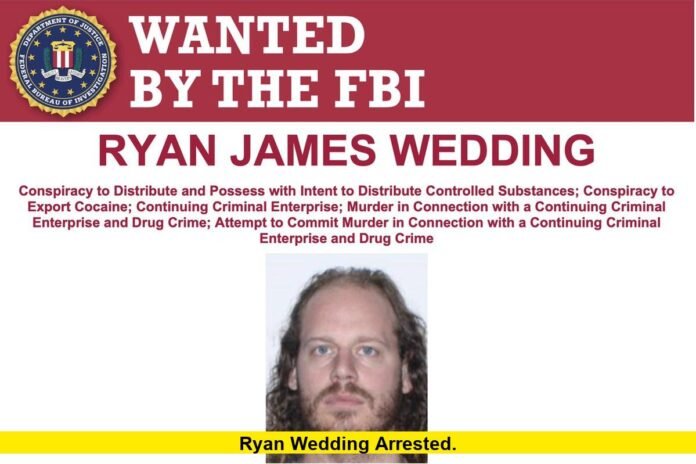

In a dramatic law enforcement breakthrough, Ryan Wedding arrested today in Mexico, ending one of the most notable international fugitive hunts in recent years. The 44-year-old Canadian, once a celebrated Olympic snowboarder, had been at large after being charged with overseeing a vast and violent drug trafficking network. Officials confirmed his capture as he now faces multiple federal criminal counts tied to cocaine distribution, murder, and leading a criminal enterprise that spanned continents.
From Olympic Athlete to International Fugitive
Ryan James Wedding once stood at the peak of winter sports. Born in Thunder Bay, Ontario, he competed for Canada in the 2002 Winter Games as a snowboarder in the parallel giant slalom event. For years, that athletic achievement was his defining public identity. But behind the public persona, U.S. and international investigators uncovered a descent into organized crime that would eventually span decades and cross borders.
After his competitive snowboarding career, authorities say Wedding shifted dramatically into illicit activities. Over time, he became the central figure in a sprawling transnational drug trafficking network moving massive quantities of cocaine from South America through Mexico and into the United States and Canada. Law enforcement described the operation as capable of distributing tens of tons of narcotics annually and generating billions in illegal proceeds.
Accusations and Criminal Charges
Federal prosecutors charged Wedding with a range of serious offenses. These included running a continuing criminal enterprise, conspiring to distribute and export cocaine, money laundering, and ordering multiple murders tied to his alleged organization’s efforts to protect itself from law enforcement and rivals. Among these accusations was the alleged killing of a federal witness in Colombia before the individual could testify, an act that highlighted the ruthlessness of his network.
Investigators also linked Wedding to other violent acts and homicides connected with maintaining control of the drug operation. Additional defendants were arrested in connection with these crimes, including individuals alleged to have coordinated or assisted in violent acts at Wedding’s behest. These charges underscored the significant threat his network posed to public safety and justice systems across borders.
The FBI’s Top Ten Most Wanted List and $15 Million Reward
As authorities intensified their pursuit, the U.S. government elevated Wedding’s profile as a dangerous fugitive. In March 2025, he was placed on the FBI’s Ten Most Wanted Fugitives list. The announcement reflected the severity and scale of the criminal allegations against him and aimed to generate public help in locating him.
To aid in his capture, the U.S. State Department increased the reward for information leading to his arrest or conviction to $15 million. The substantial bounty highlighted the importance placed on apprehending a fugitive believed to be shielded by powerful cartel alliances and frequently moving across regions to evade detection.
Alleged Cartel Protection and Evasion Tactics
In the years leading up to his arrest, law enforcement agencies believed Wedding was residing in Mexico with support and protection from members of the Sinaloa cartel, one of the most powerful drug trafficking organizations in the world. Reports indicated that he used multiple aliases and frequently altered his appearance to thwart efforts to find and detain him.
Despite these measures, authorities continued to track leads, cooperating closely with Mexican and Canadian counterparts. Throughout the manhunt, agents seized assets tied to his alleged criminal enterprise, including a sizable and high-value collection of motorcycles believed to be part of the proceeds of illicit activity. These seizures provided insight into the wealth and influence associated with his operations and helped narrow investigative focus toward individuals close to him.
Breaking News: Arrest in Mexico
Today’s arrest marks a significant turning point in the case. Law enforcement officials confirmed that Wedding was taken into custody in Mexico after months of evading capture. While specific details about the operation that led to his arrest have not yet been fully disclosed, authorities plan to publicly address the case with further information, including circumstances surrounding how they were able to finally apprehend the fugitive.
With Wedding now in custody, next steps will include his formal transfer into U.S. legal proceedings to face the array of federal charges. Prosecutors are expected to present evidence amassed over the course of a prolonged and complex investigation, which will likely involve testimony from cooperating witnesses and documentation of international drug trafficking activities.
International Cooperation and Law Enforcement Response
Officials from various law enforcement agencies hailed the arrest as a major victory in the fight against global narcotics trafficking and violent crime. The collaborative effort involved agencies from the United States, Mexico, and Canada working together to dismantle the network that had eluded capture for so long.
Law enforcement leaders emphasized that the arrest should serve as a reminder that even individuals who believe they have hidden behind layers of protection and deception can be brought to justice. By dismantling key components of the network and leveraging international cooperation, authorities were able to chip away at the infrastructure that helped conceal his activities for years.
Community and Legal Impact
The legal saga ahead is expected to unfold over a lengthy period as prosecutors build their case and navigate issues related to extradition, evidence, and testimony. Observers and analysts anticipate that the trial will attract significant attention, given the dramatic transformation of Wedding’s public image and the serious nature of the accusations he now faces.
Communities affected by the flow of narcotics and the associated violence tied to drug trafficking will be closely watching developments in the prosecution. Public safety advocates have noted that arrests like this one can disrupt criminal enterprises, at least temporarily, and send a strong signal to other would-be traffickers about the persistence of law enforcement efforts.
A Life of Contrasts: Athlete, Fugitive, Defendant
The arc of Ryan Wedding’s life—from Olympic competition to alleged kingpin of a violent drug network—is a stark example of how drastically paths can diverge over time. Once celebrated for sporting accomplishment, he now confronts the consequences of alleged involvement in activities that inflicted harm across communities and borders.
The contrast between his early life and present circumstances underscores a narrative that will likely be examined in the context of how fame, opportunity, and individual choices intersect with the lure of criminal enterprise. As the legal process moves forward, details revealed in court will further illuminate the inner workings of the network he is accused of leading and the circumstances that led to his downfall.