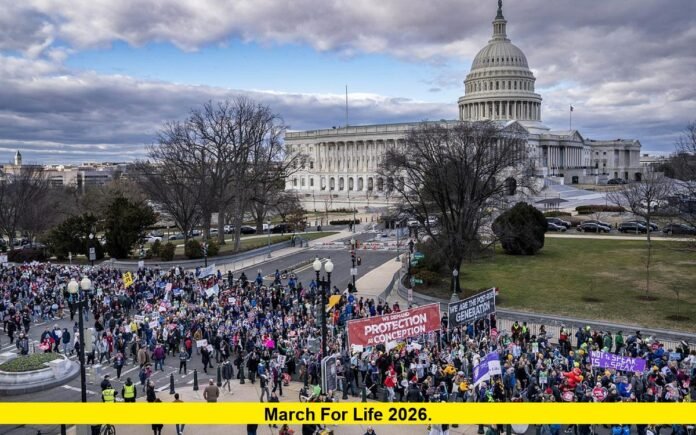

The march for life 2026 brought tens of thousands of pro-life advocates to Washington, D.C., on January 23, 2026, for the 53rd annual National March for Life. This year’s gathering built on decades of activism with a theme that resonated across faith, political, and cultural lines: “Life Is a Gift.” The event combined large-scale public participation, nationally recognized speakers, and renewed calls for policies and cultural efforts that affirm the dignity of every human life.
From early morning, streets near the National Mall and the U.S. Capitol filled with families, students, faith groups, and longtime activists. Many traveled from across the country, some by bus and others by air, to take part in one of the largest annual human-rights demonstrations in the United States. The atmosphere was energetic and peaceful, with participants carrying signs, banners, and symbols emphasizing hope, compassion, and support for mothers and children.
A Defining Annual Gathering
The March for Life has been held every year since 1974, making it one of the longest-running national demonstrations in American history. The 2026 event continued that legacy, marking more than five decades of public advocacy centered on the protection of unborn life and support for women facing unplanned pregnancies.
While attendance estimates vary, organizers and local officials described the 2026 crowd as one of the largest in recent years. Participants represented all age groups, from school-age children to senior citizens, highlighting the multi-generational nature of the movement. College and high-school groups were especially visible, reflecting sustained youth engagement and the role of student-led organizations in shaping the future of the cause.
“Life Is a Gift”: Meaning Behind the Theme
The official theme, “Life Is a Gift,” shaped the tone and message of the entire day. Rather than focusing only on political outcomes, the theme emphasized the intrinsic value of every human life and the responsibility of society to protect and support it.
Speakers and organizers stressed that the phrase was chosen to highlight gratitude, compassion, and responsibility. The message centered on caring for both mother and child, promoting resources for families, and fostering a culture that values life at every stage, from conception through natural death.
Throughout the rally, the theme appeared on stage backdrops, banners, and participant signs, reinforcing a positive and unifying message that resonated with a wide audience.
National Leadership and Public Voices
High-profile political and civic leaders took part in the rally program, signaling continued national attention to pro-life issues. The presence of senior government officials underscored the movement’s ongoing role in shaping public policy discussions at the federal and state levels.
In their remarks, speakers addressed current legal realities in the United States, where abortion policy is now primarily determined by state law. They spoke about the importance of continued civic engagement, peaceful advocacy, and support for legislation that protects unborn children while also expanding assistance for women, families, and those facing difficult pregnancies.
The program also featured testimony from women who shared personal stories about choosing life, adoption, and receiving support during challenging circumstances. These accounts added a human dimension to the policy discussions and highlighted the role of community-based organizations in providing practical help.
Spiritual and Cultural Dimensions
Faith communities played a central role in the 2026 march. Prayer services, vigils, and moments of reflection took place before and during the rally, creating a strong spiritual foundation for the day’s events.
Religious leaders from various Christian denominations, along with representatives of other faith traditions, offered prayers and messages centered on compassion, human dignity, and responsibility toward the vulnerable. Music and choral performances added to the sense of unity and solemn celebration, reinforcing the idea that the march is both a public demonstration and a moral witness.
Expanded Events Around the March
The march was part of a broader series of activities held throughout the week in Washington, D.C. Educational conferences, youth summits, concerts, and policy discussions provided opportunities for participants to learn, connect, and prepare for ongoing advocacy throughout the year.
These events addressed topics such as:
- Supporting pregnant women and new mothers through community programs
- Adoption awareness and foster care reform
- Medical ethics and advancements in prenatal care
- Legal developments affecting life issues at the state and federal levels
By combining education with public demonstration, the 2026 gathering aimed to equip supporters with both information and motivation to remain active beyond a single day.
Key Issues Highlighted in 2026
Several major issues shaped the conversation at this year’s march:
State-Level Legislation:
With abortion policy largely determined by individual states, speakers emphasized the importance of local advocacy, voter education, and engagement with state lawmakers.
Support for Women and Families:
Many messages focused on expanding access to prenatal care, housing assistance, childcare, and workplace protections for pregnant women and parents.
Medical and Ethical Developments:
Advances in ultrasound technology, neonatal care, and fetal surgery were cited as reminders of the growing scientific understanding of life before birth.
Cultural Outreach:
Participants were encouraged to engage respectfully in conversations, use social media responsibly, and promote a culture of life through service, education, and example.
Growing Network of State Marches
Alongside the national gathering, state-level March for Life events continued to grow in number and size. These regional marches, held throughout the year, allow communities to advocate directly within their own legislatures and local governments.
The expansion of these events reflects a more decentralized movement, with national leadership providing coordination while local groups drive grassroots action. This structure enables sustained momentum long after the Washington march concludes.
Looking Forward After march for life 2026
As participants departed the nation’s capital, the message of the day remained clear: the march is not an endpoint but a starting point for continued action. Organizers encouraged attendees to return to their communities ready to volunteer, educate, and advocate for policies and programs that support life and strengthen families.
The 2026 march reaffirmed the movement’s commitment to peaceful assembly, respectful dialogue, and long-term cultural change. With its emphasis on gratitude, dignity, and hope, the theme “Life Is a Gift” is expected to guide future efforts at both the national and local levels.
Join the discussion and share how this year’s march inspired you to stay engaged and informed.