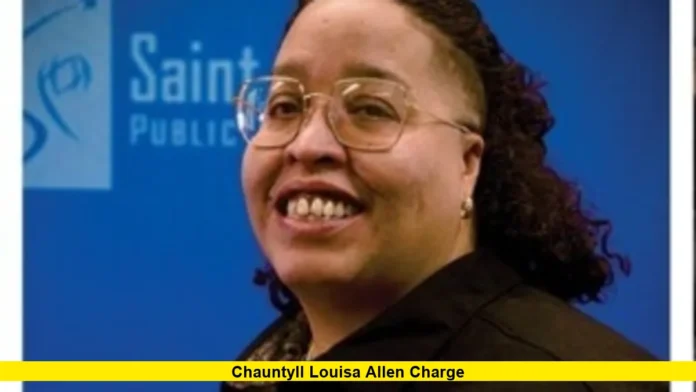

Federal authorities have announced that Chauntyll Louisa Allen charge proceedings are underway after she was arrested and charged with conspiracy to deprive rights for her alleged role in a protest that disrupted a Sunday worship service at Cities Church in St. Paul, Minnesota. The arrest comes as part of a broader federal enforcement action targeting protesters who entered the church to confront the pastor over his alleged role with federal immigration enforcement, drawing significant national attention.
Federal Agents Move Quickly After Disruptive Church Protest
On January 18, a group of demonstrators entered Cities Church during a scheduled service in St. Paul. The group, protesting federal immigration policies and the church pastor’s alleged ties to Immigration and Customs Enforcement (ICE), interrupted the worship service by marching down the aisle and chanting slogans aimed at federal immigration enforcement. Videos and eyewitness accounts show the protest occurring in the midst of worship, leading to immediate reactions from congregants and bystanders.
In the days that followed, federal authorities, including agents from the FBI and Homeland Security Investigations, conducted a coordinated response. On January 22, federal law enforcement officers arrested three individuals believed to have played key roles in organizing and participating in the protest. Among those taken into custody was Chauntyll Louisa Allen, a member of the St. Paul School Board and a known community activist, who now faces federal charges tied to the demonstration.
Understanding the Chauntyll Louisa Allen Charge
Allen was charged under a federal statute for conspiracy to deprive rights, a serious offense alleging that she and others acted together to interfere with the civil rights of churchgoers at the St. Paul congregation. Prosecutors allege the defendants conspired to prevent individuals from exercising their constitutional rights, including the right to worship without intimidation or interference.
The conspiracy charge signals the government’s position that the actions taken by Allen and her co-defendants went beyond lawful protest and crossed into conduct that impeded the protected rights of others. Federal law enforcement officials emphasized that religious services and houses of worship are protected spaces under federal law and that disruption of such services in a way that obstructs civil liberties can constitute a prosecutable offense.
Arrests Extend Beyond Allen
Chauntyll Louisa Allen was not the only individual arrested in connection with the protest at Cities Church. Federal agents also arrested Nekima Levy Armstrong, a civil rights attorney who is reported to have played a key leadership role in organizing the demonstration, and William Kelly, an activist involved in the protest. All three individuals face federal conspiracy charges alleging interference with constitutional rights.
Officials have described the operation as part of a larger effort to enforce protections for civil rights and to respond to what they characterize as unlawful interference with religious practice. Prosecutors allege that the coordinated activities of the protest group constituted actions that violated federal civil rights protections.
Court Proceedings and Immediate Legal Developments
Following their arrests, federal court proceedings began swiftly. Defendants made initial appearances in federal court, where charges were formally presented. Allen and her co-defendants now await further legal actions, which may include bail hearings, pre-trial detention decisions, and forthcoming motions as their defense teams prepare responses to the federal indictment.
In a related judicial development, a federal magistrate judge declined to authorize criminal charges against an independent journalist who livestreamed the protest from inside the church, ruling that the journalist’s presence and actions did not rise to the level of criminal conduct. That decision has highlighted the legal complexities surrounding press access and First Amendment protections in the context of protests and civil disobedience.
Government Rationale and Enforcement Stance
Federal officials, including leadership from the Justice Department and the Department of Homeland Security, emphasized the importance of protecting houses of worship from disruption. In public statements following the arrests, federal authorities underscored that interrupting religious services in a way that infringes on the ability of congregants to worship freely constitutes a serious federal concern.
Officials also noted that the protection of civil rights remains a key enforcement priority, particularly when actions are alleged to have prevented others from exercising fundamental constitutional freedoms. The conspiracy charges brought against Allen and her co-defendants reflect the government’s stance that coordinated protest activity can become criminal when it crosses certain legal boundaries.
Reactions From Officials and the Broader Public
The announcement of arrests in the St. Paul case drew reactions from political leaders and commentators across the country. Supporters of the federal enforcement action praised the arrests and reiterated the importance of safeguarding religious liberty and civil rights. They argued that places of worship must remain free from intimidation and unlawful interference.
Conversely, some civil liberties advocates and community leaders have expressed concern over the implications of the federal response. Critics caution that aggressive prosecution of protest activity could have a chilling effect on lawful dissent and raise questions about how far protest actions can go before crossing legal lines. The case has ignited debate about the balance between the right to protest and the protection of constitutional freedoms for others, particularly in sensitive settings like religious services.
What the Charges Mean for the Legal Process
The federal charges against Allen and her co-defendants mark the beginning of what promises to be a lengthy legal process. In the coming weeks, attorneys for the defendants are expected to file motions challenging aspects of the charges and seeking to shape the scope of evidence and legal arguments. The prosecution will present its case in federal court, where judges will oversee pre-trial proceedings and potentially set dates for trial.
Observers of the case note that the outcomes of these proceedings could have broader implications for how protest activity is prosecuted in similar contexts. The legal interpretations of conspiracy to deprive rights, particularly in relation to disruption of religious services and protest conduct, could set precedents for future enforcement actions.
Civil Rights, Protest, and Religious Freedom in the Spotlight
The Chauntyll Louisa Allen charge highlights the complex legal and societal issues that arise when protest activity intersects with questions of religious freedom and civil rights protections. While peaceful protest remains a deeply entrenched constitutional right, federal authorities are making clear that actions perceived as crossing the line into interference with the rights of others will be met with legal consequences.
The case in St. Paul has drawn national attention to how civil rights laws are applied in instances where activism and religious practice collide. As the legal process unfolds, courts will examine whether the conduct of Allen and her co-defendants meets the statutory requirements for conspiracy and whether their actions indeed deprived others of protected rights.
As this important legal case progresses, readers are encouraged to share their perspective and watch for further updates on this evolving story.