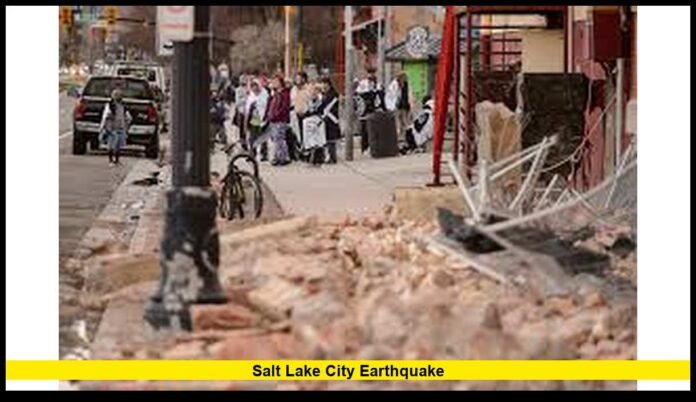

A salt lake city earthquake struck early Thursday morning, sending noticeable shaking through northern Utah and parts of southwestern Wyoming. The magnitude 4.7 quake occurred just before 8 a.m. local time, with its epicenter located near the Utah-Wyoming border, roughly 25 miles south of Evanston, Wyoming and approximately 54 miles east of Salt Lake City. The tremor was widely felt along the Wasatch Front, from Logan in the north to Provo in the south, before workdays and school routines had fully begun.
Residents in the Salt Lake Valley and surrounding communities reported a sudden jolt and several seconds of ground movement that caused household items to rattle, furniture to shake, and pets to react to the unexpected motion. Despite the relatively strong sensation of the shaking, there were no immediate reports of injuries or significant property damage from any of the affected areas.
Early Morning Shaking Across Utah and Wyoming
The quake registered a magnitude of 4.7 and occurred at a shallow depth, which helped make the shaking more noticeable at the surface. Thousands of residents in Utah and Wyoming felt the movement, with reports indicating that the tremor was felt as far north as Logan and as far south as Provo. People on social platforms shared their experiences, from being startled out of bed to feeling the office chairs vibrate during the morning commute.
This seismic event is one of the more prominent in the region in recent months. Earthquakes of this magnitude typically don’t cause major damage, but they serve as clear reminders of the seismic forces present beneath the Mountain West. Emergency response teams and local authorities confirmed that no serious injuries or structural collapses had been reported in the wake of the shaking.
Seismic Activity in the Intermountain West
The location of this salt lake city earthquake places it within the broader Intermountain Seismic Belt, a zone of frequent seismic activity that stretches from southern Idaho through Utah and into Colorado and New Mexico. This belt is known for producing numerous earthquakes each year, most of which are small and go unnoticed without instrumental detection.
Geologists and seismologists point out that the Wasatch Front region is one of the most seismically active parts of the interior United States. It lies near the Wasatch Fault zone, a major fault system responsible for some of Utah’s largest historical earthquakes. While the recent event did not originate directly on the main Wasatch Fault segment, it underscores the dynamic and complex nature of tectonic stresses in the area.
What Residents Felt and Reported
Many Utahns woke up to feel the tremor while still in bed, describing the sensation as a sudden shake followed by a brief period of swaying. Some reported objects vibrating on shelves, while others recounted how pets reacted with confusion and anxiety. Commuters heading out early noted that they felt their vehicles jolt as they drove.
Despite the sensory impact of the quake, local infrastructure such as bridges, highways, and public transit systems remained fully operational. School officials and business operators reported no disruptions caused by structural issues following the shaking, and essential services continued without interruption.
No Immediate Damage or Injuries
As of midday Thursday, officials confirmed that there were no casualties or reports of serious damage from the quake. Neighborhoods throughout the Salt Lake Valley reported normal activity resuming soon after the shaking subsided. Emergency management agencies, however, encouraged residents to remain conscious of their surroundings and report any unusual structural concerns in buildings or public spaces to authorities.
Earthquake reporting tools showed that more than 1,500 people submitted felt reports within the first 30 minutes after the event, giving scientists and emergency managers a broader picture of where the shaking was strongest. Public participation in such reporting helps create detailed shaking intensity maps, which are important for understanding earthquake impact patterns.
Historical Context of Earthquakes in the Region
While magnitude 4.7 is significant enough to be widely felt, the region has experienced stronger earthquakes in the past. The Salt Lake City area endured a magnitude 5.7 quake in March 2020 that caused moderate shaking and some damage across northern Utah. That 2020 event was the first major quake to affect the Salt Lake Valley in decades and served as a stark reminder of seismic risk in the area. Despite that larger event, Thursday’s tremor did not produce similar effects.
The Wasatch Front’s proximity to active fault systems means that even moderate quakes can be felt across a wide area. The larger historical pattern of earthquakes in the region shows that while destructive earthquakes are relatively rare, seismic activity of various magnitudes occurs frequently enough to keep scientists attentive.
Preparing for Future Seismic Events
Experts reiterate that residents should know basic earthquake safety protocols, such as “Drop, Cover, and Hold On” during shaking. Securing heavy furniture, reviewing family emergency plans, and assembling easily accessible emergency kits remain practical steps for preparedness. Although this event did not cause major damage, it highlights the value of being ready for stronger seismic events that could occur in the future.
Local governments and emergency management agencies also emphasize the importance of structural readiness. Buildings, bridges, and critical infrastructure benefit from seismic assessments and retrofits that can reduce the risk of damage when stronger earthquakes occur. Public education campaigns continue to reinforce the message that even regions not traditionally associated with frequent seismic disasters should maintain awareness and preparation strategies.
No Aftershocks of Similar Magnitude Reported Yet
In the hours following the initial shake, there were no reports of aftershocks approaching the magnitude of the main quake. Aftershocks are a normal part of the earthquake process and can continue for hours or days, depending on the nature of the fault rupture. Residents are encouraged to remain attentive to any additional shaking and report observations, which contribute to scientific understanding and community safety.
Because seismic events in the Wasatch Front area have sometimes come in sequences, scientists use data from each quake to refine models of seismic hazard and potential future activity. This ongoing research aims to help communities better understand their risk and how to reduce it.
Closing Thoughts
This salt lake city earthquake was a noticeable reminder of the seismic forces beneath the Mountain West. Felt widely across the Wasatch Front, the magnitude 4.7 tremor stirred early morning routines and drew renewed attention to earthquake preparedness. As Utahns go about their day, the region’s shared experience of feeling the earth move connects residents in a moment of natural phenomenon that is both local and geologically significant.
We’d love to hear how this morning’s shaking felt in your neighborhood — share your experience or check back for more updates.