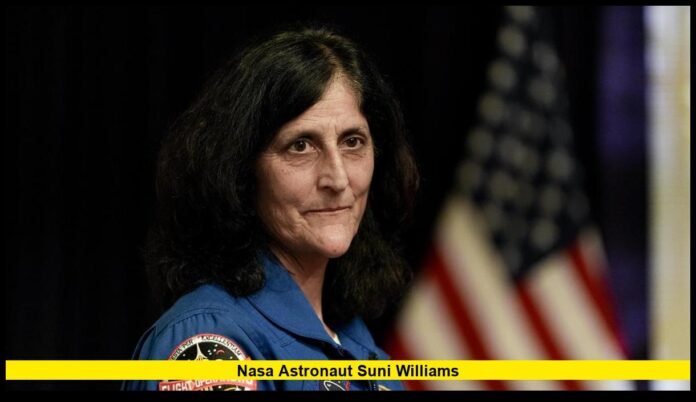

As of January 21, 2026, NASA astronaut Suni Williams stands as one of the most accomplished and respected figures in modern spaceflight. With over two decades of service, two long-duration missions aboard the International Space Station (ISS), and seven spacewalks to her name, Williams continues to play a leading role in NASA’s evolving human space exploration program. This year, she is preparing for one of her most anticipated missions yet — the Boeing Starliner-1 flight, the first operational crewed mission for Boeing’s spacecraft under NASA’s Commercial Crew Program.
Her participation in this milestone flight represents more than another achievement in a distinguished career. It symbolizes the future of American spaceflight — one driven by collaboration between NASA and private industry to ensure safe, reliable access to orbit from U.S. soil.
A Distinguished Career Built on Dedication and Discovery
Sunita Lyn “Suni” Williams was born on September 19, 1965, in Euclid, Ohio, and raised in Needham, Massachusetts. She is the youngest of three children born to Dr. Deepak Pandya, a neuroanatomist originally from Gujarat, India, and Bonnie Pandya, an American of Slovenian descent.
From an early age, Williams demonstrated a deep curiosity about science and a passion for adventure. After earning a Bachelor of Science in Physical Science from the U.S. Naval Academy in 1987, she was commissioned as an officer in the U.S. Navy. Her early career took her into aviation, where she trained as a helicopter pilot and later as a test pilot.
Williams went on to log more than 3,000 flight hours across 30 different aircraft types, including the CH-46 Sea Knight and UH-60 Black Hawk. Her naval service instilled in her a combination of discipline, courage, and precision — qualities that would later define her work as an astronaut.
In 1998, she was selected by NASA as part of Astronaut Group 17, joining an elite class of space explorers during a time of major transition for human spaceflight.
Two Historic Spaceflights That Defined Her NASA Legacy
Suni Williams’ NASA career includes two record-setting missions aboard the International Space Station. Her time in orbit totals 322 days, making her one of NASA’s most experienced astronauts and one of the few women to have commanded the ISS.
Expedition 14/15 (2006–2007)
Williams’ first space mission began on December 9, 2006, aboard the Space Shuttle Discovery (STS-116). She launched from Kennedy Space Center in Florida and joined the International Space Station crew as a flight engineer for Expeditions 14 and 15.
During her six-month stay, she:
- Conducted four spacewalks totaling nearly 30 hours of extravehicular activity (EVA).
- Helped assemble critical station modules and install solar arrays.
- Became the first person to run a marathon in space, completing the Boston Marathon on a treadmill aboard the ISS.
Her dedication and endurance captured the attention of the world. When she returned to Earth on June 22, 2007, aboard Atlantis (STS-117), she had set records for both female spaceflight duration and spacewalking time.
Expedition 32/33 (2012)
Williams returned to space in July 2012 aboard the Soyuz TMA-05M spacecraft, launching from the Baikonur Cosmodrome in Kazakhstan. This time, she served as Flight Engineer for Expedition 32 and later became Commander of Expedition 33, making her the second woman ever to command the ISS.
During this mission, she:
- Oversaw daily station operations and international research activities.
- Performed three additional spacewalks, increasing her total EVA time to over 50 hours.
- Guided the arrival of new cargo vehicles, including the SpaceX Dragon and Japanese HTV.
Williams returned to Earth in November 2012 after spending another 127 days in orbit. Her leadership aboard the ISS earned her global recognition as one of NASA’s most capable and respected astronauts.
The Path to the Boeing Starliner Mission
Today, Williams is preparing to fly aboard Boeing’s Starliner-1 mission, the first operational flight for the new spacecraft developed under NASA’s Commercial Crew Program. This mission follows years of collaboration between NASA and Boeing to develop a next-generation vehicle capable of transporting astronauts to and from the ISS.
Starliner represents a crucial step in the United States’ effort to restore independent access to space — an achievement last held by the Space Shuttle program before its retirement in 2011.
Williams joined the Boeing astronaut team in 2015 and played an integral role in testing the spacecraft’s design, safety systems, and onboard controls. Her experience flying on both the Space Shuttle and Russia’s Soyuz spacecraft has been invaluable in evaluating Starliner’s systems and ensuring its readiness for crewed operations.
Preparing for Starliner-1
The Starliner-1 mission is expected to launch in late 2026 from Cape Canaveral Space Force Station in Florida, atop a United Launch Alliance Atlas V rocket. The spacecraft will carry four astronauts to the ISS, including Suni Williams, who will serve as pilot for the mission.
In preparation, Williams and her crewmates have undergone months of intensive training at NASA’s Johnson Space Center and Boeing’s facilities. Their preparation includes:
- Practicing manual control operations for docking and undocking.
- Conducting abort and emergency simulations in both water and desert environments.
- Completing zero-gravity flight rehearsals to simulate in-orbit conditions.
The mission will last approximately six months, focusing on scientific experiments, ISS maintenance, and continued testing of Starliner’s long-duration capabilities.
This flight will mark Williams’ third journey into space and her first aboard a commercially operated spacecraft — a remarkable testament to her adaptability and long-standing contribution to NASA’s evolving mission.
The Commercial Crew Program: A New Era for NASA
The Commercial Crew Program, which began in 2010, is one of NASA’s most transformative initiatives. The program was designed to enable private companies to build and operate spacecraft capable of ferrying astronauts to the ISS, reducing dependence on foreign space agencies.
SpaceX’s Crew Dragon was the first to achieve this milestone in 2020. Boeing’s Starliner will soon join as the second American-built spacecraft capable of human spaceflight.
Williams’ participation in Starliner’s first operational mission carries immense symbolic weight. She will become one of the first astronauts to fly on three distinct spacecraft platforms — the Shuttle, Soyuz, and Starliner — highlighting her versatility and the evolution of space transportation across generations.
NASA Astronaut Suni Williams’ Role in the Future of Spaceflight
Beyond her upcoming mission, Williams continues to serve as a mentor and advisor for new astronaut recruits. She has contributed to the development of new training protocols for NASA’s Artemis program, which will send astronauts back to the Moon later this decade.
Her expertise in long-duration missions and human performance in space has also informed planning for future missions to Mars, where astronauts will need to sustain themselves on multi-year journeys.
Williams is deeply involved in testing NASA’s xEMU next-generation spacesuit and Habitat Demonstration Units, both critical components of upcoming lunar and Martian missions. Her role ensures that the next wave of explorers benefits from the lessons learned through her extensive experience in microgravity environments.
Recognitions and Achievements
Over her career, Suni Williams has received numerous honors for her service to NASA and the U.S. Navy. Her awards include:
- NASA Space Flight Medal (2007, 2012)
- NASA Distinguished Service Medal
- Defense Superior Service Medal
- Legion of Merit
- Navy Commendation Medal
- Harmon International Aviation Trophy
In addition to her professional accolades, Williams has earned widespread admiration for her humility, resilience, and advocacy for women in science, technology, engineering, and mathematics (STEM). She remains one of NASA’s most recognized ambassadors for STEM education and space outreach.
A Global Inspiration
Suni Williams’ multicultural background has made her a global symbol of perseverance and inclusivity. As an American of Indian and Slovenian heritage, she has inspired millions around the world, particularly young women and students in STEM fields.
Her achievements serve as a powerful reminder that space exploration transcends borders, reflecting the diversity and unity of humanity’s pursuit of discovery.
Williams frequently participates in educational initiatives, connecting with students through live video calls from NASA centers and international events. She emphasizes teamwork, curiosity, and the belief that “space belongs to everyone.”
Key Career Milestones
| Year | Event |
|---|---|
| 1987 | Graduated from the U.S. Naval Academy. |
| 1998 | Selected as NASA astronaut. |
| 2006 | Launched on Space Shuttle Discovery (STS-116). |
| 2012 | Commanded the ISS during Expedition 33. |
| 2015 | Joined Boeing’s Starliner team. |
| 2026 | Preparing for Starliner-1 operational mission. |
Each milestone highlights Williams’ lifelong dedication to exploration, her leadership in space operations, and her continued influence in shaping the future of NASA missions.
The Road Ahead
Looking beyond 2026, NASA’s goals are ambitious — and astronauts like Williams will be crucial in achieving them. The agency plans to extend the International Space Station’s operations through the early 2030s, develop commercial space stations, and advance preparations for lunar surface missions under Artemis.
As NASA deepens its partnerships with commercial and international organizations, the next decade will likely see an expansion of human activity in orbit and beyond. Williams’ extensive flight experience and technical expertise position her as both a bridge to NASA’s historic past and a mentor guiding the next generation of astronauts.
NASA astronaut Suni Williams continues to embody the spirit of exploration that defines human spaceflight. As she prepares for her upcoming Starliner mission, her legacy serves as an enduring reminder of what determination, teamwork, and vision can achieve — both on Earth and far beyond it.