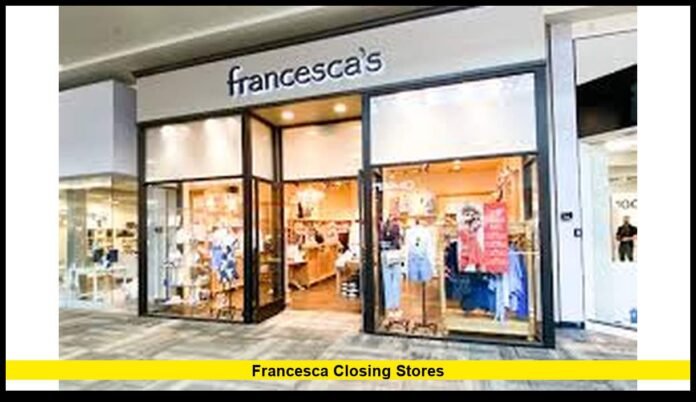

Francesca closing stores across the United States has become one of the most talked-about retail developments of the year, signaling the end of a boutique chain that spent more than two decades in malls and shopping centers from coast to coast. Known for its women’s apparel, accessories, jewelry, and gifts, the brand built a loyal following with its small-shop feel and constantly refreshed collections. Now, confirmed store shutdowns and liquidation activity are reshaping the future of the company and affecting employees, landlords, and millions of customers who grew up shopping its racks.
This article breaks down what is happening, how the process is unfolding, and what it means for the wider retail landscape in the United States, based only on verified developments as of today.
A Look Back at Francesca’s Rise
Francesca’s began in 1999 as a single boutique and expanded rapidly during the 2000s and 2010s. At its peak, the chain operated hundreds of locations nationwide, often positioned in lifestyle centers and regional malls. Its appeal came from a blend of trend-driven clothing, statement accessories, and seasonal décor that felt curated rather than mass-produced.
Unlike big-box apparel chains, Francesca’s built its brand around a boutique atmosphere. Stores were small, merchandise turned over quickly, and shoppers often discovered limited-quantity items that were not widely available elsewhere. This strategy helped the company grow quickly and become a familiar name in American shopping culture.
Financial Pressures That Led to Closure
Over the past several years, the retail environment in the U.S. has shifted dramatically. E-commerce competition intensified, mall traffic declined, and operating costs increased. Francesca’s, like many mid-sized specialty retailers, faced mounting pressure to balance rent, staffing, and inventory expenses against slowing in-store sales.
The company previously restructured through bankruptcy and continued operating with a reduced store footprint. While those measures provided temporary stability, they did not fully resolve the underlying challenges. Rising costs, changing consumer habits, and ongoing supply-chain pressures ultimately placed the brand in a position where continuing nationwide physical operations was no longer sustainable.
As a result, management initiated a full wind-down of brick-and-mortar locations, beginning the process of closing stores and liquidating remaining inventory.
What Is Happening in Stores Right Now
Across the country, Francesca’s locations have entered liquidation phases. Shoppers are seeing deep discounts on apparel, accessories, footwear, and gift items as stores work to clear shelves. Signage announcing store-closing or final-sale events has become common, and many locations are operating with reduced staff and limited hours.
Inventory is being sold on an as-is basis, and return policies are often suspended during liquidation. Gift cards and loyalty rewards may have restrictions, depending on how far along each location is in the closing process. Customers planning to shop should be aware that selections can change quickly as popular items sell out.
While exact closing dates differ by market, the direction is clear: physical stores are in their final stage of operation, and remaining stock is being sold until doors permanently close.
Impact on Employees
Store closures inevitably affect workers, and Francesca’s is no exception. Sales associates, store managers, and regional staff are facing job losses as locations shut down. For many, the boutique environment provided long-term employment and a close-knit team culture, making the transition especially difficult.
In retail shutdowns, employees often remain on the job through the final weeks to assist with liquidation and store wrap-up. Once locations close, positions are eliminated, adding to the broader wave of retail layoffs seen across the country in recent years.
Vendors and the Supply Chain
Beyond store staff, the closure has significant implications for the brand’s supplier network. Clothing manufacturers, jewelry makers, logistics partners, and other vendors that supported Francesca’s operations are directly affected when orders stop and accounts are settled through restructuring or liquidation processes.
These ripple effects highlight how the shutdown of a national retailer extends far beyond storefronts, touching factories, distribution centers, and transportation companies that depend on consistent retail demand.
What the Shutdown Means for Malls and Shopping Centers
Francesca’s stores were typically located in high-traffic corridors of malls and open-air centers. Their departure creates vacancies that landlords must now fill in an already competitive leasing environment.
For some properties, especially in smaller markets, replacing a well-known specialty retailer can be challenging. Empty storefronts can reduce foot traffic and affect neighboring tenants, creating a domino effect that shopping-center owners work hard to prevent.
At the same time, the retail landscape is evolving. Some spaces vacated by traditional apparel brands are being repurposed for restaurants, fitness studios, entertainment venues, and service-oriented businesses. The closure of Francesca’s locations may accelerate this shift, reshaping the tenant mix in many malls.
How Consumers Are Responding
Longtime shoppers have reacted with a mix of nostalgia and urgency. Many remember browsing Francesca’s for special-occasion dresses, statement necklaces, and seasonal gifts. Social media posts and in-store conversations reflect both sadness over the brand’s exit and excitement over last-chance deals.
For some, Francesca’s represented a bridge between fast fashion and high-end boutiques, offering trend-conscious pieces at accessible prices. Its disappearance leaves a gap in the market that other retailers may attempt to fill, but the brand’s distinctive atmosphere will be hard to replicate exactly.
The Broader Retail Context
The story of francesca closing stores fits into a larger pattern affecting U.S. retail. Over the past decade, numerous apparel chains have downsized, restructured, or exited entirely as shopping habits continue to shift online and toward value-focused or experience-driven concepts.
Physical stores remain important, but their role is changing. Shoppers increasingly expect seamless integration between digital and in-person experiences, fast fulfillment, and competitive pricing. Brands that cannot adapt quickly enough face difficult decisions about their store networks.
Francesca’s journey illustrates how even well-loved, once-fast-growing chains can struggle to maintain profitability in this evolving environment.
What Comes Next for the Brand Name
While physical boutiques are closing, the future of the Francesca’s name will depend on how remaining assets, trademarks, and digital channels are handled through the wind-down process. Some retail brands continue online only, others are acquired and relaunched, and some disappear entirely.
As of now, the confirmed development is the nationwide shutdown of stores and the liquidation of remaining inventory. Any further transformation would follow formal restructuring or sale proceedings.
Key Takeaways for Shoppers
- Stores are in the process of closing, with liquidation sales underway.
- Discounts are significant, but all sales are typically final.
- Inventory is limited and varies by location.
- Employees and mall operators are being directly affected by the shutdown.
- The closures reflect broader changes in how and where Americans shop.
Francesca’s leaves behind a 25-year legacy in U.S. fashion retail, remembered for its boutique charm, rotating collections, and role in shaping mall culture during a pivotal era.
Have you shopped at Francesca’s over the years? Share your memories or thoughts and stay tuned as this major retail transition continues to unfold.