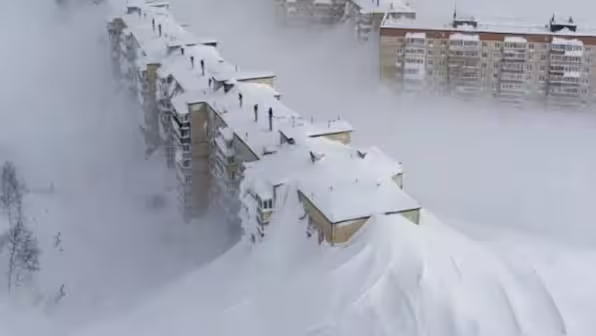

The russia snow storm 2026 has unleashed one of the most severe and disruptive winter events seen in decades, burying entire cities in deep snow, breaking long-standing records, and forcing authorities to declare emergency conditions across parts of the Russian Far East.
Massive snowfall has engulfed the Kamchatka Peninsula since late December and intensified through January 2026. Snow depths in some areas have surpassed two meters, overwhelming infrastructure, halting transportation, and isolating thousands of residents. Streets have vanished beneath towering drifts, buildings are weighed down by heavy accumulation, and daily life has been reduced to survival and recovery efforts.
Historic Snowfall Levels Across Kamchatka
Meteorological data confirms that snowfall totals during this winter period rank among the highest recorded in the region in more than half a century. Repeated storm systems, driven by persistent Arctic air and powerful low-pressure systems, have produced near-continuous snow for weeks.
In the regional capital of Petropavlovsk-Kamchatsky, snowbanks now rise above cars, first-floor windows, and street signs. Residential neighborhoods resemble frozen corridors carved through walls of snow. In some districts, the snowpack has become so dense that heavy machinery is required simply to reopen narrow paths for pedestrians.
This level of accumulation has not only exceeded seasonal averages but has also placed unprecedented stress on urban services and emergency response teams.
State of Emergency and Government Response
Local authorities declared a state of emergency as conditions worsened. The decision allowed for the mobilization of additional resources, including military engineering units, heavy snow-clearing equipment, and specialized rescue vehicles capable of operating in extreme terrain.
Public transportation was severely disrupted. Bus routes were suspended or reduced, and in many areas, only tracked vehicles and snowplows could move. Airports faced delays and cancellations due to runway conditions and limited visibility, while regional roads were intermittently closed as crews worked to prevent vehicles from becoming stranded.
Schools and government offices were temporarily shut down, and residents were urged to remain indoors unless travel was absolutely necessary.
Neighborhoods Buried and Homes Trapped
Entire residential blocks have been surrounded by compacted snow walls. In some communities, residents were forced to dig tunnels from their front doors to reach the street. Cars disappeared under several feet of snow, and parked vehicles remained immobilized for days.
The weight of accumulated snow on rooftops became a major concern. Crews were dispatched to remove snow from public buildings, apartment complexes, and critical facilities such as hospitals and power stations. Authorities warned that falling snow and ice posed a serious danger to pedestrians and urged people to avoid walking close to building edges.
Confirmed Casualties and Safety Risks
Tragically, officials confirmed fatalities caused by falling snow and ice from rooftops. These incidents highlighted the deadly risks associated with prolonged heavy accumulation and reinforced the urgency of large-scale roof clearing operations.
In addition to collapse hazards, emergency services also responded to cases of hypothermia, blocked access to medical care, and residents trapped in snowbound homes. Firefighters and rescue teams worked around the clock, often using shovels and small loaders where larger machines could not reach.
Impact on Infrastructure and Utilities
The storm placed enormous strain on essential services. Power lines were damaged by ice and snow buildup, causing localized outages. Some areas experienced temporary disruptions to heating systems, a critical concern in a region where winter temperatures remain well below freezing.
Water and food supply deliveries slowed due to impassable roads. Authorities prioritized clearing routes to hospitals, emergency shelters, and fuel depots to ensure continuity of essential services. In remote settlements, supplies were delivered using specialized all-terrain vehicles.
Transportation and Economic Disruption
Road networks across the peninsula were partially paralyzed. Freight movement slowed, affecting the delivery of fuel, construction materials, and consumer goods. Ports and fishing operations also faced operational delays due to hazardous conditions and restricted access.
Air travel remained inconsistent, with snow removal teams working continuously to keep runways functional. Weather-related delays rippled through regional logistics, impacting business operations and seasonal industries that depend on reliable transport links.
Meteorological Factors Behind the Extreme Event
Weather specialists attributed the intensity of the storm to a combination of a weakened polar vortex and sustained atmospheric circulation patterns that funneled cold, moisture-laden air into the Russian Far East. This setup allowed multiple snow systems to pass over the same region in rapid succession, preventing melting and compaction between storms.
The result was a continuous buildup of snow, creating extraordinary depth and density rarely observed in modern records for the area.
Community Resilience Amid Harsh Conditions
Despite the hardships, residents demonstrated remarkable adaptability. Volunteers assisted elderly neighbors with snow removal, local businesses provided warm shelters and hot meals, and community groups coordinated support for those unable to leave their homes.
Children and families, when conditions allowed, briefly turned the towering drifts into makeshift sledding hills, offering moments of relief amid an otherwise challenging environment. Still, the primary focus remained safety, access, and recovery.
Ongoing Recovery and Clearing Operations
As of now, large-scale snow removal continues. Authorities are widening cleared corridors, reinforcing vulnerable structures, and inspecting roofs and public facilities for structural integrity. Emergency teams remain on standby in case of further snowfall or sudden temperature changes that could trigger ice formation and roof collapses.
Officials have emphasized that full recovery will take time. The sheer volume of snow means that some secondary roads and residential zones may remain partially blocked for weeks, even with continuous clearing efforts.
Broader Implications for Extreme Winter Preparedness
The russia snow storm 2026 has become a defining example of how extreme winter weather can overwhelm even regions accustomed to harsh climates. The event has prompted renewed discussions about urban planning, snow-load standards for buildings, and the capacity of emergency systems to respond to prolonged, high-impact winter events.
Authorities are already reviewing response strategies, equipment readiness, and communication systems to strengthen preparedness for future extreme snowfall scenarios.
What Comes Next
Meteorological forecasts indicate that winter conditions will persist, though snowfall intensity is expected to fluctuate. Continuous monitoring of snow loads, temperatures, and infrastructure stability remains critical as the region works toward normalization.
For residents of Kamchatka and surrounding areas, the focus remains on safety, community support, and the slow but steady restoration of daily life.
The russia snow storm 2026 is a powerful reminder of nature’s force and the resilience of communities facing extraordinary conditions, and the story is still unfolding with every cleared road and reopened neighborhood. Join the conversation and stay connected for the latest developments.