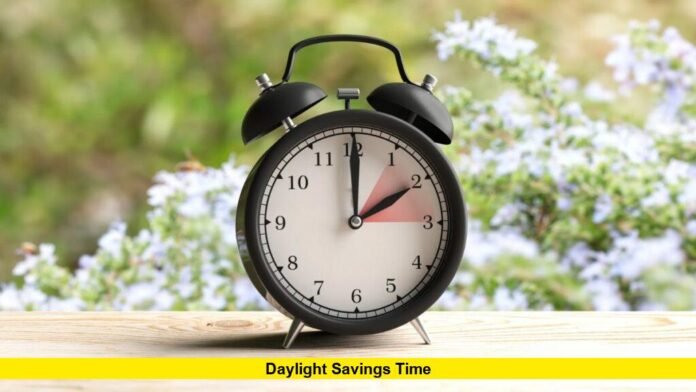

As the United States prepares for daylight savings time in 2026, the familiar ritual of adjusting clocks once again returns to the national conversation. Millions of Americans will “spring forward” in March and “fall back” in November, following the federal schedule that has governed seasonal time changes for years. At the same time, renewed legislative efforts to make daylight savings time permanent have pushed the topic back into headlines, raising questions about whether the clock-changing tradition could soon come to an end.
Here is everything confirmed as of today, presented clearly and accurately for readers who want to understand what will happen in 2026 and why it matters.
What Is Daylight Savings Time and Why It Exists
Daylight savings time is the system of moving clocks one hour ahead during part of the year to extend evening daylight and reduce early-morning darkness. The practice affects most of the United States and is regulated by federal law, which sets uniform start and end dates for participating states.
The main goal has historically been to better align human activity with natural daylight, particularly during the longer days of spring and summer. Supporters point to brighter evenings that benefit recreation, retail activity, and outdoor work. Critics argue that the clock change disrupts sleep cycles, affects health, and creates confusion for travel and business scheduling.
Despite decades of debate, the current system remains in place nationwide, with only a few states and U.S. territories choosing not to observe the seasonal change.
Confirmed 2026 Daylight Savings Time Dates
For 2026, the official schedule is set and will follow the established national pattern:
- Daylight savings time will begin at 2:00 a.m. on Sunday, March 8, 2026. At that moment, clocks will move forward one hour.
- Daylight savings time will end at 2:00 a.m. on Sunday, November 1, 2026. Clocks will move back one hour, returning to standard time.
These dates apply to all states that observe daylight savings time and are fixed under current federal law. There is no approved change to this schedule for 2026.
Which States Observe the Time Change
Most U.S. states participate in daylight savings time, but there are notable exceptions.
Hawaii does not observe the time change and remains on standard time year-round. Most of Arizona also stays on standard time, although the Navajo Nation within Arizona does follow daylight savings time. In addition, U.S. territories such as Puerto Rico, Guam, American Samoa, the Northern Mariana Islands, and the U.S. Virgin Islands do not adjust their clocks.
All other states observe the March and November clock changes unless federal law is amended.
Why the Push for Permanent Daylight Savings Time Has Returned
In 2026, lawmakers have once again introduced legislation aimed at ending the twice-yearly clock change and making daylight savings time permanent across the country. The proposal, commonly referred to as the Sunshine Protection Act, would establish a single, year-round time system that keeps evening daylight longer throughout the winter months.
Supporters of permanent daylight savings time argue that:
- Eliminating clock changes would reduce sleep disruption and related health effects.
- Longer evening daylight could improve road safety by reducing darkness during peak travel hours.
- Retail, tourism, and outdoor industries could benefit from extended daylight later in the day.
- The change would simplify schedules for schools, airlines, financial markets, and digital systems.
Opponents raise different concerns, including:
- Darker winter mornings could pose challenges for children commuting to school.
- Morning commuters in northern states would face prolonged darkness for part of the year.
- Some sleep specialists argue that permanent standard time aligns better with natural circadian rhythms.
As of now, the legislation has been introduced but has not become law. No federal measure has passed that would отмен the clock change before the 2026 transition dates. Therefore, the current system remains in effect.
What Will Happen in March 2026
When clocks move forward in March, most Americans will lose one hour of sleep on the night of the change. Sunrise and sunset will both occur one hour later by the clock, resulting in darker mornings but brighter evenings.
For many people, the adjustment period lasts several days. Common experiences include:
- Temporary fatigue or difficulty falling asleep
- Reduced concentration
- Changes in appetite or mood
- Disruption to early-morning routines
Despite these short-term effects, daily schedules, school hours, work shifts, and transportation timetables will all continue to operate based on the new clock time.
What Will Happen in November 2026
When daylight savings time ends in November, clocks will move back one hour. Most people gain an extra hour of sleep that night, and mornings become brighter while evenings grow darker earlier.
This transition is generally easier for the body than the spring change, but it still affects:
- Evening visibility
- After-work activities
- Outdoor events
- Energy use patterns
Retailers, transportation systems, broadcasters, and digital platforms all prepare months in advance to ensure smooth coordination during the shift.
Technology and Automatic Time Updates
Most modern devices automatically adjust for daylight savings time, including:
- Smartphones
- Computers and laptops
- Tablets
- Smartwatches
- Smart home systems
- Internet-connected appliances
However, some clocks still require manual adjustment, such as:
- Older vehicles
- Wall clocks
- Microwave and oven displays
- Analog wristwatches
Checking these devices on the morning of the time change helps avoid missed appointments and scheduling confusion.
How Businesses and Schools Prepare
Large organizations begin planning for daylight savings time weeks in advance. Airlines update flight schedules, hospitals adjust staffing, financial markets synchronize trading systems, and schools communicate schedule reminders to families.
Because the United States remains divided on whether to keep or abolish the time change, most institutions also monitor federal legislation in case permanent daylight savings time is ever approved. Until then, they continue to operate under the established seasonal schedule.
Could the System Change in the Future?
The idea of ending clock changes has gained bipartisan attention in recent years, and public opinion polls often show strong support for a permanent time system. However, federal approval is required before any nationwide change can occur.
Until a law is passed and signed, the legal framework remains unchanged. For 2026, this means Americans should fully expect to observe both the March and November time transitions.
What Americans Should Remember
- Daylight savings time in 2026 will begin on March 8 and end on November 1.
- Most states will observe the change.
- A few states and territories will not adjust their clocks.
- Legislation to make daylight savings time permanent is under discussion but not yet law.
- The current clock-change system is still in force nationwide.
Are you ready for the clock change, or do you hope this is the last year we ever have to adjust our time? Share your thoughts and stay updated as the national conversation continues.