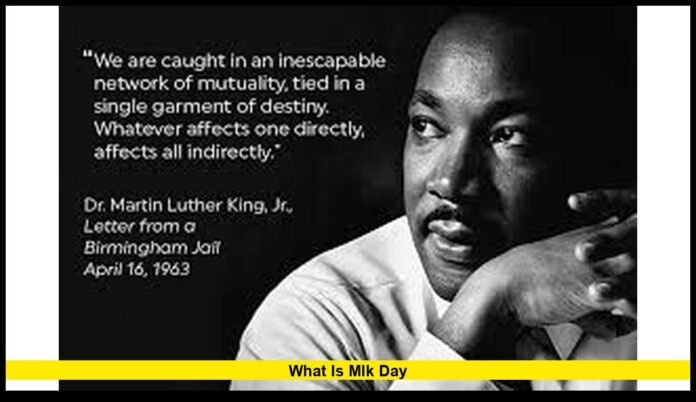

What is MLK Day and why does it hold such a powerful place in the American calendar? Each January, the United States pauses to honor the life, leadership, and enduring influence of Dr. Martin Luther King Jr., one of the most important figures in the nation’s history. The holiday is officially known as Martin Luther King Jr. Day and is observed on the third Monday of January every year. In 2026, it falls on January 19 and is recognized as a federal holiday across all 50 states.
This day is not only about remembering a historic leader. It is also about reflecting on the values of equality, justice, and peaceful change that continue to shape American society. From government closures to nationwide service projects, MLK Day stands apart as both a moment of remembrance and a call to action.
Understanding What Is MLK Day
Martin Luther King Jr. Day is a national holiday established to honor the legacy of Dr. King, a Baptist minister and civil rights leader who led the fight against racial segregation and discrimination through nonviolent resistance.
The holiday recognizes his role in:
- Advancing civil rights through peaceful protest
- Challenging unjust laws and systems
- Inspiring national unity across racial and social lines
- Promoting dignity and equal opportunity for all Americans
The third Monday in January was chosen so the holiday would always fall near his birthday on January 15. This timing allows schools, workplaces, and communities to consistently set aside a day for learning, service, and reflection.
How MLK Day Became a Federal Holiday
The push to establish a national holiday began soon after Dr. King’s assassination in 1968. Support grew through public campaigns, petitions, and legislative efforts that highlighted his historic role in transforming the nation.
After years of debate and advocacy, the federal government officially created the holiday in the 1980s. The first nationwide observance followed a few years later, and by the end of the century, every state formally recognized it.
MLK Day became one of the few U.S. federal holidays dedicated to honoring a private citizen rather than a president or military event. This distinction reflects the scale of Dr. King’s impact on American democracy and civil rights.
Why What Is MLK Day Still Matters Today
The holiday remains deeply relevant because the principles Dr. King stood for continue to guide national conversations about:
- Equal justice under the law
- Voting rights and civic participation
- Economic opportunity
- Racial fairness
- Nonviolent social change
MLK Day encourages Americans to look honestly at the nation’s past, acknowledge progress, and recognize the work that still lies ahead. It serves as a reminder that civil rights were achieved through courage, unity, and persistent effort.
MLK Day as a National Day of Service
One of the most distinctive features of the holiday is its focus on community service. Rather than being seen only as a day off, MLK Day is widely promoted as a day on.
Across the country, people take part in:
- Food and clothing drives
- Neighborhood cleanups
- Blood donation campaigns
- School supply collections
- Mentoring and tutoring programs
- Housing and community repair projects
This tradition reflects Dr. King’s belief that individual action and collective responsibility can create meaningful change. The goal is to turn reflection into positive impact.
How the United States Observes MLK Day
Federal and State Operations
As a federal holiday, MLK Day brings widespread closures and schedule changes:
- Federal offices do not operate
- Courts are closed
- The U.S. Postal Service suspends regular mail delivery
- Many state and local government offices close
These closures allow public employees and institutions to participate in commemorative events and community programs.
Financial Institutions and Markets
Most banks and credit unions close their physical branches on MLK Day, although online and mobile banking services remain available. Major stock exchanges, including the New York Stock Exchange and Nasdaq, also suspend trading for the day.
Schools and Universities
Public schools and many colleges close or operate on modified schedules. Educational institutions often use the day to host:
- Civil rights lectures
- Student discussions and assemblies
- History exhibits
- Guest speaker programs
- Service-learning activities
These programs help younger generations understand the importance of Dr. King’s work and the broader Civil Rights Movement.
Public Events and Commemorations
Cities and towns across the United States mark the day with a wide range of activities, including:
- Memorial services
- Unity marches
- Cultural performances
- Museum exhibitions
- Panel discussions on social justice
- Youth leadership forums
Major urban centers, particularly those closely connected to Dr. King’s life and work, often host large-scale events that draw national attention. These gatherings emphasize his message of peaceful change and collective responsibility.
The Civil Rights Legacy Behind MLK Day
To fully understand what is MLK Day, it is essential to recognize Dr. King’s role in reshaping American law and society. His leadership contributed to major milestones, including:
- The end of legally enforced segregation
- The protection of voting rights
- Greater access to public accommodations
- Increased awareness of economic inequality
Through marches, speeches, and grassroots organizing, Dr. King helped bring civil rights issues to the forefront of national policy. His commitment to nonviolence set a moral standard that influenced movements around the world.
Why Nonviolence Is Central to MLK Day
Dr. King’s philosophy of nonviolent resistance remains one of his most enduring contributions. He believed that lasting change must be achieved without hatred or revenge, and that moral courage could transform unjust systems.
MLK Day highlights this philosophy by encouraging:
- Peaceful dialogue
- Mutual respect
- Community cooperation
- Constructive civic engagement
These values continue to guide organizations, educators, and activists who work toward social progress today.
Economic and Social Reflection on MLK Day
The holiday also invites Americans to consider broader issues of opportunity and fairness. Dr. King spoke often about the connection between civil rights and economic justice, emphasizing the need for:
- Fair employment
- Access to quality education
- Adequate housing
- Equal treatment in the workplace
MLK Day events frequently address these themes through workshops, policy discussions, and community outreach programs.
What Is MLK Day’s Impact on National Identity
Over time, the holiday has become part of the nation’s cultural and civic identity. It stands as a symbol of:
- The power of peaceful reform
- The importance of moral leadership
- The responsibility of citizens to protect democratic values
By honoring Dr. King, the country acknowledges both its struggles and its capacity for progress.
How Families and Individuals Observe MLK Day
Many Americans observe the day in personal ways, such as:
- Reading and discussing Dr. King’s speeches
- Watching historical documentaries
- Volunteering together as families
- Attending local remembrance ceremonies
- Teaching children about equality and respect
These traditions help pass the meaning of the holiday from one generation to the next.
What Is MLK Day in the Modern Workplace
Some private employers close in recognition of the holiday, while others remain open but encourage staff participation in service activities. Many companies organize:
- Employee volunteer programs
- Diversity and inclusion workshops
- Community outreach initiatives
These efforts align workplace culture with the values of fairness and social responsibility that Dr. King championed.
The Continuing Relevance of MLK Day
Understanding what is MLK Day also means recognizing that its message is not limited to history books. The themes of equality, justice, and nonviolence remain central to ongoing discussions about civil rights, opportunity, and unity in the United States.
The holiday provides a national moment to:
- Reflect on progress made
- Acknowledge challenges that remain
- Commit to positive action in everyday life
It reminds Americans that democracy grows stronger when citizens are informed, engaged, and guided by principles of fairness.
Looking Ahead: The Future Meaning of MLK Day
As new generations learn about Dr. King’s life and work, MLK Day continues to evolve as both a memorial and a movement. Educational programs, community service, and public dialogue ensure that the holiday remains active and meaningful rather than symbolic alone.
The values it represents, dignity, equality, and peaceful change, continue to shape how the nation understands justice and citizenship.
MLK Day stands as a powerful reminder that progress is built through courage, compassion, and collective effort, and that every generation has a role in carrying forward the vision of a more just and united America.