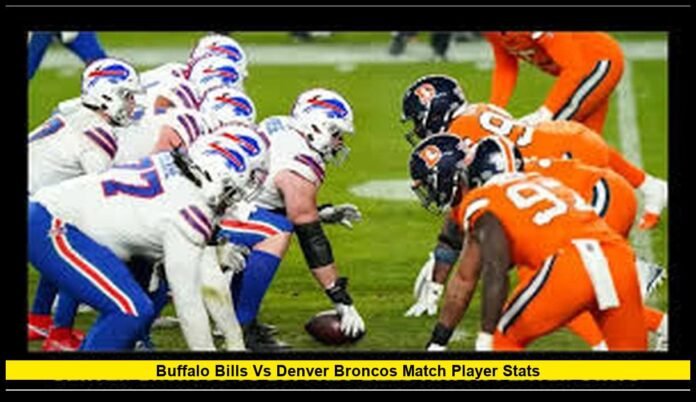

The Buffalo Bills vs Denver Broncos match player stats from the AFC Divisional Round delivered one of the most dramatic playoff games of the 2025–26 NFL season. Played at Empower Field at Mile High, the contest ended with Denver securing a 33–30 overtime victory after a four-quarter battle filled with explosive offense, late momentum swings, and decisive individual performances. Every phase of the game, from quarterback play to special teams execution, produced numbers that told the story of a postseason classic.
Game Overview
From the opening kickoff, both teams showed aggressive intent. Buffalo leaned on tempo and quarterback mobility, while Denver attacked with a balanced passing and rushing approach. The score stayed tight throughout, with neither side leading by more than one possession at any point in regulation.
By the end of the fourth quarter, clutch plays from both offenses forced overtime. Denver capitalized on a late takeaway and converted the opportunity into the game-winning field goal, closing out a 33–30 result that advanced the Broncos to the AFC Championship.
Quarterback Comparison
Josh Allen – Buffalo Bills
Allen once again served as the engine of the Buffalo offense. His stat line reflected both his productivity and the high-risk style that defined the game.
- Passing: 283 yards, 3 touchdowns
- Rushing: 66 yards on designed runs and scrambles
- Turnovers: 2 interceptions, 2 fumbles
Allen consistently attacked downfield, using quick reads and off-schedule throws to keep the Bills moving. His touchdown passes came on a mix of red-zone strikes and intermediate routes that split Denver’s coverage. On the ground, he extended drives with third-down runs and pressured the Broncos’ edge defenders.
However, the turnovers became a critical part of the statistical story. Two interceptions halted promising drives, and a lost fumble in the second half shifted field position during a crucial stretch. Even with those mistakes, Allen’s total yardage and scoring output kept Buffalo in position to force overtime.
Bo Nix – Denver Broncos
Nix delivered one of his most composed performances under playoff pressure.
- Passing: 279 yards, 3 touchdowns
- Completion efficiency: High success rate on third down
- Game management: Led the decisive overtime possession
Nix spread the ball across the field, using quick releases against blitz pressure and exploiting mismatches in the slot. His three touchdown passes showcased timing, touch, and confidence in tight windows. He also used mobility to escape pressure and reset plays, particularly in the fourth quarter when Denver needed sustained drives.
In overtime, Nix guided the offense into scoring range after a defensive takeaway, setting up the short field goal that ended the game.
Receiving Production
Buffalo Bills Pass Catchers
Buffalo’s passing game featured multiple contributors rather than a single dominant target.
- Dalton Kincaid: Key red-zone touchdown, consistent chain-mover on intermediate routes
- Keon Coleman: Touchdown reception on a boundary throw, several contested catches
- Supporting receivers: Provided spacing and yards after the catch on crossing patterns
Kincaid’s ability to find soft spots in zone coverage helped Buffalo convert in the red zone. Coleman’s size advantage was used on third downs and in the end zone, where his body control created separation on scoring plays.
Denver Broncos Pass Catchers
Denver’s receivers produced timely big plays that shifted momentum.
- Marvin Mims Jr.: 26-yard touchdown late in the fourth quarter
- Lil’Jordan Humphrey: Red-zone touchdown on a physical catch in traffic
- Tight ends and slot options: Consistent short-yardage production
Mims’ late touchdown was one of the pivotal statistical moments of the game. The play cut into Buffalo’s lead and set the stage for the final push that sent the game into overtime. Humphrey’s strength at the catch point gave Denver an advantage near the goal line.
Rushing Contributions
Buffalo Ground Game
- James Cook: Led the team in rushing attempts and yards
- Quarterback runs: Allen added significant yardage on keepers and scrambles
Cook’s vision and acceleration helped Buffalo maintain balance, particularly in the first half. His runs off the edge forced Denver’s linebackers to widen, opening throwing lanes over the middle. One fumble, however, proved costly, giving Denver a short field during a key stretch.
Denver Ground Game
Denver used the run primarily to control tempo rather than pile up massive yardage totals.
- Consistent gains on early downs
- Effective play-action setup for Nix’s touchdown passes
- Short-yardage success that sustained late drives
The Broncos’ rushing attack kept Buffalo’s pass rush honest and allowed the offense to stay ahead of the chains.
Defensive Impact
Buffalo Defense
Buffalo’s defensive unit produced pressure and disruption but struggled with consistency.
- Multiple quarterback hits and hurried throws
- Early third-down stops that created scoring chances
- Difficulty containing Denver’s receivers on crossing routes late
The Bills generated sacks and pressures that affected Nix’s timing in the first half. In the second half and overtime, however, Denver adjusted with quicker throws and misdirection, reducing the impact of the rush.
Denver Defense
Denver’s defense played a decisive statistical role, especially in turnover creation.
- Forced multiple turnovers
- Tight red-zone coverage in the second half
- Overtime interception that set up the winning drive
The interception in overtime was the single most influential defensive play of the game. It flipped possession and placed Denver within striking distance, turning a balanced contest into a walk-off victory.
Special Teams Performance
Special teams numbers proved just as important as offensive production.
- Buffalo: A 50-yard field goal at the end of regulation forced overtime
- Denver: A 23-yard field goal in overtime secured the win
The long kick in the final seconds of the fourth quarter demonstrated range and composure under pressure, while the short overtime kick required precision after a sudden-change situation.
Statistical Leaders Table
| Category | Player | Team | Result |
|---|---|---|---|
| Passing Yards | Josh Allen | Bills | 283 |
| Passing TDs | Josh Allen | Bills | 3 |
| Passing Yards | Bo Nix | Broncos | 279 |
| Passing TDs | Bo Nix | Broncos | 3 |
| Rushing Yards (QB) | Josh Allen | Bills | 66 |
| Key Receiving TD | Dalton Kincaid | Bills | 1 |
| Key Receiving TD | Marvin Mims Jr. | Broncos | 1 |
| Overtime Takeaway | Defensive Unit | Broncos | 1 interception |
| Game-Tying FG | Kicker | Bills | 50 yards |
| Game-Winning FG | Kicker | Broncos | 23 yards |
Momentum Timeline
First Half
- Both teams traded touchdowns.
- Allen and Nix each threw early scoring passes.
- Defenses tightened in the red zone, keeping the score within one possession.
Third Quarter
- Buffalo leaned on Allen’s mobility to sustain long drives.
- Denver countered with play-action and deep shots off misdirection.
Fourth Quarter
- Mims’ touchdown brought Denver back within reach.
- Buffalo answered with another scoring drive.
- A long field goal at the end of regulation sent the game to overtime.
Overtime
- Denver’s defense produced a turnover.
- Nix guided the offense into range.
- The winning field goal ended the contest.
Individual Performance Evaluation
Josh Allen
- Elite total yardage and scoring.
- Dual-threat impact stressed the defense.
- Turnovers lowered overall efficiency despite strong numbers.
Bo Nix
- Efficient distribution of the football.
- Three touchdowns without forcing risky throws.
- Calm execution in overtime.
Skill Position Players
- Buffalo’s tight ends and young receivers showed reliability in high-pressure situations.
- Denver’s wideouts delivered explosive plays at critical moments.
Defensive Units
- Buffalo generated pressure but lacked a late stop.
- Denver created the decisive turnover and controlled the final sequence.
What the Numbers Reveal
The Buffalo Bills vs Denver Broncos match player stats reflect a game defined by balance. Both quarterbacks surpassed 275 passing yards and accounted for three touchdowns. Both teams converted in the red zone and produced explosive plays. The difference came in turnover margin and situational execution.
Denver’s ability to capitalize on mistakes, combined with efficient quarterback play and timely special teams performance, tipped the statistical scales. Buffalo matched the Broncos in yardage and scoring drives but could not overcome the impact of lost possessions.
Closing
The Buffalo Bills vs Denver Broncos match player stats capture a playoff contest that will be remembered for its offensive firepower, quarterback duels, and overtime drama. Every major contributor left a statistical imprint on the game, and the numbers tell the story of a season-defining moment for both franchises.
Which performance stood out to you the most in this overtime thriller? Share your thoughts and stay connected for more in-depth NFL stat breakdowns.