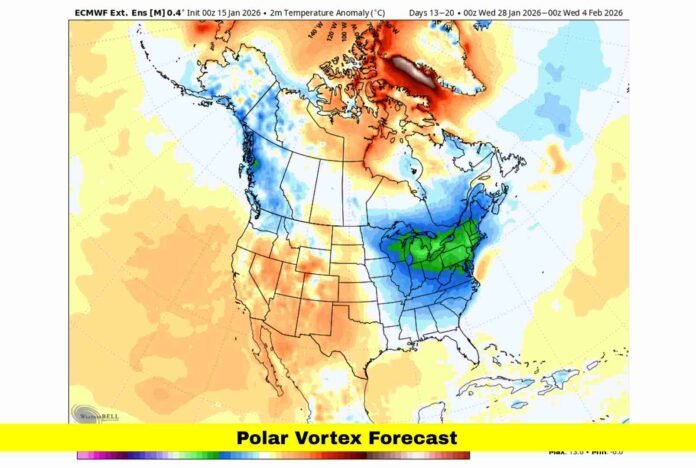

Polar vortex forecast models show that the United States will experience fluctuating winter weather patterns in late January and early February 2026 as Arctic air masses shift southward. The sudden disruptions in the polar vortex are expected to bring periods of intense cold, below‑average temperatures, and new snow threats to large sections of the country already dealing with winter’s grip.
Winter weather this year continues to evolve across North America. Forecasters are watching shifts in the jet stream and upper‑air pressure systems that could send Arctic blasts deep into the central and eastern United States. Residents, travelers, and businesses nationwide will feel the impact of these changes in weather patterns, so understanding what lies ahead is critical for preparation and safety.
Understanding the Polar Vortex and Why It Matters
The polar vortex is a vast band of frigid air that normally remains confined near the Arctic Circle. This zone of low pressure spins around the North Pole, guided by strong westerly winds. When the vortex is stable, it keeps the coldest air bottled up over the polar regions.
However, when the vortex weakens or shifts, significant amounts of Arctic air can move southward over the United States and southern Canada. This disruption of the polar vortex often results from changes in upper‑atmospheric conditions such as stratospheric warming, which can weaken the jet stream that normally shapes winter weather.
Recent atmospheric observations show evidence of changes in the polar vortex structure that have allowed Arctic air to spill deeper into North American mid‑latitudes. These movements can trigger waves of winter weather, leading to colder than average temperatures across broad regions.
Current Weather Patterns and Temperature Trends Across the U.S.
In mid‑January 2026, weather patterns show a mix of dynamic conditions. Parts of the central and eastern United States are already in the grip of colder than seasonal temperatures due to increased influence from high‑latitude air masses.
Forecast charts for the coming week reveal colder mornings and daytime highs struggling to rise above seasonal averages in many areas. Northern Plains states and regions around the Great Lakes are especially likely to see lows dipping into the teens or below, with daytime temperatures remaining well below seasonal norms for this time of year. Meanwhile, the western U.S. has experienced relatively milder conditions due to ridging patterns in the jet stream that block colder air from penetrating further west.
Even in the southeastern U.S., nights are turning colder with readings falling near or below freezing in some inland areas. This broader pattern reflects the polar vortex’s influence spreading across a wide latitudinal band as Arctic air masses push southward.
New Polar Vortex Disruption Expected Later This Month
Updated forecast models indicate that the polar vortex may undergo another significant disruption around late January 2026. Weather patterns show the possibility of a split in the vortex core near Jan. 25, which would allow cold Arctic air to surge into the central and eastern United States.
According to these model projections, the jet stream will form a ridge over the western U.S., with a corresponding trough over the Midwest and East. This trough pattern often acts as a conduit for Arctic air to plunge southward, pushing the boundary of extreme cold well into regions that typically see milder winter conditions.
This evolving pattern suggests that the strongest cold blasts may arrive in waves, rather than as a single event. The most intense periods of frigid air are expected in late January and could persist into early February, with temperatures significantly below average for much of the Midwest, Ohio Valley, Northeast, and even portions of the Southeast.
Who Will Feel the Coldest Conditions and What to Expect
Many states from the Northern Plains to New England are expected to see some of the most pronounced cold this season. Forecasts show that nighttime lows in portions of North Dakota, Minnesota, Wisconsin, and Michigan may dip into the single digits or below, with wind chills making it feel even colder.
In areas further south, such as the Ohio Valley and Mid‑Atlantic, temperatures will likely remain below average, particularly when Arctic air pushes deeper south. Some cities that rarely see true winter cold may experience temperatures near or below freezing for extended periods.
Even the Deep South may see unusually cold nights in extreme events linked to polar vortex outbreaks. Climate models suggest that Florida could experience temperatures well below normal in late January, with some inland areas dipping to freezing levels unexpectedly.
Snow, Ice and Winter Storm Threats
Alongside the cold, several winter weather systems could bring snow and ice to parts of the country. A storm pattern developing midweek is expected to track from the central U.S. toward the Appalachians and I‑95 corridor, with varying snow outcomes depending on the exact track and timing of cold air.
Regions in the Midwest could see accumulating snow that leads to slick travel conditions, while higher elevations of the Appalachians and northern New England may see more significant snow totals. Freezing rain and ice accumulation remain possible where cold air is shallow.
Lake‑effect snow is also a concern around the Great Lakes. As cold Arctic air moves over the relatively warmer lake waters, bands of heavy snow can form quickly, leading to localized heavy snowfall and reduced visibility in downwind communities.
These winter storm threats will depend on the interplay between incoming Arctic air and moisture available from developing low‑pressure systems. Residents in affected areas should monitor local weather briefings for timing and amounts.
How Long Will the Cold Spell Last?
Forecast guidance suggests that this pattern of Arctic intrusions may continue through the end of January and potentially into early February. Multiple Arctic blasts are expected, each triggered by different waves of polar vortex influence.
Between these cold periods, there may be brief returns to milder conditions, especially when the jet stream temporarily weakens its hold on Arctic air. This alternating pattern of cold waves and mild intervals is typical during strong polar vortex disruptions.
While individual weather models vary in detail, the broader consensus among forecasts is that the next two to three weeks will be active for winter weather and below‑average temperatures across large swaths of the United States.
Impacts on Infrastructure, Energy and Daily Life
Sustained cold temperatures pose several challenges for communities, utilities, and critical infrastructure. Prolonged below‑average conditions increase demand for heating fuel, which puts pressure on natural gas supplies and energy systems. In some regions, utilities may issue alerts or conservation recommendations during peak demand periods.
Cold weather also raises the risk of frozen or burst residential water pipes. Homeowners should take preventive steps now, such as insulating exposed pipes and draining outdoor faucets, to minimize damage when temperatures plunge.
Roadways can become treacherous as well. Subfreezing temperatures often lead to black ice and slick surfaces that catch drivers off guard. Snow and ice accumulation from winter systems add to the hazard, particularly on bridges and overpasses that cool faster than other surfaces.
Public transportation services may experience delays or disruptions during severe cold or winter storms. Airports and rail operators prepare for de‑icing and snow removal, but travelers should plan for potential schedule changes during peak cold periods.
What This Means for the Energy Market and Economy
Polar vortex events often influence energy markets. When Arctic air sweeps across the country, heating demand spikes and natural gas prices can rise. Energy suppliers and grid managers work to balance demand and supply, but extreme cold increases pressure on infrastructure.
Commodity markets react to forecasts of extended cold, particularly if multiple Arctic blasts are expected. Stocks of propane, heating oil, and electricity generation capacity become focal points as traders and suppliers adjust to projected demand.
In agricultural areas, prolonged cold can strain livestock and impact crops that remain in the field. Farmers and ranchers may take special precautions to protect animals and equipment during extended Arctic outbreaks.
Consumers also feel the financial effect of prolonged cold through higher heating bills. Households that rely on electric heat or natural gas typically see significant increases in utility costs during extended cold snaps.
Preparing for Polar Vortex Events at Home
Preparation and awareness are key to staying safe during severe winter weather driven by polar vortex shifts. Residents in affected regions should have emergency supplies ready, including non‑perishable food, water, blankets, and battery‑powered lights.
Car owners can prepare by having proper winter tires, keeping fuel tanks near full, and carrying an emergency kit with warm clothing, blankets, and basic tools. Checking antifreeze levels and battery health before cold spikes can help avoid breakdowns.
Families with elderly members or individuals with medical needs should plan ahead for heat and access to medical care during cold periods. Community centers and warming shelters offer resources for those without reliable heat.
Animals, both pets and livestock, require extra attention when temperatures drop significantly. Access to unfrozen water and shelter from wind and cold is essential for animal health.
Looking Ahead: Weather Patterns Through February 2026
While the strongest Arctic influences are forecasted through late January, models show the possibility of lingering cold into early February. A secondary wave of Arctic air may follow the initial surge, depending on the strength of upper‑air disturbances and polar vortex behavior. Snowfall potential remains in play during this time, particularly if winter systems interact with cold air masses at the surface.
Temperature trends are expected to vary regionally. The western United States may experience a pattern of milder conditions alternating with brief cold intrusions, while the central and eastern regions remain more vulnerable to sustained cold.
By early February, the pattern may begin to shift toward a seasonal transition, though winter weather threats cannot yet be ruled out. Long range models will continue to refine these projections as more data becomes available.
Share your local weather experiences and stay connected as conditions evolve with this winter’s polar vortex patterns.