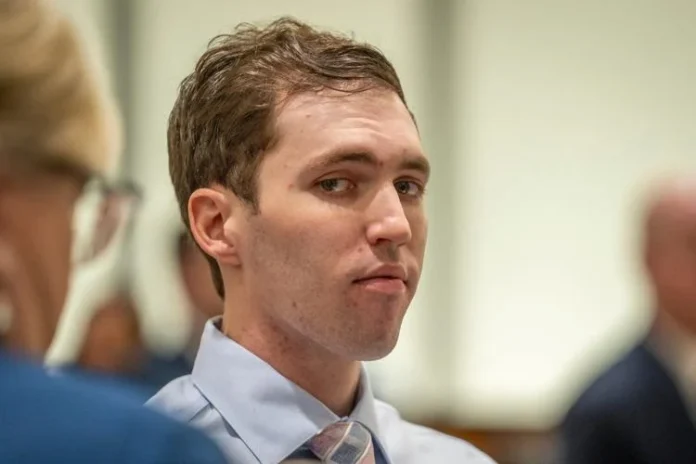

A dramatic legal confrontation is unfolding in Utah’s courtroom as the man charged with assassinating prominent activist Charlie Kirk is pushing to remove the entire prosecuting team from his case. In a move that could rewrite the dynamics of one of the most high-profile prosecutions of recent years, tyler robinson’s defense has filed a motion claiming a conflict of interest tied to a prosecutor’s family member who was present when Kirk was shot dead during a campus event in September 2025.
This tactical litigation step comes as both sides prepare for critical hearings that will test not just evidentiary strength but also constitutional safeguards designed to ensure impartial justice.
A Captivating Crime That Gripped the Country
On a bright afternoon on September 10, 2025, Charlie Kirk, a conservative political figure known for his national activism, stood addressing a large gathering at Utah Valley University in Orem. The outdoor forum, part of a touring speaking series, was attended by roughly 3,000 people when gunfire shattered the proceedings. Kirk was struck and later died at a nearby hospital.
Law enforcement swiftly identified a suspect and, after a short manhunt, arrested 22-year-old Tyler Robinson in Washington, Utah. He was charged with aggravated murder and a series of related offenses, including violent conduct in the presence of a child, obstruction of justice, and other enhancements that made the case eligible for capital punishment. Robinson has pleaded not guilty.
The Grounds for Disqualification: A Prosecutor’s Family Link
The heart of the current courtroom drama revolves around an unusual conflict claim. Robinson’s legal team has argued that the Utah County Attorney’s Office should be disqualified from prosecuting the case because the adult child of one of its prosecutors was among the crowd at the Utah Valley University event when Kirk was assassinated.
According to court filings, the prosecutor’s child did not witness the shooting directly but was close enough to hear the chaos and later communicated with the prosecutor parent about what had happened through text messages. The defense contends that this personal connection raises questions about the emotional involvement of the prosecution team in decisions ranging from charging to seeking the death penalty, and that the appearance of bias threatens Robinson’s right to a fair trial.
Prosecutors Forcefully Reject the Motion
Utah County prosecutors have responded with firm opposition to the disqualification request, arguing that the presence of a family member at a public event does not constitute an actual conflict of interest. They point out that the adult child never saw the shooter or the critical moments of the murder, heard only generalized sounds of the disturbance, and relayed information that was largely second-hand and reflective of confusion after the incident.
Prosecutors also underline that the child is neither a material witness to key elements of the crime nor a victim. They assert that nearly all firsthand knowledge of the shooting comes from other eyewitnesses and documented evidence, not the brief text exchange between parent and child.
Furthermore, the county attorney’s office insists that decisions such as filing a notice of intent to pursue the death penalty were made on legal and strategic grounds based on the severity of the alleged offenses, not personal sentiment tied to an emotional recollection relayed by a family member.
Upcoming Hearings and Testimony
The legal contest over whether the prosecuting team must be removed is slated to see additional developments in court. Attorneys for Robinson have demanded a hearing where live testimony from witnesses may be presented, aiming to build what they describe as a necessary factual record for the judge to determine if a conflict truly exists.
This evidence-driven process, which differs from merely raising theoretical objections on paper, represents a proactive effort by the defense to compel scrutiny of internal communications and motivations behind prosecutorial decisions. The hearing could feature testimony from multiple witnesses subpoenaed by the defense.
Meanwhile, prosecutors are preparing to defend their stance that the connection between the prosecutor and their child did not and does not compromise their ability to carry out their duties impartially.
What This Conflict Claim Could Mean for the Case
The judge’s ruling on the disqualification motion carries significant implications. If the court orders the current prosecutorial team removed, the case might be reassigned to an independent prosecutor or a different office entirely. That change could lead to procedural delays, extended pretrial litigation, and potentially different strategic approaches to charging and sentencing.
Such a shift could be particularly consequential given the extreme gravity of the accusations, which include allegations that Robinson acted with political motivation and with full awareness that children were present during the attack that claimed Kirk’s life.
Conversely, if the court rejects the motion, the prosecution will continue under the Utah County Attorney’s Office with its current strategy intact, and the focus will squarely return to the evidence that prosecutors assert ties Robinson to the crime.
The Evidence Still in the Spotlight
Beyond the conflict motion, prosecutors have emphasized significant physical and digital evidence linking Robinson to the killing. Prosecutors have publicly stated that DNA and other forensic evidence connect Robinson to items at the shooting scene. Text messages recovered from Robinson’s devices — including messages to his romantic partner that indicate a targeted motive — are expected to play a central role in the prosecution’s narrative.
Defendants in capital cases typically face intense scrutiny on each piece of evidence. The admissibility, credibility, and interpretation of communications that suggest intent or motive often become focal points at hearings and during trial.
Media Restrictions and Trial Management
Because of the national attention the case has drawn, the presiding judge has imposed restrictions on media access. Efforts by Robinson’s attorneys to prohibit certain types of photography and videography, particularly of the defendant in restraints, reflect longstanding legal concerns about protecting a defendant’s right to a fair trial and preventing prejudicial imagery from influencing public opinion or potential jurors.
The judge has partially granted these restrictions, balancing the need for transparency with legitimate legal safeguards.
How Public Reaction Has Shaped Proceedings
Since the assassination and subsequent arrest of Robinson, the case has remained a subject of intense national interest. Debates over political violence, public safety at open events, and the broader implications of ideological conflict have permeated public discourse. Reactions have ranged from calls for accountability and justice to debates about systemic fairness and the rights of defendants in cases with explosive public attention.
Efforts to remove the prosecuting office have become another flashpoint in that discussion, drawing commentary from legal analysts who are divided on whether the conflict claim holds substantial merit or represents an aggressive legal gambit by the defense.
What Comes Next: The Road to May and Beyond
A key next milestone in the case is the scheduled preliminary hearing in May, where prosecutors are expected to further lay out their evidence and argue that the case should proceed to full trial. This hearing will test whether the evidence is sufficient to justify moving forward on the charged offenses.
Between now and then, both sides will continue to battle over procedural matters, evidentiary disputes, and strategic decisions that could define the trial’s course.
The controversy over whether the prosecuting team should stay or go is just one chapter in a complex legal narrative that comprises forensic evidence, constitutional challenges, courtroom strategy, and public scrutiny.
Why This Matters Across the Legal Landscape
The conflict question being aired in this case underscores broader themes in American criminal justice: how courts balance defendants’ rights against efficient prosecution, how emotional proximity to a crime should be weighed in legal ethics, and how high-profile cases navigate media attention without compromising fairness.
A ruling on disqualification could set a reference point for similar motions in future cases that involve public events, emotionally charged evidence, and intersections between personal experience and professional duty.
As legal teams prepare for further hearings, the nation watches closely — not just for updates in this single felony prosecution but for precedents that may influence courtroom dynamics long after this particular matter is resolved.