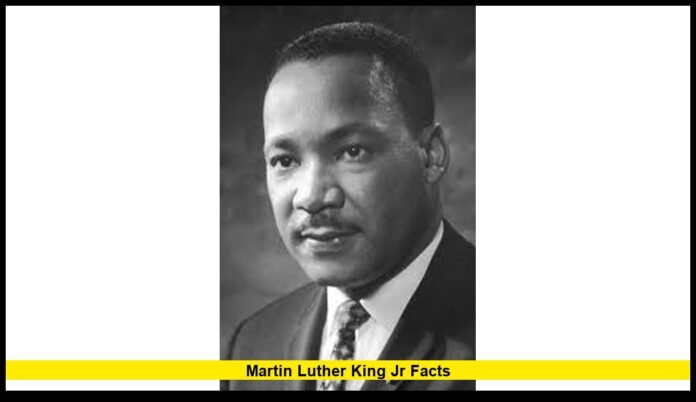

Martin Luther King Jr facts remain central to understanding American history and the ongoing celebration of his life and legacy. As the United States marks Martin Luther King Jr. Day in 2026, communities across the nation pause to reflect on Dr. King’s enduring influence on civil rights, social justice, and peaceful activism. His leadership reshaped the country’s moral compass and continues to inspire new generations to stand for equality, dignity, and unity.
Below is a fully verified, fact-based look at the life, work, and lasting impact of Dr. Martin Luther King Jr., written for readers who want a deeper understanding of the man behind the movement.
His Birth Name Was Not Martin Luther King Jr.
Dr. King was born on January 15, 1929, in Atlanta, Georgia. His original name was Michael King Jr. His father, a Baptist minister, later changed both his own name and his son’s to Martin Luther King in honor of the Protestant reformer Martin Luther. This change symbolized a lifelong commitment to faith, reform, and moral leadership.
Growing up in the segregated South, King encountered racial injustice at an early age. One of his most formative experiences occurred when he was forbidden to continue playing with a white childhood friend after starting school, simply because of the color of his skin. That moment left a lasting impression and helped shape his determination to challenge inequality.
He Entered College at Just 15 Years Old
King was academically gifted. He skipped both ninth and twelfth grades and entered Morehouse College in Atlanta at the age of 15. There, he studied sociology and was deeply influenced by religious leaders and scholars who encouraged him to view faith as a tool for social change.
He later earned a degree from Crozer Theological Seminary and completed his doctoral studies in systematic theology at Boston University. His education gave him the intellectual foundation to articulate the philosophy of nonviolent resistance that would define the civil rights movement.
The Montgomery Bus Boycott Launched His National Leadership
In 1955, the arrest of Rosa Parks for refusing to give up her bus seat to a white passenger sparked the Montgomery Bus Boycott in Alabama. At just 26 years old, King was chosen to lead the movement.
For 381 days, African American residents refused to ride city buses, walking miles to work and organizing carpools. The protest ended with a Supreme Court ruling that segregation on public buses was unconstitutional. The success of the boycott transformed King into a national leader and proved that disciplined, nonviolent protest could dismantle unjust laws.
He Founded the Southern Christian Leadership Conference
In 1957, King and other civil rights leaders established the Southern Christian Leadership Conference (SCLC). The organization aimed to coordinate nonviolent protests across the South and mobilize Black churches as centers of community organizing.
Under King’s leadership, the SCLC played a central role in major campaigns in Birmingham, Selma, Albany, and other cities, confronting segregation in schools, housing, transportation, and voting rights.
The “I Have a Dream” Speech Was Partly Improvised
On August 28, 1963, King addressed more than 250,000 people at the March on Washington for Jobs and Freedom. While he had prepared remarks, the most famous section of the speech—the repeated phrase “I have a dream”—was delivered spontaneously after he felt moved by the crowd and the moment.
The speech called for racial equality, economic justice, and unity, and it remains one of the most powerful orations in American history.
He Was the Youngest Nobel Peace Prize Winner of His Time
In 1964, at the age of 35, King received the Nobel Peace Prize for his commitment to nonviolent resistance and human rights. He donated the entire prize money to the civil rights movement, reinforcing his belief that leadership meant service, not personal gain.
His Work Directly Influenced Landmark U.S. Laws
King’s leadership and organizing were instrumental in the passage of:
- The Civil Rights Act of 1964, which outlawed segregation and employment discrimination
- The Voting Rights Act of 1965, which protected the right to vote
- The Fair Housing Act of 1968, which addressed discrimination in housing
These laws transformed American society and remain foundational to civil rights protections today.
He Expanded His Focus to Economic Justice
In the final years of his life, King broadened his activism beyond racial segregation to address poverty and labor rights. He supported sanitation workers in Memphis who were striking for fair wages and safe working conditions.
King believed that racial equality could not be fully achieved without economic justice. His Poor People’s Campaign aimed to unite Americans of all races to demand fair housing, jobs, and healthcare.
His Assassination Shocked the Nation
On April 4, 1968, Dr. King was assassinated while standing on the balcony of the Lorraine Motel in Memphis, Tennessee. He was 39 years old.
His death triggered nationwide mourning and unrest, but it also strengthened the resolve of many Americans to continue the struggle for civil rights and equality.
His Birthday Is Honored as a National Day of Service
Martin Luther King Jr. Day became a federal holiday in 1986. In 1994, it was officially designated a National Day of Service, encouraging Americans to volunteer and support their communities in the spirit of King’s belief that “everybody can be great, because everybody can serve.”
Across the United States in 2026, cities are marking the holiday with marches, educational programs, youth leadership events, and community service projects that reflect King’s vision of unity and collective responsibility.
Why Martin Luther King Jr Facts Still Matter Today
Understanding Martin Luther King Jr facts is not just about remembering history. It is about recognizing how courage, faith, and nonviolent action can change laws, transform hearts, and reshape a nation.
King’s legacy lives on in classrooms, courtrooms, churches, and community centers. His words continue to be quoted in moments of crisis and hope. His example reminds Americans that progress is possible when people stand together with discipline, compassion, and moral clarity.
From his early days as a young preacher in Atlanta to his role as the most influential civil rights leader in U.S. history, Dr. King’s life shows how one voice, guided by principle and persistence, can awaken the conscience of a country.
What does Dr. King’s message mean to you today? Share your thoughts and stay connected as his legacy continues to inspire change.