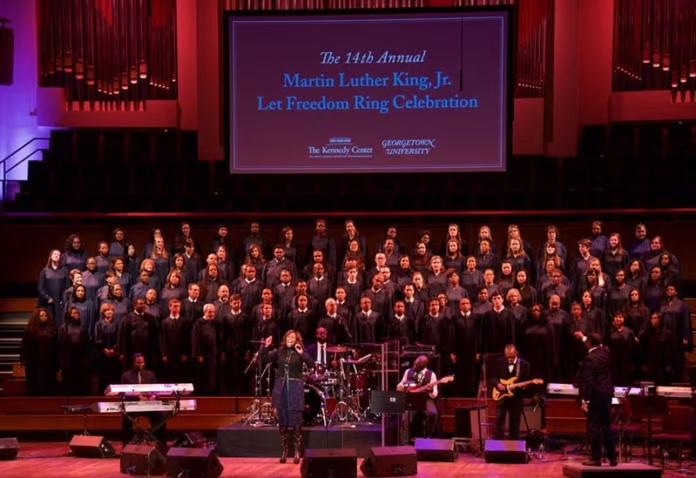

The annual mlk concert kennedy center tradition is undergoing a major transformation in 2026, marking the first time in more than two decades that Washington’s signature Martin Luther King Jr. Day musical tribute will be presented outside the iconic performing arts complex. The long-running “Let Freedom Ring” celebration, a cornerstone of the capital’s cultural observance of the holiday, is relocating to a different historic venue while preserving its mission of honoring Dr. King through music, reflection, and community unity.
The move represents a significant moment for one of the nation’s most visible artistic tributes to the civil rights leader. For audiences across the United States, it signals both the close of a familiar chapter and the opening of a new one shaped by evolving cultural priorities and practical realities.
A Concert That Became a National Tradition
Since the early 2000s, “Let Freedom Ring” has been a defining feature of Martin Luther King Jr. Day in Washington, D.C. The program was created to unite diverse musical voices in a single evening dedicated to the ideals Dr. King championed: justice, equality, dignity, and hope.
Over the years, the concert developed a recognizable identity. Gospel choirs delivered soaring spirituals. Orchestral and contemporary arrangements added depth and range. Solo vocalists brought personal emotion to classic anthems. Spoken word elements and excerpts inspired by Dr. King’s speeches provided historical grounding.
The result was not simply a performance, but a civic ritual. Families attended year after year. Students made it part of their MLK Day learning. Visitors planned trips around the event. The concert’s blend of reverence and artistic excellence made it a focal point of the national holiday.
Why the Venue Is Changing in 2026
After 23 years at one of the country’s most prestigious arts institutions, the organizers of “Let Freedom Ring” confirmed that the 2026 concert will be staged at a new location. The decision followed an extensive review of production needs, financial sustainability, and long-term planning.
Large-scale performances in major performing arts centers require significant resources, including technical crews, rehearsal time, and venue-related costs. As those demands increased, maintaining the event at its traditional site became more challenging. The producers chose a path that would protect the concert’s future without compromising its artistic standards.
Rather than scaling back the program, they opted to relocate it to a venue that could offer a meaningful setting, strong community ties, and a more sustainable production model.
The Howard Theatre: A Symbolic New Home
Beginning in 2026, “Let Freedom Ring” will take place at the historic Howard Theatre, a landmark deeply rooted in African-American cultural history. For more than a century, the theater has hosted influential musicians, comedians, and performers whose work shaped American entertainment and social dialogue.
The Howard Theatre’s legacy aligns naturally with the spirit of Dr. King’s message. Gospel, jazz, soul, and R&B—genres closely connected to the civil rights era—have long echoed from its stage. Moving the MLK Day concert to this venue places the celebration within a space that reflects the cultural foundations of the movement itself.
The theater’s more intimate scale is expected to create a closer connection between performers and audience, allowing the emotional weight of the music and words to resonate in a powerful, personal way.
A Headliner with a Message
The 2026 edition of “Let Freedom Ring” will be led by Common, an artist widely recognized for blending music with social commentary and activism. His career has consistently addressed themes of equality, identity, and community, making him a fitting figure to headline a tribute to Dr. King.
In addition to the featured performer, the program will continue its tradition of showcasing choirs, vocal ensembles, and musicians whose work reflects both technical excellence and spiritual depth. The lineup is designed to span generations and musical styles while remaining unified by purpose.
The structure of the evening will remain focused on:
- Opening segments rooted in gospel tradition
- Musical interpretations inspired by the civil rights movement
- Collaborative performances that bring together multiple groups
- A closing section emphasizing hope, resilience, and collective responsibility
How the Experience Will Differ for Audiences
A More Intimate Setting
The Howard Theatre offers fewer seats than the grand concert hall that previously hosted the event. This change is expected to increase demand and create a more exclusive atmosphere. Attendees can anticipate a closer view of performers and a heightened sense of shared experience.
A Different Acoustic and Visual Environment
While the scale of the space is smaller, the venue is equipped to deliver high-quality sound and lighting. The production team plans to adapt the staging to preserve the concert’s dramatic impact while taking advantage of the theater’s historic character.
Community-Centered Surroundings
Located in a neighborhood with deep cultural roots, the new setting places the concert within a broader historical context. Visitors will be attending not just a performance, but a celebration embedded in the living heritage of the city.
Continuing the Spirit of Dr. King’s Vision
At its core, “Let Freedom Ring” has always been about more than music. It is about remembrance, education, and inspiration. Each performance aims to remind audiences that Dr. King’s work was not confined to history books but remains relevant to ongoing conversations about justice and unity.
The relocation does not change that mission. Instead, it reframes it within a space that reflects the cultural traditions that sustained the civil rights movement and gave voice to its hopes.
The Broader Cultural Landscape in Washington
The shift also highlights a larger evolution in how major cultural institutions and community venues share responsibility for national observances. While the concert moves to the Howard Theatre, other MLK Day programs will continue across the city, ensuring that multiple perspectives and artistic expressions contribute to the day’s significance.
This diversified approach allows different audiences to engage with the holiday in ways that resonate with them, whether through large-scale productions, community gatherings, or educational events.
A Legacy Carried Forward
For those who have followed “Let Freedom Ring” for years, the change may feel momentous. The concert’s association with its former venue became part of its identity. Yet traditions endure not because of buildings, but because of the values they represent and the people who sustain them.
By choosing a new home that embodies cultural history and artistic authenticity, the organizers are ensuring that the celebration continues to grow rather than simply repeat itself. The move reflects confidence that the concert’s message will remain strong, regardless of address.
What This Means for the National Audience
As one of the most prominent MLK Day concerts in the country, “Let Freedom Ring” has always attracted attention beyond Washington, D.C. The 2026 transition will be closely watched by arts organizations, educators, and cultural leaders who view the event as a model for how music can honor history while engaging the present.
The involvement of high-profile performers, combined with the symbolic power of the new venue, positions the concert to continue serving as a national point of reflection on Dr. King’s legacy.
Looking Ahead
The upcoming edition of “Let Freedom Ring” represents continuity through change. The voices, the messages, and the purpose remain constant, even as the setting evolves. In a year that will introduce audiences to a different stage and atmosphere, the heart of the celebration will still be found in the same ideals that inspired it from the beginning.
Music will once again rise in honor of a leader whose dream reshaped a nation. Community will once again gather in reflection and hope. And a tradition that has become part of the American cultural calendar will step confidently into its next chapter.