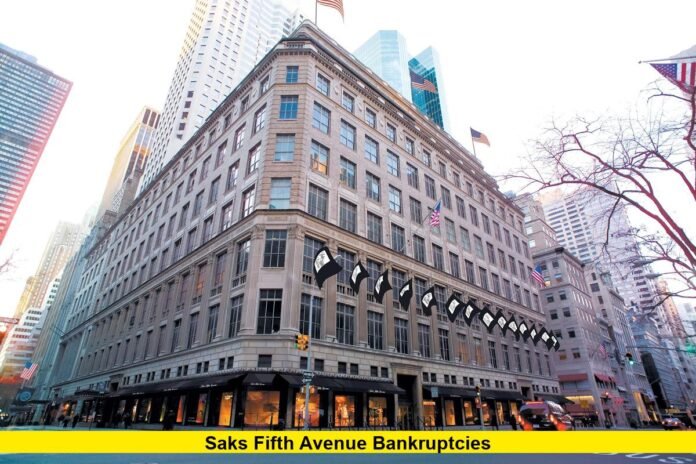

The U.S. luxury retail landscape entered a decisive new phase this week when the corporate owner of Saks Fifth Avenue sought court protection, placing the long-standing department store at the center of the unfolding saks fifth avenue bankruptcies story and raising urgent questions about how high-end shopping will evolve in a slower, more digital-first economy.
The filing, made under Chapter 11 of the U.S. Bankruptcy Code, does not signal an immediate shutdown of stores or websites. Instead, it marks the start of a court-supervised financial restructuring designed to stabilize operations, renegotiate debt, and preserve the business while it adapts to changing consumer behavior and mounting competitive pressure.
A Court Filing That Shook the Luxury Sector
The parent company that controls Saks Fifth Avenue and several other elite retail banners entered Chapter 11 protection in mid-January 2026. The move followed months of financial strain, rising interest costs, and uneven demand across the luxury market.
Chapter 11 allows a company to continue operating while it reorganizes its balance sheet. For shoppers, this means stores remain open, online orders continue to be processed, and gift cards and loyalty programs remain valid under court supervision.
For the industry, the filing is one of the most significant developments in years, given Saks Fifth Avenue’s role as a primary distribution channel for many of the world’s most valuable fashion and beauty brands.
The Business Pressures Behind the Filing
Debt Built Up During Aggressive Expansion
In recent years, Saks’ corporate parent pursued large-scale acquisitions and structural changes aimed at creating a unified luxury retail group. While the strategy expanded its brand portfolio and market reach, it also loaded the company with substantial long-term debt.
As borrowing costs climbed and refinancing became more expensive, interest payments consumed a growing share of cash flow. That reduced the company’s flexibility to invest in technology, store upgrades, and inventory.
Shifts in Luxury Spending Patterns
High-income consumers continue to buy premium goods, but the way they shop has changed. Direct-to-consumer websites, brand-owned boutiques, and curated online platforms now capture a larger share of luxury sales.
Traditional department stores, even at the high end, face thinner margins and lower foot traffic. Shoppers still visit for special occasions and in-store service, but routine purchases increasingly happen online or through brand-specific apps.
Inventory and Supply Chain Strain
Luxury retail depends on precise inventory planning. Delays in deliveries, cautious ordering, and selective allocations from top brands made it harder for department stores to keep shelves fully stocked with the season’s most in-demand items.
When popular styles are unavailable, high-spending customers often turn directly to brand boutiques or competing platforms, further weakening store traffic and sales momentum.
What Chapter 11 Means in Practical Terms
Operations Continue Without Interruption
Under court protection, the company can keep paying employees, honoring customer orders, and maintaining vendor relationships. New financing arranged as part of the restructuring provides working capital to fund daily operations during the process.
Debt Restructuring and Creditor Talks
The central task in the months ahead will be negotiations with lenders, bondholders, landlords, and merchandise suppliers. The goal is to reduce the overall debt burden, extend payment schedules, and potentially convert some obligations into equity in the reorganized company.
Possible Store Portfolio Review
While no mass closures have been announced, large retailers in Chapter 11 typically review every location’s profitability. Underperforming stores may be downsized, relocated, or, in some cases, closed if leases cannot be renegotiated on sustainable terms.
Flagship locations in major cities, which serve both as sales drivers and brand showcases, are widely expected to remain core to the company’s future strategy.
Leadership and Strategic Direction
A new leadership team has been tasked with guiding the retailer through the restructuring. Their mandate extends beyond financial repair. It includes redefining how the business competes in a luxury market increasingly shaped by:
- Digital-first shopping experiences
- Personalized service powered by data
- Faster product cycles and exclusive launches
- Integrated online and in-store fulfillment
The company has emphasized that its long-term vision centers on blending the heritage of in-store luxury service with advanced e-commerce capabilities, private client programs, and omnichannel convenience.
Impact on Luxury Brands and Designers
Saks Fifth Avenue is more than a store; it is a key wholesale partner for global fashion houses and emerging designers alike. Its buying decisions influence which brands gain national visibility and how collections are presented to American consumers.
During Chapter 11, vendor agreements are reviewed by the court. Most suppliers continue shipping merchandise under revised terms, often supported by special payment protections. For designers, maintaining shelf space at a premier department store remains strategically important, even as direct sales grow.
What Shoppers Should Expect
Business as Usual at the Register
From a customer’s perspective, the experience in the near term should look familiar. Seasonal collections, sales events, and personal shopping services continue. Online platforms remain active, and return policies stay in place.
Potential Changes Over Time
As the restructuring progresses, shoppers may notice:
- More tightly curated assortments
- Greater emphasis on exclusive collaborations
- Enhanced digital services and faster fulfillment
- Adjustments in store layouts to highlight experiential retail
These changes aim to strengthen loyalty and encourage repeat visits in a market where choice is abundant and competition is only a click away.
The Broader Message for U.S. Retail
The financial restructuring of such a prominent luxury chain reflects a wider reality: even well-known, century-old brands must continually adapt. Rising operating costs, evolving consumer expectations, and technological disruption spare no segment of the retail industry.
While mass-market chains have faced similar challenges for years, the current moment shows that prestige and heritage alone are no longer enough. Financial discipline, digital innovation, and customer-centric strategy are now essential for survival at every price point.
Looking Ahead
Court-supervised restructuring typically unfolds over several months. During that time, the company will present a formal plan outlining how debt will be reduced, how operations will be funded, and how ownership may change once it exits Chapter 11.
If approved, that plan would allow the business to emerge with a stronger balance sheet and a clearer roadmap for growth in a transformed luxury retail environment.
For an institution that has dressed generations of Americans and shaped fashion culture for more than a century, the coming year represents both a test and an opportunity: a chance to preserve its legacy while building a model suited for the next era of high-end shopping.