
Havana syndrome remains one of the most perplexing national security and medical mysteries facing the United States in 2026, and recent verified developments show that the U.S. government is actively investigating a device that may finally offer answers about the condition’s cause and implications for American personnel. As of January 2026, defense agencies have spent more than a year testing a covertly acquired device that some investigators now believe could be connected to the health problems reported by U.S. diplomats, intelligence officers, and military members. This continued focus highlights both the complexity of Havana syndrome and its national importance.
History and Definition of Havana Syndrome
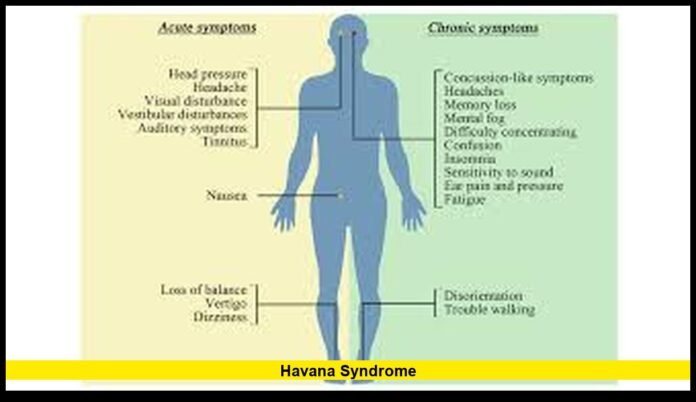
Havana syndrome refers to a set of unexplained health incidents first reported in late 2016 by U.S. diplomats stationed in Havana, Cuba. Individuals described a sudden onset of neurological and physical symptoms that included intense headaches, dizziness, balance issues, cognitive difficulties, ringing in the ears, and problems with vision or sleep. Similar reports emerged over the next several years from U.S. personnel in other countries and, in some cases, within the United States. The condition is also formally referred to by the U.S. government as anomalous health incidents.
To date, Havana syndrome is not officially recognized as a distinct medical diagnosis by the wider medical community. Investigations by multiple U.S. federal agencies—including intelligence, defense, and health research bodies—have examined thousands of cases. While the symptoms are well-documented and have had real impacts on lives and careers, the cause has remained elusive. The lack of consensus on explanation, whether biological, technological, or environmental, has sustained interest from policymakers and the public alike.
Recent Government Testing of a Suspected Device
In January 2026, U.S. defense officials confirmed that a mysterious device acquired through an undercover operation is currently under intensive study by federal laboratories. The device was purchased with funding from the Department of Defense through Homeland Security Investigations near the end of the last presidential administration. While specific technical details remain classified, several key points have been verified:
- The device reportedly emits pulsed radio-frequency waves, a type of energy that investigators for years have speculated might be capable of producing symptoms similar to those associated with Havana syndrome.
- Though it contains components sourced from foreign manufacturers, including Russian-made parts, the device itself is not entirely foreign-made and was acquired by U.S. personnel.
- The system is compact and portable, small enough to fit in a backpack, making it possible in theory to deploy discreetly in various environments.
- Defense scientists have been studying the device in controlled settings for over a year, trying to determine whether its emissions can produce the range of neurological effects described in real-world cases.
Officials emphasize that while this device testing marks a significant new technical approach, it does not yet prove causation between the device and any specific health incident. Determining whether the device can reproduce the exact physiological impact seen in affected individuals remains a major focus of ongoing research.
Government Analysis and Debate
The renewed focus on this device has reignited debate within the intelligence and defense communities. Some officials see the testing as a critical step toward unraveling a puzzle that has frustrated investigators for nearly a decade. Others remain skeptical about whether any single piece of technology can explain the full range of reported symptoms.
Key perspectives within the U.S. government include:
- Some agencies maintain that there is insufficient evidence to conclusively tie Havana syndrome to directed-energy or radio-frequency technologies.
- Others argue that the existence of a device capable of producing energy emissions similar to those hypothesized in earlier studies warrants further study and resource investment.
- Legislative oversight committees have been briefed on the device and its testing, reflecting the continued seriousness with which Congress views the issue.
This internal debate reflects both the scientific uncertainty and the political sensitivity surrounding Havana syndrome investigations, especially as some former personnel have accused past administrations of downplaying the condition’s severity or failing to protect affected individuals.
Medical and Scientific Considerations
Medical experts engaged in reviewing Havana syndrome cases have reached some clear conclusions about the condition, even as its cause remains unknown:
- The symptoms reported by many individuals are real and have, in some cases, caused long-term health issues that required comprehensive medical treatment.
- Epidemiological patterns of reported cases vary widely, complicating efforts to identify a single underlying cause.
- Scientific research, including neuro-imaging and vestibular testing, has in many cases revealed disruptions in balance, cognition, and sensory processing, although these results have not pointed definitively to a specific trigger mechanism.
Physicians treating individuals affected by Havana syndrome have adopted a multidisciplinary approach, combining neurological rehabilitation, vestibular therapy, sleep regulation, and cognitive support. These treatments reflect the complex nature of the symptoms and the absence of a one-size-fits-all medical solution.
Impact on U.S. Personnel
Since the initial reports in 2016, thousands of U.S. government employees and their families have come forward with health complaints attributed to Havana syndrome. Diplomats, intelligence officers, and military personnel have reported:
- Difficulty concentrating or remembering information
- Persistent headaches and sensitivity to sound
- Loss of balance or dizziness
- Sleep disruption and chronic fatigue
Some individuals have been forced into early retirement due to lingering health challenges, while others continue to advocate for expanded research, official recognition, and long-term care support. The Pentagon’s recent device testing has reinvigorated calls from former personnel for transparency and accountability.
Legislative and Policy Responses
Recognizing the human toll of Havana syndrome, Congress enacted the HAVANA Act to provide medical and financial support to affected government employees. The law allows qualifying federal workers to receive disability compensation and ongoing health care for conditions related to anomalous health incidents.
In recent congressional sessions:
- Funding has increased for advanced neurological research into unexplained health incidents.
- Lawmakers have pressed for improved reporting standards and medical tracking for U.S. personnel stationed overseas.
- There is bipartisan interest in ensuring that federal agencies share information more promptly and effectively with medical providers to benefit those affected.
These developments underscore a broader awareness among lawmakers that Havana syndrome is not merely a scientific curiosity but a policy issue with real consequences for U.S. national security and personnel readiness.
Ongoing Investigations and Future Directions
Looking ahead, the government’s approach to Havana syndrome is evolving in several key areas:
- Device-Based Research: Continued laboratory testing of the radio-frequency emitting device to establish whether it can produce effects consistent with the symptoms described by affected personnel.
- Diagnostic Standards: Efforts to standardize medical criteria across federal agencies, improving consistency in case identification and treatment strategies.
- Early Detection Technologies: Exploration of sensor systems that could detect anomalous energy emissions in embassy compounds and military installations.
- Global Monitoring: Broadening surveillance and reporting mechanisms in U.S. diplomatic posts and defense facilities worldwide to capture new incidents promptly.
- Interagency Collaboration: Enhancing coordination among defense, health, and intelligence agencies to unify research, analysis, and response efforts.
While none of these efforts has yet delivered a definitive solution, they represent a sustained commitment to understanding and addressing Havana syndrome’s effects on U.S. personnel.
Why Havana Syndrome Still Matters
More than a decade after the first cases were reported in Cuba, Havana syndrome continues to captivate public interest and policy attention. Its combination of medical mystery, potential technological implications, and impact on U.S. national interests makes it a topic of ongoing relevance.
The most recent government actions — particularly the testing of a device that may shed light on possible physical mechanisms — represent a turning point in how the condition is being investigated. Whether this leads to clear answers remains to be seen, but for now it marks the most concrete technical inquiry into the syndrome to date.
As research continues and medical understanding evolves, affected families, former personnel, and national security officials alike are hopeful that answers will eventually emerge. Havana syndrome, once a baffling anomaly, now sits at the intersection of science, defense, and public health policy.
Share your thoughts or experiences related to Havana syndrome and stay connected as this story continues to progress.