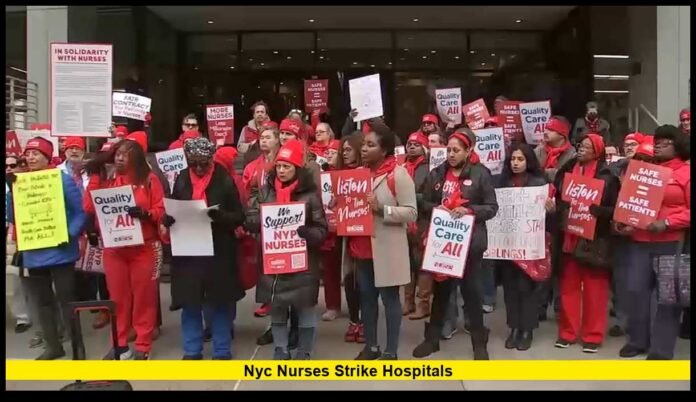

NYC nurses strike hospitals in what has become the largest and most consequential labor action ever seen in the city’s healthcare system, as nearly 15,000 registered nurses walked out of major private hospitals after contract talks collapsed. The strike began in mid-January 2026 following months of negotiations that failed to resolve deep concerns over staffing shortages, patient safety, workplace violence, health benefits, and wages. This unprecedented action has placed New York’s medical infrastructure under intense pressure while drawing national attention to the conditions faced by frontline healthcare workers in one of the busiest urban hospital networks in the world.
The walkout did not emerge suddenly. It followed a prolonged period of frustration among nurses who say they have been pushed beyond safe limits by chronic understaffing, increasing patient loads, and emotionally demanding working environments that worsened after years of pandemic strain. Many nurses describe shifts where they are responsible for more patients than medical standards recommend, leaving them with little time to provide the level of care they believe every patient deserves. The strike represents a collective effort to force structural changes rather than temporary fixes.
Why NYC Nurses Strike Hospitals
At the heart of the NYC nurses strike hospitals is the issue of staffing. Nurses argue that hospitals have not hired enough permanent staff to meet patient demand, relying instead on overtime and short-term solutions that lead to exhaustion and burnout. In critical care units, emergency rooms, and medical-surgical floors, nurse-to-patient ratios have steadily increased, making it difficult to monitor patients closely, respond quickly to emergencies, and maintain safe standards of care.
Beyond staffing, workplace safety has become a central concern. Nurses report a rise in violent incidents involving patients or visitors, particularly in emergency departments and psychiatric units. Many say they lack adequate security presence and clear protocols for responding to dangerous situations. The union has demanded enforceable protections, including guaranteed security staffing and training programs designed to de-escalate conflicts before they turn violent.
Healthcare benefits and wages also remain key drivers of the strike. Although nurses are among the most essential professionals in the healthcare system, many feel their compensation has not kept pace with New York City’s rising cost of living or with the physical and emotional toll of the job. Rising housing costs, transportation expenses, and childcare needs have added financial pressure, especially for nurses supporting families. The union has called for wage increases that reflect both inflation and the specialized skills required in modern hospital care.
Hospitals Affected by the Walkout
The NYC nurses strike hospitals spans several of the city’s largest and most influential private medical centers, primarily in Manhattan and the Bronx. These facilities serve hundreds of thousands of patients each year and include major trauma centers, teaching hospitals, and specialized treatment units. As the strike began, picket lines formed outside multiple campuses, with nurses standing in uniform, holding signs, and chanting in coordinated shifts throughout the day.
The presence of picketers at these locations underscores the scale of the action. These are not small community clinics but cornerstone institutions in the city’s healthcare network. Many of the striking nurses work in intensive care, oncology, neonatal units, and emergency departments, areas where staffing levels can mean the difference between life and death. Their absence, even with temporary replacements, has required hospitals to activate complex contingency plans.
Government Response and State of Emergency
Recognizing the potential impact of the NYC nurses strike hospitals on patient access and emergency care, state leadership moved quickly to declare a state of emergency. This measure allows health authorities to streamline staffing approvals, coordinate emergency resources, and ensure that critical services remain available even as thousands of union nurses remain off the job.
City officials have echoed concerns about continuity of care, particularly during the winter season when flu and respiratory illnesses place additional strain on emergency departments. While supporting the right of nurses to advocate for better working conditions, government leaders have emphasized the need for rapid negotiations to prevent prolonged disruption. Behind the scenes, labor mediators and healthcare officials are working to keep communication channels open between hospital executives and union representatives.
How Hospitals Are Operating During the Strike
Despite the scale of the walkout, hospitals affected by the NYC nurses strike hospitals remain open and operational. Administrators have hired temporary nurses, reassigned non-union staff, and adjusted schedules to maintain essential services. Emergency rooms, intensive care units, and labor and delivery departments continue to function, though often under modified staffing models.
Elective procedures and non-urgent appointments have faced delays in some cases, as hospitals prioritize critical and time-sensitive care. Patients with scheduled surgeries or specialist visits have been contacted to confirm whether their appointments will proceed or be rescheduled. Hospital leadership has stated that these measures are temporary and aimed solely at ensuring safety during the labor dispute.
Ambulance services and emergency medical teams have also coordinated closely with hospitals to manage patient flow. In some instances, patients have been redirected to nearby facilities if staffing levels at a particular hospital reached critical thresholds. These adjustments highlight the interconnected nature of New York City’s healthcare system, where disruptions in one area can quickly ripple across the network.
The Nurses’ Perspective
For the nurses on strike, the action is not only about contracts but about the future of patient care in New York City. Many describe feeling morally distressed when they cannot spend enough time with each patient due to high workloads. They speak of missed meals, skipped breaks, and twelve-hour shifts that extend into fourteen or fifteen hours because there are not enough staff to hand off responsibilities.
Nurses also emphasize the emotional weight of the profession. They form close bonds with patients and families, often serving as the primary source of comfort during medical crises. When staffing is inadequate, they feel they are forced to rush through interactions that should be unhurried and compassionate. The strike, in their view, is a stand for the kind of healthcare system they believe New Yorkers deserve.
Public support has grown as residents witness the dedication of nurses standing for hours in cold weather, advocating not only for themselves but for systemic improvements. Many community members see the strike as a reflection of broader challenges in healthcare, including workforce shortages and the need for sustainable investment in frontline staff.
Economic and System-Wide Implications
The NYC nurses strike hospitals also carries significant economic implications. Large hospital systems operate with complex budgets that balance patient care, infrastructure investment, and staffing costs. Temporary staffing solutions are expensive, and prolonged reliance on them can strain financial resources. At the same time, nurses argue that chronic understaffing leads to costly consequences such as longer hospital stays, higher readmission rates, and increased risk of medical errors.
From a broader perspective, the strike has sparked renewed discussion about how healthcare is funded and how labor is valued within the system. Policymakers, healthcare economists, and labor advocates are closely watching the situation, recognizing that its outcome could influence labor negotiations and staffing standards in hospitals across the country.
Negotiations and the Path Forward
As the NYC nurses strike hospitals continues, negotiations remain the central path toward resolution. Union leaders have stated that they are ready to return to the table as soon as hospitals present proposals that meaningfully address staffing ratios, safety protections, benefits, and wages. Hospital executives, for their part, have expressed a desire to reach an agreement that balances worker needs with financial sustainability.
Mediation efforts are expected to intensify as pressure mounts from patients, city officials, and the broader public. Every additional day of the strike increases operational costs and uncertainty, making compromise increasingly important for all parties involved. A negotiated settlement would allow nurses to return to the bedside while setting new standards for working conditions and patient care.
What the Strike Means for the Future of Healthcare in NYC
The NYC nurses strike hospitals may prove to be a turning point for healthcare labor relations in the city. Its scale and visibility have brought long-standing issues into the open, forcing hospitals, government leaders, and the public to confront questions about how care is delivered and who bears the burden of sustaining it.
If the strike leads to enforceable staffing standards and stronger safety protections, it could reshape hospital operations for years to come. It may also encourage other healthcare workers to advocate more forcefully for conditions that support both patient well-being and professional sustainability.
As NYC nurses strike hospitals and the city watches a historic moment unfold, the outcome will shape not only current contracts but the future of healthcare for millions of New Yorkers. Stay engaged, share your perspective, and follow the developments as this pivotal story continues to evolve.