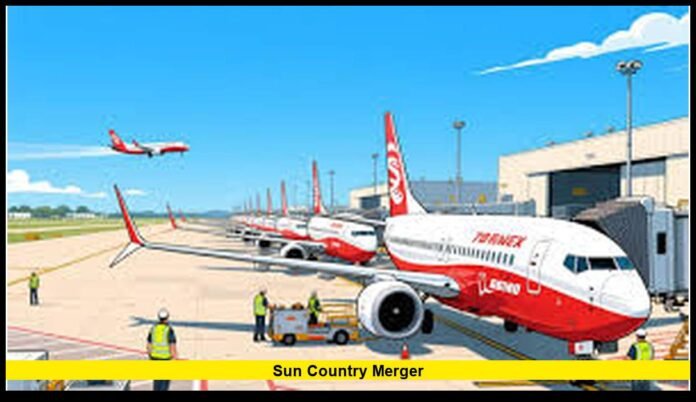

Sun country merger discussions have moved to the center of the U.S. aviation industry after Allegiant Travel Company and Sun Country Airlines confirmed plans to unite in a major transaction that will create one of the largest leisure-focused carriers in North America.
The agreement brings together two airlines that built their businesses on nonstop routes from midsize cities to popular vacation destinations. Both companies have strong reputations for low fares, point-to-point service, and a focus on travelers flying for holidays, family visits, and seasonal getaways rather than corporate hub-and-spoke traffic.
The planned combination is designed to strengthen financial stability, broaden route networks, and create a larger platform capable of competing more effectively with both legacy carriers and other low-cost airlines. Once completed, the new company will operate a fleet approaching 200 aircraft and serve hundreds of routes across the United States, Mexico, Central America, and the Caribbean.
How the Deal Came Together
The transaction is structured as a cash-and-stock deal that values Sun Country at roughly $1.5 billion, including debt. Under the terms, Sun Country shareholders will receive a mix of cash and Allegiant shares, giving them an ongoing stake in the combined airline.
Ownership of the merged company will be split, with Allegiant investors holding a majority position and Sun Country shareholders retaining a significant minority interest. Leadership will be drawn primarily from Allegiant’s executive team, while Sun Country’s top management will remain involved through board and advisory roles.
The combined airline will be headquartered in Las Vegas, Allegiant’s long-time base, while Minneapolis–St. Paul will continue as a major operational hub, reflecting Sun Country’s deep roots in the Upper Midwest.
Why This Combination Makes Strategic Sense
Both airlines operate similar business models but in largely complementary markets. Allegiant has built a strong presence in smaller and midsize cities across the United States, linking them directly to leisure destinations such as Florida, Nevada, Arizona, and California. Sun Country, while also focused on vacation travel, has a powerful base in Minneapolis–St. Paul and a growing international leisure network.
By bringing these networks together, the combined carrier can:
- Expand nonstop service from underserved cities
- Increase aircraft utilization across seasonal markets
- Share operational infrastructure and technology
- Strengthen purchasing power for fuel, aircraft, and services
- Offer travelers more direct options without relying on congested hub airports
Executives have described the merger as a way to create a stronger, more resilient airline that can grow while maintaining a low-cost structure.
Impact on the U.S. Airline Landscape
The U.S. airline industry has undergone waves of consolidation over the past two decades. Most of those mergers involved large network carriers. This transaction is different because it centers on the leisure and ultra-low-cost segment.
The new airline will focus on:
- Point-to-point routes rather than complex connections
- High-demand vacation markets
- Seasonal flexibility, adding and removing routes based on travel trends
- Price-sensitive customers seeking nonstop service
This focus positions the merged company as a powerful competitor in markets where travelers want direct flights but have historically faced limited options.
What Passengers Should Expect During the Transition
Until regulatory approvals are complete and a single operating certificate is issued, both airlines will continue to function independently. For travelers, that means:
- Existing tickets remain valid
- Schedules and routes continue as published
- Loyalty programs operate separately
- Customer service channels remain unchanged
The integration process will be gradual, with systems, branding, and operational procedures aligned step by step.
Expanded Route Opportunities Across the Network
Once fully integrated, the combined airline is expected to unlock substantial growth in route offerings.
Growth From Minneapolis–St. Paul
Sun Country’s base at Minneapolis–St. Paul will likely see an increase in nonstop routes to midsize cities and leisure destinations. With access to Allegiant’s broader domestic network, passengers in the Upper Midwest may gain:
- More direct flights to Florida, the Southwest, and the West Coast
- Additional seasonal routes to warm-weather destinations
- Increased frequency on popular vacation corridors
This growth will strengthen Minneapolis–St. Paul as a major leisure gateway, complementing its role as a traditional hub for network carriers.
International Leisure Expansion
Sun Country has steadily expanded its international footprint, particularly to Mexico and the Caribbean. Allegiant’s strong presence in smaller U.S. markets provides a foundation to extend this international reach.
The combined airline is positioned to:
- Launch new nonstop routes from secondary U.S. cities to resort destinations
- Increase service to established leisure markets such as Cancun, Punta Cana, and Montego Bay
- Balance seasonal demand with year-round offerings
This strategy allows travelers in cities that previously required connections through major hubs to access international vacation spots directly.
Serving Underserved Regions
Many midsize and smaller cities have limited nonstop options, especially for leisure travel. The merged carrier’s point-to-point approach is designed to fill these gaps.
Benefits for these communities may include:
- Direct access to popular vacation destinations
- Reduced travel time and fewer connections
- Competitive fares driven by increased capacity
The broader footprint will also introduce stronger competition in markets that historically lacked multiple nonstop providers.
Fleet and Operational Integration
The combined airline will operate a fleet approaching 200 aircraft, primarily narrow-body jets suited for short- to medium-haul routes. This scale supports:
- Greater scheduling flexibility
- Improved aircraft utilization
- More efficient maintenance and training programs
Standardizing operational procedures and technology systems will be a major focus during integration. Reservation platforms, crew scheduling, and customer service tools will be aligned to support a seamless travel experience.
Customer Experience and Brand Alignment
While both airlines share a low-cost philosophy, each has its own brand identity, onboard product, and service style. Unifying these elements will be a key part of the merger process.
Plans include:
- A single loyalty program with expanded earning and redemption opportunities
- Consistent fare structures and optional services
- Unified branding across aircraft, airports, and digital platforms
The goal is to provide a clear, recognizable experience for travelers regardless of which route or city they fly from.
Regulatory Review and Competitive Balance
The transaction is subject to review by U.S. regulatory authorities to ensure it does not reduce competition or harm consumers. While the two airlines have limited overlap in many markets, regulators will examine:
- Route concentration in specific city pairs
- Potential fare impacts
- Effects on airport competition
Any required conditions or commitments will be addressed before the merger receives final approval.
What It Means for Employees
Both companies employ thousands of pilots, flight attendants, mechanics, and ground staff. Management has emphasized continuity and growth, noting that a larger network and fleet can create new opportunities.
Key priorities include:
- Maintaining existing labor agreements
- Supporting training and career development
- Preserving operational bases and key hubs
A larger, financially stronger airline can offer more long-term stability and advancement paths across multiple departments.
Financial Strength and Future Growth
The combined company expects to benefit from cost efficiencies and increased scale. Shared purchasing, streamlined operations, and network optimization are expected to improve margins and support reinvestment in fleet, technology, and customer service.
Growth strategies include:
- Adding new leisure routes
- Expanding seasonal service
- Exploring new international markets
- Enhancing digital booking and customer engagement tools
These initiatives aim to strengthen the airline’s position in the fast-growing leisure travel segment.
How This Merger Differs From Other Airline Deals
Unlike many major airline consolidations in the past, which were driven by a desire to build massive hub-and-spoke networks or extend global alliances, the sun country merger is distinctive because it is built around leisure travel and point-to-point connectivity. Rather than prioritizing large transfer hubs or international alliance membership, the combined airline will focus on delivering direct service between smaller and midsize U.S. cities and vacation destinations. This strategic direction reflects shifting travel patterns, where more passengers are choosing nonstop flights to warm-weather, resort, or family destinations instead of connecting through crowded major airports.
One of the clearest ways this merger stands apart is its emphasis on sustainable low fares. Both Allegiant and Sun Country have historically operated with lean cost structures, offering no-frills pricing that appeals to price-conscious travelers. By joining forces, they aim to maintain that pricing advantage while leveraging greater scale to keep operating costs down. Sustaining low fares across a broader network — even as fuel prices, airport fees, and labor costs rise — will be a key barometer of the combined airline’s competitive strength.
Another differentiator is network flexibility. In legacy carrier mergers, the integration process often centers on consolidating overlapping hubs and merging loyalty systems. In this case, the focus is on combining complementary route maps to allow greater agility in scheduling flights based on seasonal demand. The airline will be positioned to adjust capacity quickly, add or reduce routes based on travel trends, and introduce service to airports that have been underserved for years.
The airline’s success will also be judged by customer satisfaction in markets that larger carriers tend to overlook. Many smaller cities lack nonstop service to popular vacation locations, forcing residents to make multiple connections or travel significant distances to reach major hubs. The combined carrier’s strategy of providing direct flights from these communities represents a fundamental difference from traditional mergers that often lead to service reductions in less profitable markets.
Operational reliability will be another important measure. Legacy mergers can face years of consolidation challenges, from aligning technology to synchronizing staff procedures. In contrast, the newly merged airline is designing its operational systems from the start with simplicity and efficiency in mind. This approach aims to reduce delays, simplify reservations, and provide a more consistent passenger experience across a wide geographic footprint from the Upper Midwest to the Southeast, Southwest, and beyond.
The focus on nonstop service and customer value further separates this deal from others that sought only to rationalize overlapping routes or eliminate competition. Instead, the airline intends to expand choice, connecting communities with direct flights that previously did not exist. Whether it’s a family in South Dakota heading to a beach destination, a retiree in Ohio planning a winter getaway, or vacationers in Texas flying to the Caribbean, the combined airline’s priorities reflect how the U.S. travel market has evolved.
In essence, this merger recognizes that many travelers today value time savings, convenience, and affordability over extensive frequent-flyer networks or multi-leg itineraries. By focusing on affordable nonstop options, adaptable seasonal scheduling, and strong service levels across leisure markets, the airline is positioning itself differently from past consolidation efforts. Instead of chasing hub dominance, the combined carrier aims to be the airline that reliably connects point A to point B for millions of leisure travelers with minimal hassle and maximum value.
Looking Ahead
As approvals move forward and integration planning continues, the sun country merger represents a significant shift in how leisure travel is served in the United States. The combined airline is positioned to connect more communities directly with vacation destinations, expand international access, and strengthen competition in markets long dominated by a limited number of carriers.
For travelers, the changes promise more choices, more nonstop routes, and continued emphasis on value. For the industry, the deal signals ongoing evolution as airlines adapt to changing demand patterns and competitive pressures.
The coming months will bring further clarity on branding, route announcements, and loyalty program integration. Until then, both airlines continue to operate as usual, laying the groundwork for a new chapter in U.S. leisure aviation.
Readers are invited to share their thoughts and follow future updates as this major transformation in air travel continues to unfold.
FAQ
1. When is the merger expected to be completed?
The transaction is targeted for completion in the second half of 2026, pending regulatory and shareholder approvals.
2. Will current tickets and reservations remain valid?
Yes. All existing bookings will be honored during the transition period.
3. Will loyalty programs be combined?
The airlines plan to unify loyalty programs after full regulatory and operational integration.
Disclaimer
This article is intended for informational purposes only. All details are based on officially announced plans and current regulatory filings as of the date of writing. Transaction terms, timelines, and operational plans may change following regulatory review or corporate decisions.