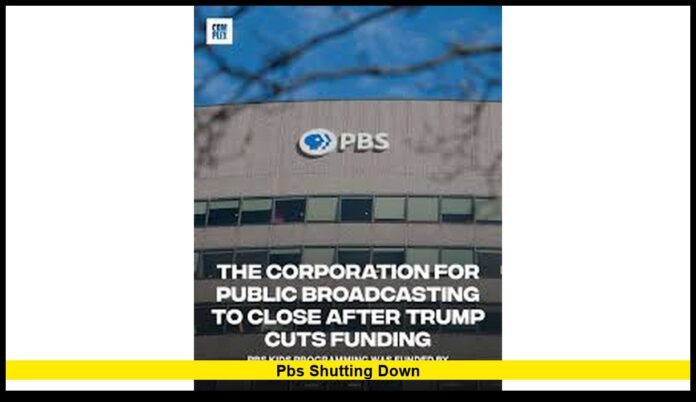

PBS shutting down is a claim that has triggered widespread concern across the United States, especially among viewers who rely on public television for educational content, trusted news, and cultural programming. The topic continues to trend because of major structural changes in public broadcasting funding that have reshaped how PBS and its local stations operate. While the headline sounds alarming, the confirmed reality is more complex and far more important to understand clearly.
This article explains the current situation in full, focusing strictly on verified facts, present conditions, and the real-world impact on PBS, its stations, and American audiences.
Why the Idea of PBS Shutting Down Gained Momentum
The concern around PBS shutting down intensified after the formal closure of the long-standing federal funding distributor that supported public broadcasting for decades. Once that organization voted to dissolve, confusion spread rapidly online. Many readers assumed that the end of one institution meant the immediate collapse of PBS itself.
That assumption was incorrect. PBS continues to operate, broadcast, and stream nationwide. However, the funding shift that triggered these fears is significant and has introduced serious challenges for public television.
Understanding How PBS Actually Operates
PBS is not a single, centralized television channel. It is a national nonprofit network made up of hundreds of independently owned local stations. These stations collectively support PBS programming while maintaining control over local operations.
This structure is the primary reason PBS remains on the air today. While federal funding once played a role in sustaining public broadcasting, it was never the only source of support.
PBS stations generate revenue through:
- Viewer donations and memberships
- Corporate underwriting
- Grants from foundations
- State and local support
- Educational partnerships
Because of this diversified model, PBS does not shut down automatically when one funding stream disappears.
What Changed Financially for Public Television
The most significant development affecting PBS is the permanent removal of federal funding that previously flowed through a central public broadcasting organization. Once that funding ended, the organization itself could no longer operate and formally dissolved.
This did not cancel PBS programming, but it did remove a dependable source of financial stability for many stations. For some large urban stations, the loss is manageable. For smaller and rural stations, it creates serious budget pressure.
This is the core reason the topic of PBS shutting down continues to circulate.
Is PBS Shutting Down Right Now?
No. PBS is not shutting down nationwide, and there has been no announcement of a national closure. Programming continues as normal across television and digital platforms.
However, the future varies by location. Because each station is independent, some may face reductions while others remain largely unaffected. This uneven impact has fueled uncertainty and fear among viewers.
How Local Stations Are Being Affected
Local PBS stations are the backbone of public television. They handle broadcasting, fundraising, community outreach, and locally produced content. The loss of federal support affects these responsibilities in different ways.
Confirmed impacts include:
- Tighter operating budgets
- Reduced spending on local productions
- Greater reliance on fundraising campaigns
- Hiring freezes or staff reductions in some regions
These changes do not equal an immediate shutdown, but they do force stations to make difficult decisions.
Rural Communities Face the Greatest Risk
Rural and low-population areas depend heavily on public television. In many of these regions, PBS stations serve as a primary source of educational and public-interest content.
These stations often operate with limited fundraising capacity. Without federal support, replacing lost revenue becomes far more difficult. As a result, rural communities face a higher risk of reduced service or, in rare cases, station closure.
This reality is a major driver behind searches related to PBS shutting down.
Educational Programming Remains Available
PBS is widely recognized for its educational mission, especially for children and families. Programs designed to support learning, literacy, and early development continue to air nationwide.
There has been no confirmed cancellation of national educational programming. However, some local education initiatives tied to community partnerships may face budget-related adjustments.
For parents concerned about losing trusted content, PBS remains available today across broadcast and digital platforms.
Local News and Community Coverage Under Pressure
One area most affected by funding changes is local journalism. PBS stations often provide in-depth regional news, public affairs programs, and election coverage that commercial networks do not prioritize.
When budgets tighten, locally produced content is often the first area reviewed. While national PBS programming remains stable, some stations may reduce local news output due to staffing or production costs.
This trend raises broader concerns about access to reliable local information.
Why Online Claims Became So Dramatic
The rapid spread of the phrase PBS shutting down can be traced to how news circulates online. Short headlines, viral videos, and social media posts often removed essential context.
Many posts failed to distinguish between a funding organization closing and PBS continuing to broadcast. As the message spread, clarity was lost, and fear replaced facts.
The result was a nationwide misconception that PBS was about to disappear overnight.
How PBS Is Adapting to the New Reality
PBS and its member stations have responded by adjusting priorities and strategies. These steps are already underway and confirmed across multiple regions.
Key responses include:
- Increased focus on viewer-supported funding
- Expansion of digital streaming platforms
- Cost-sharing between stations
- Emphasis on core programming with the widest reach
These changes aim to stabilize operations while preserving public service values.
The Growing Role of Digital Platforms
Streaming has become an essential part of PBS’s future. Digital platforms allow PBS to reach new audiences while reducing reliance on traditional broadcast infrastructure.
PBS content remains accessible online and through dedicated apps. This shift helps offset financial pressure, though it does not fully replace the community role of local stations.
Digital access ensures PBS remains relevant in a changing media environment.
Why the Future of PBS Depends on Viewers
With the loss of federal funding, viewer support matters more than ever. Membership contributions, donations, and community engagement now play a direct role in keeping stations operational.
Public television has always relied on public trust. Today, that trust is tied more closely than ever to financial sustainability.
For many stations, local support will determine long-term survival.
What Viewers Should Expect Moving Forward
Based on confirmed developments, viewers across the United States can expect:
- Continued national PBS programming
- Increased fundraising appeals
- Possible reductions in local content in some areas
- No confirmed nationwide shutdown
Change will happen gradually and unevenly, not all at once.
Clarifying the Core Facts
To summarize the reality clearly:
- PBS is still broadcasting
- PBS is not shutting down nationwide
- A key funding organization has dissolved
- Financial pressure is real for some stations
- Public support now plays a larger role
The concern around PBS shutting down reflects uncertainty, not a confirmed end of public television.
Why This Moment Matters for Public Media
The current transition represents one of the most significant moments in the history of U.S. public broadcasting. Decisions made now will shape how educational and public-interest media functions for years to come.
PBS remains active today, but its future depends on adaptability, innovation, and community support.
What role should public television play in the future of American media? Share your thoughts and stay connected as this important story continues.