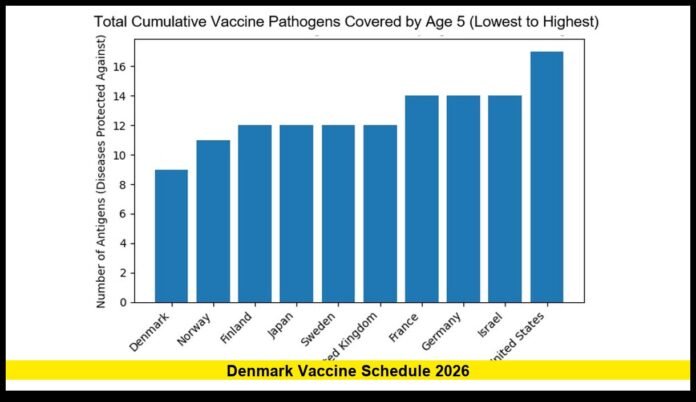

The Denmark vaccine schedule in 2026 remains one of the world’s most trusted and successful immunization programs, setting a high standard for public health management. Backed by a strong healthcare infrastructure, digital innovation, and public confidence, Denmark’s vaccination system ensures that every child, adolescent, and adult has access to free, timely, and safe vaccines.
For U.S. readers interested in how nations achieve near-perfect vaccination coverage, Denmark offers a model of efficiency, equality, and transparency. Its approach combines advanced technology with community-based care, demonstrating how consistent communication and universal access can prevent outbreaks and protect entire populations.
How Denmark’s Vaccine Schedule Works in 2026
Denmark’s immunization system is part of its universal healthcare model. Every resident—citizen, refugee, or legal immigrant—is automatically registered in the national health database, which connects doctors, patients, and the government through a unified digital network.
Vaccines are administered by local doctors and public health nurses under the Danish Childhood Vaccination Programme, which has operated since 1943. The program offers vaccines at no cost to families, funded through national taxes, and covers both standard and booster immunizations.
The current 2026 plan protects against 12 major diseases, with an emphasis on combination vaccines that reduce the number of total injections without sacrificing effectiveness.
Detailed Breakdown of the 2026 Denmark Vaccine Schedule
Denmark’s schedule is simple and consistent, allowing families to follow their child’s immunization plan easily through automatic reminders.
| Age | Vaccine(s) | Diseases Covered |
|---|---|---|
| 3 months | DTaP-IPV/Hib/HepB + PCV | Diphtheria, Tetanus, Pertussis, Polio, Haemophilus influenzae type b, Hepatitis B, Pneumococcal infections |
| 5 months | DTaP-IPV/Hib/HepB + PCV | Booster for same diseases |
| 12 months | DTaP-IPV/Hib/HepB + PCV | Third series dose for sustained immunity |
| 15 months | MMR | Measles, Mumps, Rubella |
| 4 years | DTaP-IPV + MMR booster | Reinforces early-childhood protection |
| 12 years | HPV (2 doses, 6 months apart) | Human Papillomavirus, prevention of related cancers |
| 14–15 years | DTaP booster | Diphtheria, Tetanus, Pertussis |
The Danish schedule emphasizes simplicity and accessibility. All doses are provided at local clinics or general practitioners’ offices. Parents receive digital reminders through Denmark’s secure eHealth system, eliminating confusion or missed appointments.
Digital Access: The Secret to High Compliance
One of the key reasons Denmark achieves consistent vaccination success is its integration of digital health systems. Every citizen has a personal medical record accessible through a secure national portal.
Parents log in to check upcoming vaccine appointments, confirm completed doses, and download vaccination certificates for school or travel—all within minutes. Automatic reminders are sent when vaccines are due, making compliance nearly effortless.
This automation has dramatically reduced missed appointments. Denmark’s national health data shows that more than 99% of families respond to reminders within 30 days.
National Vaccination Coverage in 2026
The Denmark vaccine schedule consistently produces some of the highest vaccination coverage rates in Europe. Data from 2026 shows:
- 97% of Danish children complete the primary infant vaccine series.
- 95% receive both MMR doses before school age.
- 93% of adolescents complete the HPV series.
- 98% of parents report satisfaction with vaccine communication.
These high rates have eliminated or nearly eliminated multiple diseases. Polio has been gone since 1983. Measles and rubella are classified as eliminated. Diphtheria and Hib have not been recorded in Danish children for decades.
Why the Program Works: Trust, Simplicity, and Free Access
Three principles define Denmark’s immunization success:
- Trust:
The Danish population has deep confidence in public healthcare. The government provides open data, clear communication, and regular updates about all vaccines. - Simplicity:
Parents don’t need to remember dates or file paperwork—automatic scheduling and digital reminders make participation easy. - Free Access:
All vaccines in the national program are free. Cost is never a barrier, which ensures full participation across income levels.
The result is a system that combines efficiency with community trust, leading to universal coverage rates unmatched in most countries.
HPV Vaccine: A Cornerstone of Denmark’s Modern Immunization Strategy
One of the most successful parts of the national program is the HPV vaccination for adolescents. In Denmark, both boys and girls receive the HPV vaccine at age 12. This gender-neutral policy protects against a range of cancers caused by human papillomavirus, including cervical, throat, anal, and genital cancers.
The vaccine is given in two doses, six months apart, through either school programs or local clinics. Participation remains above 90%, and recent public health data shows a steady decline in HPV-related precancerous conditions among vaccinated populations.
By 2030, Denmark aims to eliminate HPV-related cervical cancer entirely—a goal the World Health Organization supports as achievable through continued high coverage.
COVID-19 in the 2026 Denmark Vaccine Framework
COVID-19 vaccination continues as part of Denmark’s broader preventive strategy, though not as a mandatory part of the childhood schedule. Instead, it is recommended for specific groups:
- Individuals over 65 years old.
- Adults and children with chronic medical conditions or weakened immune systems.
- Healthcare and social care workers.
Each autumn, updated COVID-19 vaccines targeting the latest variants are offered at clinics and pharmacies. The policy focuses on protection for those most at risk of serious illness while keeping the vaccine voluntary for the general population.
Denmark’s management of COVID-19 vaccination has maintained low hospitalization rates and high community immunity without public controversy.
Vaccines Recommended During Pregnancy and for Travelers
In addition to standard immunizations, Denmark provides targeted vaccine guidance for pregnancy and international travel.
For Pregnant Women:
- Pertussis (whooping cough): Recommended during the third trimester to transfer antibodies to the baby before birth.
- Influenza: Safe in all trimesters and strongly encouraged during flu season.
- COVID-19: Advised for expectant mothers when clinically indicated.
For Travelers:
- Hepatitis A and B: Recommended for travel to regions with higher infection rates.
- Yellow Fever: Required for certain destinations in Africa and South America.
- Typhoid and Cholera: For travelers spending extended time in high-risk areas.
- Rabies: For individuals working with animals or traveling to rural regions.
These travel vaccines are available at specialized clinics. While not part of the free national program, they remain heavily subsidized.
Comparison Between Denmark and U.S. Vaccine Programs
Both Denmark and the United States maintain high vaccine standards, but their systems differ in structure, funding, and implementation.
| Vaccine Type | Denmark (Start Age) | United States (Start Age) | Key Difference |
|---|---|---|---|
| Hepatitis B | 3 months | Birth | U.S. begins earlier; Denmark combines later with DTaP |
| DTaP | 3 months | 2 months | Denmark’s schedule uses fewer injections |
| Polio | 3 months | 2 months | Integrated into a single combination vaccine |
| Hib | 3 months | 2 months | Administered simultaneously with DTaP |
| MMR | 15 months | 12 months | Slightly later start, same protection |
| HPV | 12 years | 11–12 years | Equal coverage for both genders |
| Tdap booster | 14–15 years | 11–12 years | Denmark schedules booster later |
| Varicella | Not routine | 12 months | Denmark relies on natural immunity |
While both countries achieve strong results, Denmark’s approach focuses more on combination vaccines and digital monitoring, reducing administrative burden and maximizing efficiency.
Adult and Booster Immunizations in Denmark
Adults in Denmark are encouraged to maintain vaccine protection through scheduled boosters. The 2026 guidance includes:
- Tetanus and Diphtheria: Every 10 years.
- Influenza: Every year for those over 65 or with chronic illnesses.
- COVID-19: Annually for risk groups.
- MMR catch-up: For anyone missing childhood doses.
The booster process is fully integrated into Denmark’s digital health records, and reminders are automatically issued when a vaccine is due.
Disease Elimination and National Achievements
Decades of consistent vaccination have produced measurable public health victories in Denmark:
- Polio: Eradicated for more than 40 years.
- Measles and Rubella: Eliminated, with only isolated imported cases.
- Diphtheria: No domestic cases for over two decades.
- Hib: Virtually nonexistent among children.
- HPV-related cancers: Expected to decline by 80% in coming generations.
Denmark’s consistent monitoring and rapid response prevent outbreaks before they spread. This success underlines how prevention remains more cost-effective than treatment.
The Role of Technology in Denmark’s Vaccination Success
Digital innovation plays a central role in Denmark’s vaccine program. The country’s eHealth system, integrated across all healthcare providers, ensures:
- Real-time tracking: Each vaccine administered is logged instantly in the national database.
- Automatic reminders: Notifications are sent before and after due dates.
- Secure access: Families can view or download their records anytime.
- Research-ready data: Anonymous data helps researchers study trends and improve scheduling.
This model allows Denmark to maintain national oversight while keeping healthcare personal and accessible. It also ensures quick adjustments when new vaccines are introduced or timing guidelines change.
Addressing Vaccine Hesitancy
Vaccine hesitancy in Denmark remains minimal compared to global averages. The government’s transparent communication and unified health messaging prevent misinformation from spreading widely.
Public campaigns focus on facts, not fear. They emphasize community protection, family health, and scientific evidence. Health workers are trained to answer questions openly, helping parents feel informed rather than pressured.
The approach works: surveys in 2026 show over 90% of Danish parents express confidence in vaccines, and more than 85% report discussing vaccination topics directly with their healthcare providers.
Financial and Economic Benefits of the Denmark Vaccine Schedule
Vaccination is not only a health intervention—it’s an economic safeguard. The Danish Ministry of Health reports that for every dollar spent on vaccination, the country saves an estimated $12–$15 in future medical costs.
Fewer hospitalizations, reduced absenteeism, and long-term protection contribute to economic stability. With preventable diseases nearly eliminated, healthcare resources can focus on chronic care and aging populations instead of outbreaks.
For Denmark, maintaining universal free vaccination remains a public investment that continually pays dividends.
Research and Future Vaccine Development
Denmark’s public health authorities continue to evaluate new vaccines for potential inclusion in future schedules. Ongoing projects in 2026 include:
- RSV immunization: Studies underway to introduce protection for infants and pregnant women.
- Universal influenza vaccine: Early trials showing promise for long-term coverage.
- Next-generation pneumococcal vaccines: Designed for broader bacterial resistance.
- AI-based outbreak monitoring: Enhancing detection of regional vaccine gaps.
These initiatives reinforce Denmark’s commitment to staying ahead of evolving global health challenges.
How Denmark’s Model Informs Global Health Policy
International organizations frequently cite Denmark’s vaccine schedule as a model of integration and public cooperation. Its balance between personal freedom and collective responsibility offers lessons for countries struggling with misinformation or unequal access.
The Danish system demonstrates that high vaccination rates don’t require mandates—just trust, access, and efficient communication. It also shows the power of combining healthcare, technology, and education to protect an entire nation.
Key Lessons for the U.S. and Other Nations
The Denmark vaccine schedule provides several takeaways that could enhance U.S. vaccination infrastructure:
- Unified Health Records: A single national registry reduces data gaps.
- Automatic Notifications: Digital reminders simplify compliance.
- Combination Vaccines: Fewer injections improve adherence and reduce fear.
- Universal Access: Free vaccination removes socioeconomic barriers.
- Consistent Communication: Centralized messaging maintains trust across all regions.
Implementing similar strategies could help the U.S. strengthen public trust and reduce disparities in vaccination coverage across states.
Looking Ahead: Denmark’s 2026–2027 Public Health Priorities
For 2027, Denmark’s vaccination committee plans to review several updates to its national schedule, including:
- Expanded use of combination vaccines for infants.
- Broader influenza vaccine access for children under five.
- Assessment of RSV protection options.
- Continued monitoring of HPV and COVID-19 vaccine outcomes.
These upcoming evaluations ensure Denmark stays aligned with the latest scientific evidence and international best practices.
The Denmark vaccine schedule for 2026 demonstrates how accessibility, trust, and modern healthcare design can work together to protect a nation. What do you think the U.S. could learn from Denmark’s approach? Share your thoughts below.