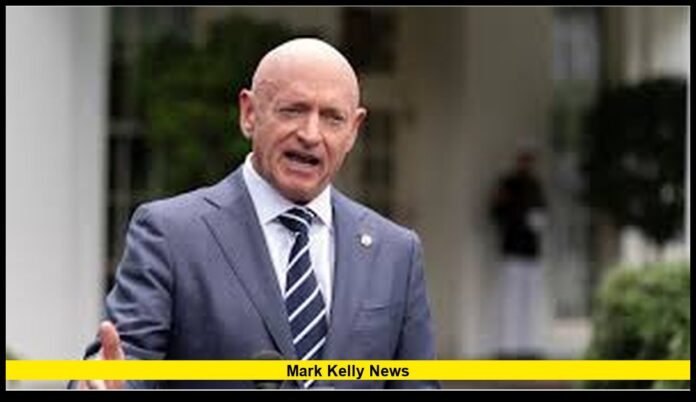

Mark Kelly news continues to draw national attention as developments involving the Arizona senator intersect with military oversight, constitutional debate, and political accountability. The situation centers on formal action taken by the U.S. Department of Defense concerning Kelly’s conduct as a retired Navy officer who now serves in the U.S. Senate. What began as a political controversy has grown into a defining moment that raises questions about civil-military boundaries, public speech, and the responsibilities of elected officials with military backgrounds.
Why Mark Kelly News Is Resonating Across the Country
The latest Mark Kelly news matters because it is highly unusual for a sitting U.S. senator to face formal administrative scrutiny from the Department of Defense. Kelly’s status as a retired Navy captain places him in a rare category where military regulations still apply, even as he holds civilian office. This overlap has sparked widespread discussion among lawmakers, veterans, and voters.
At the center of the issue is a public message involving military ethics and constitutional responsibility. Supporters frame the issue as one of free expression and lawful military conduct. Critics view it as a challenge to discipline and order. The Pentagon’s involvement has elevated the issue beyond partisan debate and into institutional review.
Understanding the Pentagon’s Administrative Review
The Department of Defense has initiated an administrative process that includes a formal censure and a review of Kelly’s retired rank. This type of review focuses on whether a retired officer’s conduct meets the standards associated with the rank they held upon leaving service.
Unlike criminal proceedings, this process is administrative in nature. It does not involve arrest, trial, or criminal penalties. However, the consequences can still be significant. A change in retired rank would affect both professional standing and retirement benefits, which are calculated based on rank and years of service.
The review process generally includes:
- A written notice outlining the concerns
- Placement of formal findings in the retired service record
- An opportunity for the officer to respond in writing
- A final determination by defense officials
For a lawmaker currently serving in Congress, such a process is rare and politically sensitive.
The Video That Triggered the Controversy
The events leading to this Mark Kelly news cycle trace back to a video in which Kelly and other lawmakers addressed members of the U.S. military. The message emphasized that service members have a duty to refuse unlawful orders, a principle grounded in military law and constitutional doctrine.
Kelly has stated that his remarks reflected long-standing military training. Critics argue that delivering such a message in a political context risked confusing or pressuring active-duty personnel. The debate quickly escalated, drawing responses from political leaders and prompting calls for accountability.
Defense officials ultimately determined that the matter warranted formal administrative review due to Kelly’s continued status as a retired officer receiving military pay.
Mark Kelly’s Public Defense
Mark Kelly has responded by standing firmly behind his words. He has emphasized that the obligation to refuse unlawful orders is not controversial within military doctrine. According to Kelly, reminding service members of this duty reinforces constitutional values rather than undermining authority.
He has also pointed to his decades of service as evidence of his respect for military discipline and national security. Kelly argues that the scrutiny he faces reflects a broader climate in which political speech on defense issues has become increasingly contentious.
As part of the administrative process, Kelly is expected to submit a formal written response addressing the concerns raised in the review.
Why This Case Is So Uncommon
Cases like this are rarely seen because retired officers are seldom subject to high-profile administrative action, especially when they hold elected office. While military law allows for oversight of retirees in limited circumstances, enforcement is typically reserved for extraordinary situations.
Several factors contribute to the uniqueness of this case:
- Kelly’s role as a sitting U.S. senator
- His visibility as a former astronaut and combat veteran
- The political nature of the underlying dispute
- The broader national debate over civil-military relations
Together, these factors have turned the review into a focal point for discussion about institutional authority and democratic norms.
Potential Effects on Military Retirement Benefits
One of the most closely watched aspects of this Mark Kelly news story is the potential impact on Kelly’s military retirement pay. Military pensions are closely tied to the highest rank served satisfactorily. A reduction in retired rank would lead to a corresponding reduction in benefits.
While such a change would not erase Kelly’s service record, it would carry symbolic weight. Rank represents professional achievement and trust. Any adjustment would signal formal disapproval by defense authorities.
Veterans’ organizations and legal observers are paying close attention, noting that the outcome could influence how similar cases are handled in the future.
Political Reactions in Congress
The situation has sparked strong reactions on Capitol Hill. Lawmakers have debated whether the Pentagon’s action represents appropriate oversight or an overreach into political territory.
Supporters of the review argue that military standards must apply consistently, regardless of political office. They stress the importance of maintaining clear boundaries between military discipline and political advocacy.
Opponents warn that administrative action against a senator could chill legitimate speech and blur the line between civilian leadership and military authority. They argue that elected officials must be free to discuss constitutional principles without fear of institutional reprisal.
Public Opinion and National Conversation
Public response to the Mark Kelly news has been divided. Some Americans view the Pentagon’s action as a necessary step to uphold discipline. Others see it as an alarming precedent that could discourage open debate on military ethics.
The issue has resonated particularly strongly among veterans. Some agree with Kelly’s interpretation of military duty, while others worry about the implications of political messaging directed at service members.
This range of views reflects broader divisions in American society about authority, accountability, and the role of institutions.
Mark Kelly’s Background and Its Role in the Debate
Kelly’s personal history plays a major role in shaping public perception. His career includes combat service as a naval aviator and multiple space missions as an astronaut. He later transitioned into public service, winning election to the U.S. Senate and building a reputation focused on national security and veterans’ issues.
Supporters argue that this background lends credibility to his comments and demonstrates deep respect for the military. Critics counter that his experience makes his words more influential and therefore more consequential.
Either way, Kelly’s biography is inseparable from the current discussion.
Legal and Constitutional Questions Raised
The case has revived debate over the legal status of retired military officers. While courts have upheld limited military authority over retirees, such cases rarely involve elected officials actively serving in civilian roles.
Key questions now being discussed include:
- How should military authority over retirees be balanced with constitutional protections?
- Should Congress clarify the limits of such authority?
- What safeguards should exist to prevent politicization of military oversight?
Legal experts suggest that while the current process may be lawful, its broader implications could prompt legislative or judicial review in the future.
What Happens Next
The next step in this Mark Kelly news story is the completion of the administrative review. After Kelly submits his response, defense officials will issue a final determination regarding his retired rank and record.
Possible outcomes range from no change at all to formal adjustments in rank or documentation. Regardless of the decision, the case is likely to remain a reference point in discussions about civil-military relations and political speech.
Implications for Arizona and Beyond
For voters in Arizona, the controversy adds another layer to Kelly’s public profile. Supporters may see the situation as evidence of principled leadership. Critics may view it as an unnecessary distraction.
Nationally, the case has implications that extend far beyond one state or one senator. It highlights tensions that arise when military service, political authority, and public communication intersect.
Why This Story Continues to Matter
The importance of this Mark Kelly news story lies in what it reveals about American institutions. It tests how the nation balances respect for military discipline with the freedoms guaranteed in a democratic system.
As the review process concludes, its outcome will shape future expectations for retired officers who enter public life and for the institutions that oversee them.
How should the United States balance military standards with the rights of elected officials? Share your thoughts and stay connected as Mark Kelly news continues to unfold.