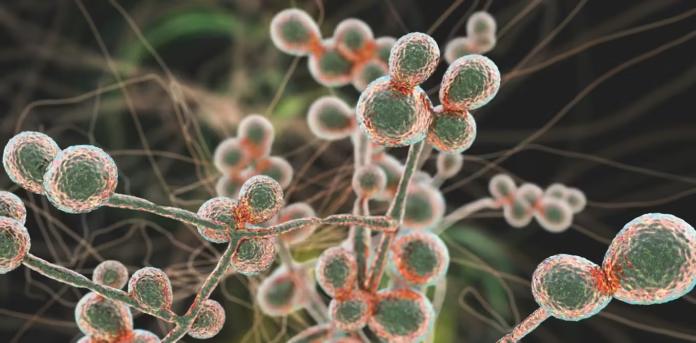

Superbug fungus Candida auris continues to spread across the United States, drawing heightened attention from healthcare leaders as confirmed cases increase in hospitals, nursing homes, and long-term care facilities. This highly resilient fungal pathogen has become a persistent challenge due to its resistance to multiple antifungal medications, its ability to survive on surfaces, and the difficulty of identifying it quickly. As of now, it is firmly established as a major healthcare-associated infection requiring sustained vigilance and coordinated response.
Unlike common fungal infections, Candida auris primarily affects people who are already medically vulnerable. Its expansion has reshaped infection prevention strategies nationwide, forcing healthcare systems to adapt to a pathogen that behaves differently from other known fungi.
Understanding Candida auris and Its Unique Risks
Candida auris is a yeast that can cause severe, invasive infections, including bloodstream infections that may spread to organs such as the heart, kidneys, and brain. What sets it apart from other Candida species is its unusual combination of drug resistance, environmental persistence, and ease of transmission in medical settings.
Many strains of Candida auris are resistant to one or more antifungal drug classes. Some have shown resistance to all commonly used antifungal treatments. This makes infections difficult to manage and increases the risk of serious outcomes, particularly when diagnosis is delayed.
Another major concern is that Candida auris can live on the skin without causing symptoms. People may carry the organism unknowingly, allowing it to spread within healthcare environments before it is detected.
Rising Case Counts Across the United States
Candida auris cases have been confirmed in a growing number of states, with thousands of identified clinical infections and colonization cases nationwide. While early U.S. cases were limited and sporadic, recent years have seen steady and widespread increases.
Healthcare facilities remain the primary locations where transmission occurs. Hospitals, skilled nursing facilities, rehabilitation centers, and long-term acute care hospitals have reported ongoing challenges in preventing repeated introductions of the fungus.
Once Candida auris enters a facility, it can be extremely difficult to eliminate. It can survive for weeks on surfaces such as bedrails, medical carts, monitoring equipment, and door handles, even after routine cleaning. This persistence contributes to prolonged outbreaks and recurring cases.
Why Candida auris Thrives in Medical Environments
Candida auris spreads mainly through direct contact. Contaminated surfaces, shared medical equipment, and close interactions between patients and healthcare workers all play a role in transmission.
Several factors make healthcare settings especially vulnerable:
- High patient density
- Frequent use of invasive devices
- Repeated contact between staff and patients
- Shared equipment and rooms
- Patients with weakened immune systems
The fungus can contaminate gloves, gowns, and hands if strict hygiene measures are not consistently followed. Because it is resistant to some disinfectants, standard cleaning procedures may not be sufficient without targeted infection-control protocols.
Who Is Most at Risk of Infection
Candida auris rarely causes serious illness in healthy individuals. The greatest risk is concentrated among patients with complex medical needs. These include:
- Individuals in intensive care units
- Residents of nursing homes and long-term care facilities
- Patients with central venous catheters or urinary catheters
- People on ventilators or receiving dialysis
- Patients with cancer, organ transplants, or weakened immune systems
In these groups, invasive Candida auris infections can progress rapidly. Bloodstream infections are associated with high complication rates, extended hospital stays, and increased mortality.
Symptoms Can Be Difficult to Identify
Symptoms of Candida auris infection often resemble those of bacterial infections or other serious illnesses. This overlap can delay accurate diagnosis. Common signs include:
- Persistent fever that does not respond to antibiotics
- Chills
- Fatigue
- Low blood pressure
- Signs of sepsis
Because many patients who develop Candida auris infections are already critically ill, symptoms may be mistakenly attributed to existing conditions. Without specialized testing, the fungus can be misidentified as a less dangerous yeast, allowing it to spread further before appropriate measures are taken.
The Challenge of Drug Resistance
Drug resistance is one of the most troubling aspects of Candida auris. Standard antifungal medications that are effective against other fungal infections often fail against this organism.
When treatment options are limited, clinicians may need to use combinations of medications or less commonly used drugs, which can increase the risk of side effects and complications. In some cases, infections do not respond adequately to available treatments at all.
This resistance also complicates outbreak management. Patients may remain infectious for longer periods, increasing the risk of transmission within healthcare facilities.
Impact on Long-Term Care Facilities
Long-term care facilities face particular challenges with Candida auris. Residents often require ongoing medical care, frequent assistance with daily activities, and the use of medical devices. These conditions create an environment where the fungus can spread easily.
Unlike large hospitals, some long-term care facilities may have limited access to advanced laboratory testing and isolation resources. This can delay detection and make containment more difficult.
Once established in such settings, Candida auris can persist for extended periods, requiring sustained infection-control efforts to prevent ongoing transmission.
Healthcare System Response
Healthcare systems across the U.S. have strengthened their response to Candida auris through a range of targeted strategies. These include:
- Screening high-risk patients upon admission
- Isolating or cohorting affected individuals
- Using disinfectants proven effective against the fungus
- Enhancing environmental cleaning protocols
- Reinforcing hand hygiene and protective equipment use
Staff education is a critical component of prevention. Facilities are investing in training programs to ensure that healthcare workers recognize risks, follow proper procedures, and respond quickly when a case is identified.
Surveillance and Early Detection
Improved surveillance has become a central focus in managing Candida auris. Early detection allows facilities to implement control measures before widespread transmission occurs.
Specialized laboratory testing is often required to accurately identify the fungus. As awareness has increased, more facilities have improved their diagnostic capabilities, reducing the likelihood of misidentification.
Active screening of patients transferred from other healthcare facilities has also helped limit cross-facility spread.
Why the General Public Faces Low Risk
Despite its seriousness, Candida auris is not considered a threat to the general public. It is not spread through casual contact, respiratory droplets, or community settings.
Healthy individuals without recent healthcare exposure are unlikely to become infected. Public health officials emphasize that the risk remains concentrated within medical environments among vulnerable patients.
Understanding this distinction helps prevent unnecessary fear while maintaining appropriate concern where it matters most.
Looking Ahead
Candida auris represents a growing test for modern healthcare systems. Its ability to resist treatment and persist in medical environments highlights the importance of infection prevention, rapid detection, and coordinated response.
Research into new antifungal therapies and faster diagnostic tools continues, but prevention remains the most effective defense. Consistent hygiene practices, environmental cleaning, and early intervention are critical to controlling spread.
As healthcare systems adapt, Candida auris serves as a reminder of how quickly infectious threats can evolve and the importance of preparedness.
The continued spread of Candida auris underscores the need for awareness and strong infection-control practices—join the conversation or stay updated as this public health challenge unfolds.