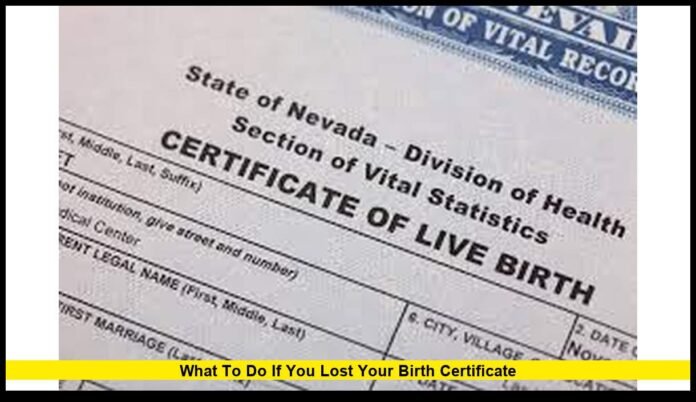

If you are wondering what to do if you lost your birth certificate, you are not alone. Across the United States, thousands of people replace lost or damaged birth certificates every year due to moves, disasters, theft, or simple misplacement. As of today, the replacement process is well-defined, secure, and accessible in every state. This guide provides a complete, up-to-date explanation of how to recover your birth certificate, what documents you need, how long it takes, and how to avoid delays.
Why a Birth Certificate Matters So Much
A birth certificate is one of the most important legal documents you will ever possess. It establishes your legal identity from birth and is required for many essential services throughout life.
Government agencies rely on birth certificates to confirm citizenship and identity. Employers may require it for I-9 employment verification. State motor vehicle offices often request it for REAL ID-compliant licenses. Schools, colleges, and universities use it to verify age and enrollment eligibility. Federal agencies require it for passport issuance, immigration processing, and Social Security benefits.
Because of its role in identity verification, a birth certificate cannot be replaced casually. The process is structured to prevent fraud while ensuring legitimate access for those who need it.
Understanding How Birth Certificates Are Stored in the U.S.
Birth certificates in the United States are not issued or stored by a single federal agency. Instead, each state, territory, and jurisdiction maintains its own vital records system.
Your birth certificate is held by the vital records office in the state or territory where you were born. Some states also allow county-level offices to issue certified copies. This means that even if you currently live in a different state, you must request your replacement from the state of birth.
Certified copies are official documents printed on security paper and stamped or sealed by the issuing authority. Photocopies or digital images are not legally valid for official use.
What to Do If You Lost Your Birth Certificate Immediately
The first step is to remain calm. Losing a birth certificate does not cancel your legal status or identity. It simply means you need to request a replacement.
Start by confirming whether your birth certificate is truly lost or simply misplaced. Check safe deposit boxes, personal files, and trusted family members who may have stored it for safekeeping.
If you are certain it is lost, begin the replacement process as soon as possible. Delaying can cause issues later when you urgently need proof of identity for travel, employment, or government services.
Where to Request a Replacement Birth Certificate
You must request your replacement from the vital records office of the state or territory where you were born.
Each state has its own department, often called:
- Office of Vital Records
- Bureau of Vital Statistics
- Department of Health Vital Records Division
These offices are legally authorized to issue certified copies of birth certificates.
Requests can usually be made online, by mail, or in person. Availability of same-day service depends on state rules and office capacity.
Online Requests for a Lost Birth Certificate
Many states now allow online ordering of certified birth certificate copies. Online requests are popular because they are convenient and trackable.
When ordering online, you will be asked to verify your identity, provide personal information, and submit payment electronically. Online orders often include optional expedited processing and shipping.
Online systems use identity verification tools to protect records. This may include answering security questions or uploading identification documents.
Online requests are especially helpful if you live far from your state of birth or need a replacement quickly.
Mail Requests for a Lost Birth Certificate
Mail requests remain a valid option in every state.
To request by mail, you typically need to:
- Complete the official application form
- Provide a photocopy of acceptable identification
- Include payment in the approved form
- Mail everything to the correct address
Mail processing times vary widely. Some states process mail requests within two weeks, while others may take longer during high-volume periods.
Mail requests are best for individuals who are not in a rush and prefer paper documentation.
In-Person Requests for a Lost Birth Certificate
Some states allow in-person requests at state or county vital records offices.
In-person visits may offer same-day service, especially if the office maintains on-site printing. However, availability depends on staffing levels and local regulations.
When visiting in person, bring valid identification and be prepared to pay the required fee. Some offices require appointments, so checking ahead can prevent wasted trips.
Identification Requirements Explained
To protect against identity theft and fraud, vital records offices require proof of identity before issuing a birth certificate.
Commonly accepted forms of identification include:
- State driver’s license
- State identification card
- U.S. passport
If you do not have primary identification, some states allow secondary forms such as utility bills, school records, or insurance cards combined with a signed application.
Requirements vary by state, so confirming accepted documents beforehand helps avoid rejection.
Information You Must Provide
When requesting a replacement birth certificate, accuracy is critical. You will need to provide:
- Full name as listed on the birth record
- Date of birth
- City or county of birth
- State or territory of birth
- Full names of parents, including mother’s maiden name
Even small errors can delay processing, so double-check spelling and dates before submitting your request.
Fees for Replacing a Lost Birth Certificate
Fees for certified birth certificate copies are set by each state.
Most states charge between $15 and $30 for the first copy. Additional copies ordered at the same time are often discounted.
Online orders may include additional processing or shipping fees. Expedited services increase the total cost but reduce waiting time.
Fees are generally non-refundable, even if the request is denied due to incomplete information.
How Long It Takes to Get a Replacement
Processing times depend on several factors, including request method, state workload, and whether expedited service is used.
Online requests with expedited processing may arrive within one to two weeks. Standard processing can take several weeks. Mail requests typically take longer due to postal delivery times.
During peak periods, such as summer travel seasons, processing times may increase.
What If You Need a Birth Certificate Urgently
If you need a birth certificate quickly for travel, employment, or legal reasons, choose the fastest available option.
Online requests with expedited shipping are often the quickest. In-person visits may provide same-day service in some states.
If time is critical, contact the vital records office directly to confirm processing times and options.
Replacing a Birth Certificate After a Name Change
If your name has changed due to marriage, divorce, or court order, your birth certificate will still show your name at birth.
You may need to provide legal documentation of the name change when using your birth certificate for official purposes.
Some states allow amendments to birth records under specific circumstances, but this is a separate legal process from replacing a lost certificate.
What If Your Birth Certificate Was Stolen
If you believe your birth certificate was stolen, consider taking additional precautions.
Reporting the theft helps create a record in case of identity misuse. Monitor your credit and personal records for unusual activity.
The replacement process remains the same, but staying vigilant protects you from potential identity theft.
Replacing a Birth Certificate for Someone Else
Parents, legal guardians, and authorized representatives may request birth certificates for minors or dependents.
Proof of relationship or legal authority is required. This may include court orders, guardianship papers, or parental identification.
Each state defines who is eligible to request a copy and under what conditions.
Common Mistakes That Delay Replacement
Several common errors can slow down the process:
- Providing incomplete information
- Submitting incorrect identification
- Sending payment in an unacceptable form
- Mailing requests to the wrong address
Carefully reviewing requirements before submitting your application reduces the risk of delays.
How Many Copies Should You Order
Ordering multiple certified copies at once is often a smart decision.
Having extra copies allows you to handle future needs without repeating the process. Many agencies keep copies, so having spares saves time and stress later.
Store extra copies securely and avoid carrying them unless necessary.
How to Store Your Birth Certificate Safely
Once you receive your replacement, protect it carefully.
Store certified copies in a fire-resistant safe or secure filing system. Avoid folding or laminating the document, as this may invalidate it.
Keep a record of where the document is stored and inform a trusted family member in case of emergency.
Digital Copies and Why They Are Not Enough
While scanning your birth certificate for personal reference is helpful, digital copies are not legally accepted for official use.
Only certified physical copies issued by a vital records office are valid. Digital images are useful for reference but cannot replace certified documents.
What to Do If Records Are Delayed or Missing
In rare cases, records may be delayed due to archival issues, clerical errors, or historical record gaps.
If your request is delayed, contact the issuing office for status updates. Providing additional information may help locate the record.
Most delays are administrative and can be resolved with follow-up communication.
Special Situations: Older Records and Home Births
Older birth records or births that occurred outside hospitals may take longer to locate.
States maintain archives, but manual searches may be required. Providing as much detail as possible helps archivists locate the record.
Even older or non-hospital births are documented and can usually be retrieved.
Replacing a Birth Certificate Is a Legal Right
Every U.S. citizen and legally recorded birth has the right to obtain a certified birth certificate.
The process is designed to balance access with security. Following official procedures ensures your request is processed correctly.
Planning Ahead for Future Needs
Replacing a lost birth certificate is easier when done before an emergency arises.
If you anticipate travel, employment changes, or legal proceedings, request your replacement early. Having documents ready prevents unnecessary stress.
Final Thoughts
Understanding what to do if you lost your birth certificate gives you control over an otherwise stressful situation. By following the correct steps, providing accurate information, and choosing the right request method, you can secure a certified replacement without unnecessary delays. Birth certificates are replaceable, and the system is designed to help you regain this essential document safely and legally.
Have you recently replaced a lost birth certificate or faced challenges during the process? Share your experience in the comments and stay updated with the latest guidance.