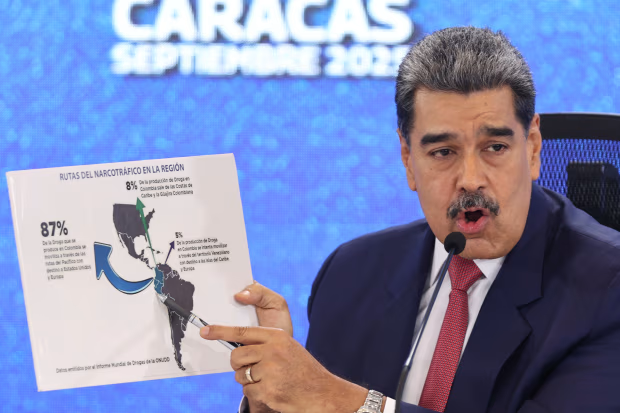

Claims that venezuelan president captured have surged across digital platforms, triggering confusion, concern, and intense debate among U.S. readers. The dramatic wording suggests a sudden and historic political rupture, yet verified information available today tells a very different story. No credible authority has confirmed that Venezuela’s sitting president has been detained, removed, or seized by any foreign or domestic force. Government operations in Venezuela continue, leadership remains intact, and diplomatic structures show no sign of collapse.
This in-depth report examines how the claim emerged, why it spread so quickly, what has been factually confirmed, and how readers can separate verified developments from online misinformation.
How the Claim Took Hold Online
The narrative began with a cluster of viral posts that appeared almost simultaneously across multiple platforms. These posts relied on sensational language, capitalized headlines, and visuals designed to resemble official announcements. In many cases, images were reused from unrelated events or edited to create urgency.
The speed of the spread created the illusion of credibility. As users reshared the content, the claim reached millions before any verification could catch up. However, none of the original posts provided evidence such as official statements, documents, or identifiable spokespersons.
This pattern is common in high-impact political misinformation, where emotional appeal replaces factual grounding.
The Verified Status of Venezuela’s Leadership
Despite online claims, Venezuela’s executive branch remains fully operational. The president continues to exercise authority within the country, and state institutions are functioning normally. Public governance activities, policy communications, and administrative actions show continuity rather than disruption.
There has been no declaration of emergency succession, no confirmation of incapacitation, and no formal acknowledgment of leadership change. Under Venezuelan constitutional procedures, any removal or incapacity of a president would trigger immediate, public steps. None of those steps have occurred.
These facts alone invalidate claims that the president has been captured.
Official Reactions and Clarifications
Government representatives in Venezuela addressed the rumor directly, rejecting it as false and misleading. Officials described the reports as deliberate attempts to destabilize public confidence and provoke uncertainty.
From the U.S. perspective, no confirmation has been issued regarding any operation involving the detention of Venezuela’s head of state. There have been no military alerts, no emergency press briefings, and no legal actions announced that would align with such a claim.
International diplomatic communications likewise reflect no recognition of the alleged event.
Why a Presidential Capture Cannot Remain Hidden
Capturing a sitting head of state would represent a geopolitical shock of historic scale. Such an event would immediately generate global consequences, including:
• Emergency international meetings
• Coordinated diplomatic statements
• Financial market volatility
• Heightened security alerts
None of these indicators are present. Markets remain stable, international relations have not shifted abruptly, and no emergency protocols have been activated.
The absence of secondary effects is a critical signal that the claim lacks factual basis.
Venezuela and the Cycle of Viral Misinformation
Venezuela has long been a focal point for exaggerated or false political narratives. Economic challenges, international sanctions, and diplomatic tensions make the country a frequent target for misinformation campaigns.
False claims often follow a predictable structure:
• Anonymous or unnamed sources
• Vague references to secret operations
• Recycled or manipulated imagery
• Language designed to provoke fear or excitement
The recent claim fits this structure closely, reinforcing the conclusion that it is not grounded in verified reality.
Why the Claim Resonated With American Readers
For U.S. audiences, Venezuela is often associated with foreign policy debates, immigration discussions, and energy concerns. Headlines implying a dramatic intervention or sudden regime collapse naturally attract attention.
Additionally, algorithm-driven platforms reward engagement, not accuracy. As more users reacted emotionally to the claim, it gained further visibility, regardless of its factual weaknesses.
This dynamic highlights how misinformation can spread faster than verification, especially when geopolitical topics are involved.
Legal and Diplomatic Constraints
From a legal standpoint, detaining a foreign head of state would require public justification and immediate acknowledgment. Such an act would not occur without formal announcements, legal filings, or international responses.
As of today, there are no extradition proceedings, arrest warrants, or international legal actions involving Venezuela’s sitting president. Diplomatic channels remain active, and formal relations, though strained, have not been severed.
These realities further confirm that the claim does not align with verified facts.
The Importance of Cross-Verification
Readers evaluating claims of this magnitude should look for consistency across independent authorities. A single viral post is not confirmation. Genuine geopolitical events are reported simultaneously by governments, international bodies, and multiple official channels.
When none of those channels confirm a claim, skepticism is not only reasonable but necessary.
What Is Confirmed Today
Despite widespread online repetition, the assertion venezuelan president captured is false. There is no evidence supporting it, and multiple indicators actively contradict it.
Venezuela’s leadership remains in place, state functions continue, and no verified authority has reported otherwise.
Why Responsible Reporting Matters
False geopolitical claims can have real consequences. They can fuel panic, distort public understanding, and strain international relationships. In an era where information travels instantly, accuracy becomes more important than speed.
Publishing verified facts protects readers and preserves trust in digital media.
Looking Ahead
While Venezuela continues to face political and economic challenges, sudden leadership removal is not among the verified developments today. Readers should remain cautious of sensational claims and rely on confirmed information when assessing international news.
As global events unfold, informed readers play a key role in stopping misinformation by choosing facts over viral fiction.