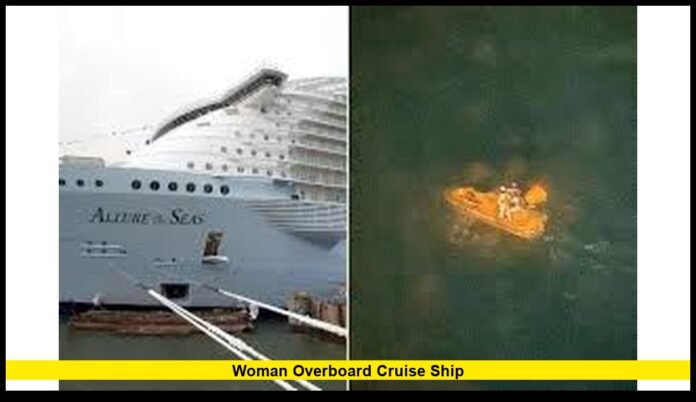

A woman overboard cruise ship incident during a New Year’s Day voyage in the Caribbean has left passengers, families, and cruise travelers across the United States searching for answers. A 77-year-old woman went missing after falling from a large cruise vessel sailing near Cuba, prompting an urgent multi-hour rescue operation. Despite extensive efforts, authorities suspended the search later that day, marking a tragic start to the 2026 cruise season.
What Happened on the Cruise
The incident occurred on January 1, 2026, while a Holland America Line ship was traveling through Caribbean waters near Cuba. The woman was a passenger aboard the Nieuw Statendam, a modern cruise ship operating a scheduled itinerary that began in Fort Lauderdale, Florida.
At some point during the voyage, the woman went overboard. Crew members quickly became aware of the situation and initiated emergency protocols designed for maritime emergencies. The ship slowed, altered its route, and began coordinated response actions while maritime authorities were notified.
The exact circumstances of how the woman fell from the vessel have not been released. Officials have confirmed only what is verified, avoiding assumptions while investigations remain ongoing.
Immediate Response on Board
Once the overboard situation was confirmed, ship personnel acted without delay. Emergency alerts were activated, and trained crew members conducted searches throughout the vessel. Lookouts were posted along exterior decks, and navigational systems were used to retrace the ship’s recent path.
Passengers were informed through onboard announcements. Many reported a noticeable change in atmosphere as the ship reversed course and remained in the area longer than planned. Safety procedures took priority over the scheduled itinerary.
Search Efforts at Sea
The U.S. Coast Guard launched a search operation shortly after receiving notification from the ship. Air and sea assets were deployed to the area believed to be the point where the woman entered the water.
The search covered hundreds of square miles, involving helicopters scanning from above and a cutter navigating through the search zone. Crews focused on visual detection while accounting for wind, waves, and ocean currents that can quickly move a person far from their original location.
After several hours of coordinated searching, the Coast Guard suspended active operations pending any new credible information. Officials stated that this decision followed established maritime search guidelines and probability assessments.
Location and Environmental Challenges
The search took place roughly 40 miles northeast of Sabana, Cuba. This region includes deep ocean waters with active currents, making rescue efforts particularly challenging. Even under favorable conditions, locating a single individual in open water is extremely difficult.
Ocean conditions can change rapidly. Wave motion, sunlight reflection, and water color all affect visibility from both air and sea. These realities often limit how long searches can remain effective, even when resources are available.
Cruise Line Actions and Support
Holland America Line confirmed the incident and expressed sorrow over the situation. The company stated that its care team was working directly with the woman’s family, offering assistance and support during a deeply distressing time.
The ship temporarily adjusted its schedule to allow rescue efforts to continue without interruption. A planned stop in Key West, Florida, was canceled so the vessel could remain in the area during the critical response period.
After the Coast Guard suspended the search, the ship resumed its voyage and continued toward its remaining destinations.
About the Vessel
The Nieuw Statendam is one of the cruise line’s Pinnacle Class ships. It spans nearly 1,000 feet and accommodates thousands of passengers and crew. The ship features multiple decks, open-air walkways, and advanced navigational systems designed for long-distance voyages.
Like other modern cruise ships, it includes safety railings, monitoring procedures, and trained personnel assigned to emergency response. Despite these measures, overboard incidents, while rare, can still occur.
What Authorities Have Confirmed
Officials have released limited but verified details:
- The passenger was 77 years old
- The incident occurred on January 1, 2026
- The ship was sailing near Cuba at the time
- A large-scale search was conducted
- Active search operations were suspended later that day
Authorities have not released the woman’s name or details about how the incident occurred. No conclusions have been announced regarding whether the fall was accidental or related to other factors.
Timeline of the Incident
December 27, 2025
The cruise ship departed Fort Lauderdale for a Caribbean itinerary.
January 1, 2026 (Morning)
The woman went overboard while the ship was at sea near Cuba.
January 1, 2026 (Daytime)
The ship and Coast Guard conducted a coordinated search covering a wide area.
January 1, 2026 (Evening)
Active search operations were suspended pending new information.
January 2, 2026
The cruise itinerary resumed following cancellation of a scheduled port stop.
Understanding Overboard Events
A woman overboard cruise ship case is rare when compared to the total number of passengers who sail each year. However, such incidents receive intense attention due to their seriousness and emotional impact.
Overboard cases can involve a variety of factors, including environmental conditions, personal health, and ship movement. Cruise lines continuously review safety procedures, crew training, and onboard systems to reduce risks and improve response times.
Search and Rescue Limitations
Maritime rescue operations rely on precise timing and accurate location data. Once a person enters open water, currents and wind can move them rapidly. Search models estimate possible drift patterns, but uncertainty increases with each passing hour.
Suspending a search does not mean abandoning hope. Authorities may resume operations if new information becomes available, such as credible sightings or technological data.
Impact on Passengers and Crew
Passengers onboard experienced delays and emotional stress as the situation unfolded. Many travelers expressed concern and sympathy for the missing woman and her family.
Crew members involved in emergency responses undergo training for high-pressure situations. Cruise lines provide internal support resources to staff affected by incidents of this nature.
Cruise Safety and Ongoing Review
Every overboard incident prompts internal and external reviews. Cruise companies examine response timelines, communication procedures, and detection capabilities. Industry-wide discussions often follow, focusing on prevention and passenger awareness.
Travelers are reminded to follow safety guidelines, remain cautious on open decks, and report any concerns immediately to crew members.
Why This Incident Matters
This incident serves as a reminder that even well-regulated travel environments carry risks. For U.S. travelers, transparency and safety remain top priorities when choosing cruise vacations.
While cruising remains a popular and generally safe form of travel, rare emergencies underscore the importance of preparedness and rapid response.
Current Status
As of today, no new information has been released regarding the woman’s whereabouts. Authorities and the cruise line continue to monitor the situation and remain prepared to act if new details emerge.
The case remains open, and the outcome is still unknown.
As this story continues to develop, readers are encouraged to share their thoughts and remain attentive to confirmed updates surrounding this tragic event.