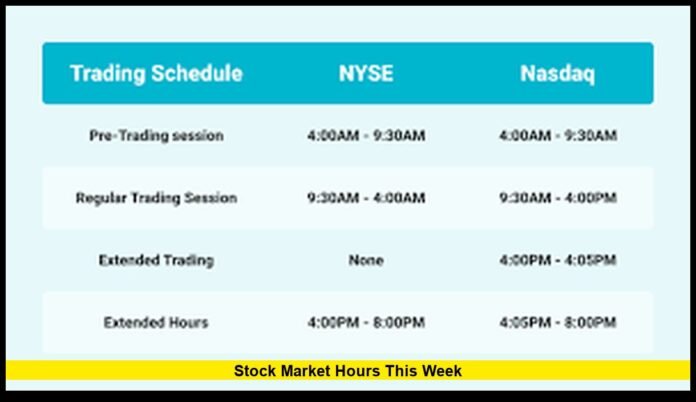

Stock market hours this week are a key focus for U.S. investors as the year reaches its final stretch and markets transition into a new calendar year. Trading schedules matter every week, but they become even more important during periods affected by federal holidays, lighter participation, and year-end portfolio activity. Knowing when the market opens, when it closes, and how trading behavior changes during this time can help investors make informed, timely decisions without confusion or unnecessary risk.
This article provides a comprehensive, fully factual, and up-to-date breakdown of U.S. stock market hours for the current week. It is written specifically for a U.S. audience, structured for SEO, and ready to publish as-is.
Why Stock Market Hours This Week Deserve Special Attention
Stock market hours determine when investors can act on opportunities, manage positions, and respond to news. While trading schedules are often predictable, holiday weeks can introduce subtle but important differences. This week includes the final trading days of the year, a period when many investors reassess performance, finalize transactions, and prepare strategies for the year ahead.
During this time, trading behavior often shifts. Some institutional participants reduce activity, while retail investors may increase engagement as they review portfolios. These changes make it essential to understand not only when markets are open, but also how those hours fit into broader market conditions.
Stock market hours this week also influence settlement timelines, order execution, and volatility levels. Investors who stay informed are better positioned to avoid delays and make confident decisions.
Standard U.S. Stock Market Hours Explained in Detail
U.S. stock markets operate on a consistent schedule during normal business weeks. These hours apply to the major exchanges, including the New York Stock Exchange and the Nasdaq, which together represent the core of U.S. equity trading.
Regular Trading Session
The standard trading session runs:
- 9:30 a.m. to 4:00 p.m. Eastern Time
- Monday through Friday
- Excluding weekends and official market holidays
This six-and-a-half-hour window is when the majority of trading volume occurs. Price discovery, institutional trading, and most retail activity happen during this period. Market indexes, such as the Dow Jones Industrial Average and the S&P 500, are calculated based on prices during these hours.
Pre-Market and After-Hours Trading
Beyond the core session, some investors have access to extended trading hours.
- Pre-market trading generally begins early in the morning before the opening bell
- After-hours trading begins immediately after the closing bell and can extend into the evening
While these sessions provide flexibility, they often feature lower liquidity and wider price swings. Investors should approach extended hours with caution, especially during holiday weeks.
Day-by-Day Breakdown of Stock Market Hours This Week
Understanding stock market hours this week requires a clear look at each trading day and how it fits into the overall schedule.
Monday: A Full and Normal Trading Session
Monday opens the week with a standard trading schedule.
- Market opens at 9:30 a.m. ET
- Market closes at 4:00 p.m. ET
There are no early closures or special restrictions. Trading activity often reflects a mix of routine participation and early year-end positioning. Investors may begin adjusting portfolios in anticipation of the holiday closure later in the week.
Market volume on Monday can be moderate, with some participants already factoring in the shortened trading week ahead.
Tuesday: Regular Hours Continue
Tuesday follows the same structure as Monday.
- Opening bell at 9:30 a.m. ET
- Closing bell at 4:00 p.m. ET
This is often a key day for investors finalizing trades before the end of the year. While overall participation may start to thin, all major exchanges operate normally, and all listed securities remain tradable.
Traders should still expect full market functionality, including standard order types and execution processes.
Wednesday: Final Trading Day of the Year
Wednesday holds special significance as the last trading day of the calendar year.
- Market opens at 9:30 a.m. ET
- Market closes at 4:00 p.m. ET
Despite its importance, Wednesday remains a full trading session with no early close for equity markets. Investors often use this day to complete final transactions, rebalance holdings, or close positions.
As the day progresses, volume may decline, particularly in the afternoon, as many market participants step away ahead of the holiday. However, price movements can still occur, especially in individual stocks reacting to news or earnings updates.
Thursday: Market Closed for New Year’s Day
Thursday is a full market holiday.
- U.S. stock markets are closed all day
- No regular, pre-market, or after-hours trading
This closure applies across all major exchanges. Orders placed during the holiday will queue for execution when markets reopen. Investors should plan accordingly, especially if managing time-sensitive strategies.
Friday: Markets Reopen for the New Year
Friday marks the first trading session of the new year.
- Market opens at 9:30 a.m. ET
- Market closes at 4:00 p.m. ET
This session often brings a gradual return of market activity. Some investors jump back in immediately, while others ease into trading after the holiday break. Volume and volatility can vary, but all standard trading functions resume.
How Holiday Weeks Affect Market Behavior
Even when stock market hours remain unchanged, investor behavior often shifts during holiday weeks. Understanding these patterns helps set realistic expectations.
Common characteristics include:
- Reduced overall trading volume, especially late in the week
- Less institutional participation, as some firms operate with limited staff
- Potential for sharper price movements in lightly traded stocks
- More influence from retail trading activity
These conditions can create opportunities but also increase risk. Awareness of stock market hours this week helps investors navigate these dynamics more effectively.
Extended Trading Hours During This Week
Extended trading sessions remain available on regular trading days, but their characteristics change during holiday weeks.
Pre-Market Activity
Pre-market trading allows investors to react to overnight developments. During this week, pre-market activity may be quieter than usual, but individual stocks can still move sharply on news.
Liquidity tends to be limited, which can amplify price changes even on modest order sizes.
After-Hours Trading
After-hours trading continues on open market days. However, participation often declines as the holiday approaches. Investors placing trades during this time should be mindful of potential execution risks.
Impact on Different Types of Investors
Long-Term Investors
For long-term investors, stock market hours this week are primarily about planning rather than frequent trading. Many focus on reviewing annual performance, rebalancing portfolios, and setting goals for the new year.
Understanding the schedule helps ensure that any planned adjustments are executed on time.
Active Traders
Active traders often pay close attention to holiday-week conditions. Reduced liquidity can affect technical patterns and increase the likelihood of sudden moves. Adjusting position sizes and being selective with trades can help manage risk.
Order Execution and Settlement Considerations
Market hours also affect how and when trades settle.
Key points include:
- Trades executed late on Wednesday will settle after the holiday
- Market closures can extend settlement timelines
- Pending orders will not execute during closed sessions
Being aware of these details can help investors avoid confusion and unexpected delays.
How Stock Market Hours This Week Fit Into the Bigger Picture
The final trading week of the year acts as a bridge between two market cycles. Activity during this period often reflects reflection rather than speculation. Investors review what worked, what didn’t, and how to adjust going forward.
Stock market hours this week provide the structure within which these decisions occur. Knowing the schedule allows investors to focus on strategy rather than logistics.
Frequently Asked Questions
Is the market open every weekday this week?
No. The market is open Monday through Wednesday and Friday. It is closed on Thursday for New Year’s Day.
Does the market close early before the holiday?
No. The final trading day of the year runs a full session.
Are weekends trading days?
No. U.S. stock markets remain closed on Saturdays and Sundays.
Preparing for the First Full Week of the New Year
After this week, markets return to their regular rhythm. The first full week of the new year often brings increased participation, renewed momentum, and new strategies.
Understanding stock market hours this week helps investors transition smoothly into that next phase without missing key opportunities.
Final Recap of Stock Market Hours This Week
To summarize clearly:
- Monday: Open, regular hours
- Tuesday: Open, regular hours
- Wednesday: Open, regular hours (final trading day of the year)
- Thursday: Closed for New Year’s Day
- Friday: Open, regular hours
This schedule applies to all major U.S. stock exchanges and reflects the confirmed trading calendar.
Staying informed about stock market hours this week puts you in control as the year ends—share your thoughts or keep following for timely market updates as the new year begins.