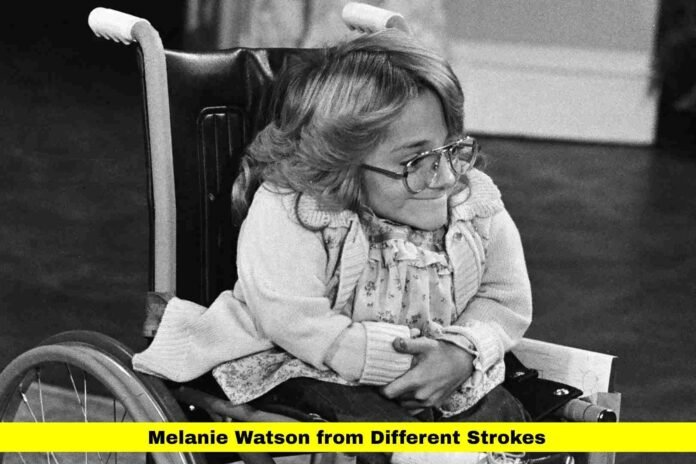

Melanie Watson from Different Strokes passed away at the age of 57, leaving behind a legacy as a trailblazing actress and disability advocate. Best known for her role as Kathy Gordon on the classic sitcom Diff’rent Strokes, Watson made a lasting impression on audiences during the early 1980s. Her performances highlighted both her talent and the importance of authentic representation of individuals with disabilities on mainstream television. She died on December 26, 2025, in Colorado Springs, Colorado, after a brief hospitalization. Her passing has prompted widespread reflection on her contributions to entertainment and advocacy.
Early Life and Personal Background
Melanie Watson was born on July 20, 1968, in Dana Point, California. She lived with osteogenesis imperfecta, a genetic condition that causes fragile bones and connective tissue issues. This condition shaped her experiences from a young age, teaching her resilience and determination. Watson’s family provided a supportive environment that encouraged her ambitions despite the physical challenges she faced.
From childhood, Watson demonstrated a love for performance and storytelling. Her early experiences with acting and the arts prepared her for opportunities in television. Her unique perspective and life experience informed the authenticity she brought to her roles. She also learned early on how to navigate a world not fully equipped to accommodate her physical needs, developing problem-solving skills and a strong sense of independence.
Breakthrough Role on Diff’rent Strokes
Watson’s acting career began with small roles, but her breakthrough came when she joined Diff’rent Strokes as Kathy Gordon. She appeared in four episodes between 1981 and 1984, portraying a friend of Arnold Jackson, played by Gary Coleman. Her character offered audiences an early example of disability representation on a popular sitcom.
Her role as Kathy Gordon was groundbreaking because it presented a character in a wheelchair as a fully integrated member of the story, rather than a token figure. This was significant at a time when television rarely included actors with disabilities in authentic roles. Watson’s natural performance and ability to connect with her co-stars made her character memorable and helped normalize the presence of individuals with disabilities on mainstream television.
On-Set Experiences and Challenges
Despite her success, Watson faced physical and logistical challenges while filming. She often had to navigate sets that were not designed for accessibility. In some cases, crew members assisted her when equipment was insufficient, and she occasionally faced situations where she had to be physically carried to scenes.
Watson openly discussed these challenges later in life, highlighting the lack of awareness in Hollywood regarding actors with disabilities. She emphasized the importance of proper accommodations and the need for inclusive production practices. These experiences underscored the obstacles actors like Watson overcame to succeed in an industry that had limited understanding and resources for performers with disabilities.
Life After Acting
Following her television career, Watson focused on advocacy and community service. She founded Train Rite, a nonprofit dedicated to training shelter dogs as service animals for people with disabilities. This organization allowed her to combine her passion for animals with her commitment to supporting those with physical challenges.
Watson also became the CEO of Couiffie’s Ranch, an organization dedicated to empowering individuals with disabilities to live independently. Her leadership emphasized capability-based support and the integration of service animals into daily life. Through these efforts, she had a profound impact on communities, helping people with disabilities gain access to resources, support, and opportunities that might have otherwise been unavailable.
Advocacy and Public Engagement
Watson used her platform to raise awareness about disability rights, accessibility, and social inclusion. She frequently spoke about her experiences living with osteogenesis imperfecta and encouraged others to advocate for systemic change. Her efforts highlighted the importance of equal access and representation in all areas of life, from entertainment to public services.
She engaged with schools, community organizations, and advocacy groups to educate and inspire others. Her public appearances often combined personal storytelling with practical advice on navigating challenges related to disability. Watson’s advocacy work reinforced her belief that visibility and understanding could break down social barriers and create more inclusive communities.
Personal Life and Family
Melanie Watson married Roger Bernhardt in 1994, though the marriage ended in divorce two years later. She maintained close relationships with her family throughout her life, particularly with her brother Robert Watson, who shared updates about her health and passing.
Her personal life was marked by resilience and determination. Despite the physical challenges associated with her condition, she pursued her passions in acting, advocacy, and community service. Friends and colleagues remember her as generous, spirited, and committed to improving the lives of others. Her courage in facing lifelong health challenges while pursuing her career and advocacy work served as an inspiration to many.
Cultural Impact and Legacy in Television
Watson’s role on Diff’rent Strokes remains culturally significant. She was among the first actors with a visible disability to portray a character authentically on a major network sitcom. Her performance helped challenge stereotypes and expanded the scope of representation for individuals with disabilities.
The visibility she provided influenced how subsequent shows approached casting and character development. Advocates cite Watson’s work as an early example of inclusive storytelling, demonstrating that characters with disabilities could be fully integrated into storylines rather than treated as anomalies or plot devices.
Health Challenges and Final Days
In the weeks leading up to her passing, Watson faced severe health complications. She was hospitalized in late December 2025, and her condition declined rapidly, resulting in her death on December 26 in Colorado Springs, Colorado. Her lifelong experience with osteogenesis imperfecta contributed to her health struggles, but she remained resilient until the end.
Her passing prompted an outpouring of grief and reflection from fans, former colleagues, and members of the disability advocacy community. Many highlighted not only her on-screen achievements but also her tireless efforts to improve the lives of others through service and leadership.
Remembering Melanie Watson
Watson’s life reflects a combination of talent, determination, and service. From her groundbreaking television appearances to her advocacy work with organizations like Train Rite and Couiffie’s Ranch, she consistently worked to make a positive impact.
Her story continues to inspire actors, advocates, and community members alike. She demonstrated that disability does not define capability and that representation matters in all aspects of society. Fans remember her warmth, dedication, and the courage she displayed throughout her life.
Melanie Watson’s life and career exemplify resilience, talent, and advocacy. Share your memories and thoughts about her enduring impact in the comments below and stay engaged with updates on her legacy.