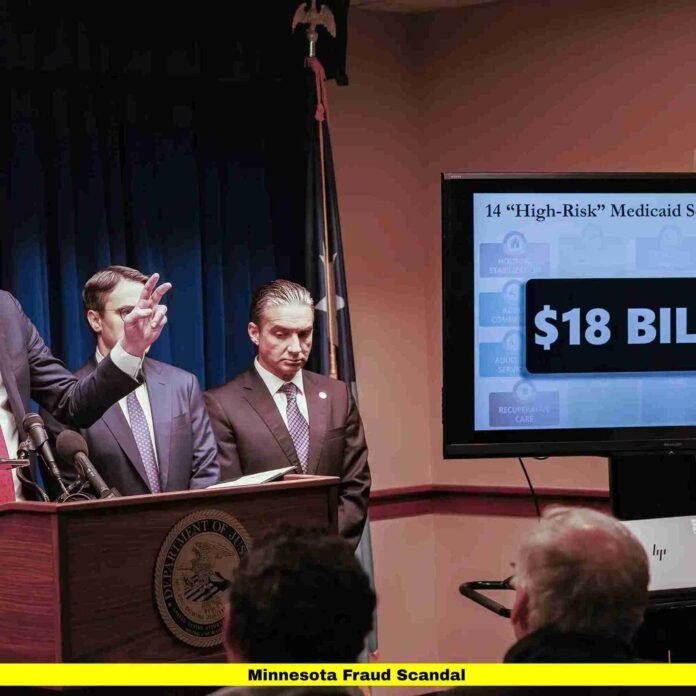

The Minnesota fraud scandal continues to unfold as federal authorities investigate widespread allegations of misused public funds in the state. The scandal involves multiple programs, including child nutrition, housing assistance, autism support, and other social services. Investigators are focusing on how these funds were allegedly diverted through fraudulent claims, sham organizations, and shell entities. Officials warn that the cases revealed so far may only represent a portion of the misconduct, and the full scope could take months to fully uncover.
Communities across Minnesota have been directly impacted, with affected families, taxpayers, and nonprofit organizations grappling with the fallout. The state continues to cooperate with federal investigators while reviewing oversight measures to prevent similar issues in the future.
Origins and Scope of the Scandal
The scandal traces back to programs intended to support vulnerable populations that were allegedly exploited by individuals and organizations. One of the most prominent cases involves a nonprofit responsible for distributing federally funded child nutrition aid during the COVID‑19 pandemic. The organization allegedly claimed funds for meals that were never provided, and investigations revealed patterns of inflated reimbursements and false documentation.
In addition to child nutrition, federal and state funds for housing and autism support programs were reportedly misused. Payments intended to assist families, seniors, and individuals with disabilities were allegedly diverted to unauthorized recipients. Investigators discovered complex networks of shell companies and fraudulent entities designed to obscure the flow of money and avoid oversight.
The alleged misconduct exploited gaps in program monitoring and temporary policy changes implemented during the pandemic. These conditions allowed individuals to submit claims without proper verification, facilitating financial abuse at scale. Federal authorities have described the schemes as “industrial‑level” in terms of planning and execution, indicating that thousands of transactions may be under review.
Federal Investigation and Enforcement
Federal authorities have increased investigative resources in Minnesota to address the expanding allegations. The FBI has coordinated closely with other agencies to identify suspicious financial flows, track shell companies, and pursue legal action against individuals implicated in the schemes. Investigators emphasize that ongoing prosecutions represent only a fraction of the potential cases and that additional charges may be forthcoming.
The federal probe has involved reviewing millions of dollars in reimbursement claims, cross-referencing documentation, and interviewing individuals connected to the alleged fraud. Investigators have also explored whether any state officials or program administrators failed to identify or prevent improper activity. The goal is to hold those responsible accountable while restoring integrity to programs intended for public benefit.
Officials warn that the investigation may take months to conclude, given the complexity and scale of the alleged fraud. Federal authorities continue to monitor new reports and tip-offs from community members, nonprofit auditors, and other stakeholders to expand the scope of their findings.
Key Elements of the Fraud Schemes
Several layers of alleged misconduct have been identified. In the child nutrition program, operators claimed reimbursement for meals that were never delivered to schools or community sites. Documentation was falsified to support these claims, often using shell organizations that appeared legitimate on paper but were inactive in practice.
Housing assistance and autism support programs were similarly affected. Families seeking aid for housing costs or therapeutic services sometimes received no support despite the processing of claims. Funds were allegedly diverted to individuals or entities with no connection to program eligibility, highlighting systemic weaknesses in verification and monitoring.
Medicaid and other social service programs were also impacted. Investigators discovered instances where claims were submitted for services not provided, including behavioral therapy and healthcare support. These patterns suggest that the alleged fraud was both organized and deliberate, with participants seeking personal enrichment at the expense of public resources.
Legal Action and Federal Charges
Federal prosecutors have filed numerous indictments in connection with the scandal. Charges include fraud, money laundering, conspiracy, and theft of public funds. Many of the individuals charged have been linked to nonprofit organizations, shell companies, or program administration roles that facilitated the alleged misconduct.
Sentencing for convicted individuals has reflected the severity of the crimes, with prison terms, fines, and restitution orders imposed. Prosecutors have described the scale of the alleged fraud as significant, emphasizing the need for deterrence to prevent similar schemes in the future.
The cumulative financial impact of these alleged schemes is substantial, with total misappropriated funds estimated in the hundreds of millions of dollars. Federal authorities continue to trace money flows to identify additional parties responsible for facilitating or benefiting from fraudulent claims.
Political Fallout and Public Reaction
The scandal has drawn significant political attention, with state and national leaders weighing in. Some politicians have criticized the state government for oversight failures that allowed alleged fraud to persist. They argue that stronger auditing procedures and accountability measures should have prevented such extensive misuse of funds.
State officials, including the governor, have stressed cooperation with federal investigators and highlighted steps taken to improve oversight once misconduct was identified. Efforts include enhanced auditing, program reviews, and support for criminal prosecutions.
Public perception has been shaped by viral content depicting empty or inactive facilities that allegedly received large sums in federal funding. This has heightened scrutiny of social programs and created pressure on officials to implement stricter controls. Community members express frustration at the misuse of taxpayer dollars while also advocating for fair treatment of legitimate service providers.
Impact on Communities and Social Programs
Families and community organizations have felt the effects of the scandal directly. Programs designed to support vulnerable populations were compromised, creating gaps in services for children, seniors, and individuals with disabilities. Taxpayer confidence in public funding has also been shaken.
Despite the allegations, many nonprofit and social service organizations continue to operate effectively, delivering essential support. Advocates emphasize that criminal activity by a few actors should not overshadow the work of legitimate providers who serve the community faithfully.
The scandal has sparked discussions about equity, accountability, and the importance of maintaining robust oversight while ensuring that program beneficiaries continue to receive necessary services.
Oversight Reforms and Preventative Measures
In response to the scandal, policymakers are proposing reforms to strengthen oversight and prevent future abuse. Measures under consideration include enhanced auditing processes, improved tracking of claims, and stricter eligibility verification for programs distributing public funds.
Technology is being explored as a tool for prevention, including systems that detect anomalies in real time and flag suspicious claims before funds are disbursed. Interagency cooperation is also being emphasized to close gaps in monitoring and enforcement.
Lawmakers and administrators are focused on implementing safeguards that maintain program integrity without creating unnecessary barriers for legitimate beneficiaries. Public hearings and oversight committee reviews are underway to ensure that lessons from the scandal translate into meaningful reforms.
Balancing Accountability and Fairness
Officials and community leaders caution against generalizing the actions of a few individuals to entire populations or organizations. Investigations are intended to target specific illegal conduct, while efforts continue to support legitimate program participation and protect vulnerable communities.
Civil rights and community advocacy groups stress that enforcement should be evidence-based and respectful of due process. Maintaining a balance between accountability and fairness is central to restoring public trust in social programs and government oversight.
The Minnesota fraud scandal underscores the challenges of monitoring large-scale public programs and the need for robust safeguards. As investigations progress, federal authorities continue to pursue justice for the misappropriation of funds, while state leaders and communities work to rebuild confidence and ensure that essential services remain accessible and reliable.
Share your thoughts on the ongoing scandal and how Minnesota should improve oversight in the comments below to stay informed about the latest developments.