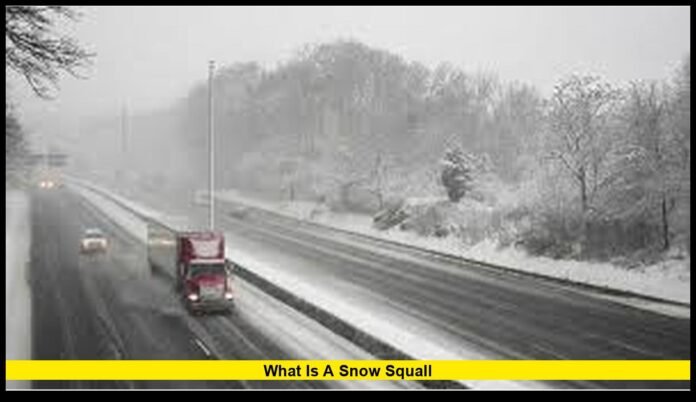

What is a snow squall is a question many Americans are asking as winter weather continues to create sudden and dangerous conditions across U.S. highways and cities. Snow squalls remain one of the most disruptive winter hazards because they arrive quickly, reduce visibility without warning, and turn ordinary roads into slick, hazardous surfaces in minutes.
Unlike major snowstorms that develop over hours or days, snow squalls are brief, intense, and highly localized. Their short duration often leads people to underestimate their danger. Yet snow squalls are responsible for some of the most severe winter driving incidents nationwide, particularly during peak travel hours.
Understanding What Defines a Snow Squall
A snow squall is a narrow band of heavy snowfall that moves quickly across an area. It is typically accompanied by strong winds and a rapid drop in visibility. Most snow squalls last less than an hour, but the conditions they create can be extreme.
Key elements that define a snow squall include:
- Sudden onset of heavy snow
- Sharp visibility reduction, sometimes to near zero
- Gusty winds that blow snow across roadways
- Rapid changes in pavement conditions
Snow squalls differ from traditional snow events because their impact is concentrated in a very short time frame.
Why Snow Squalls Are Especially Dangerous
Snow squalls are dangerous primarily because of how fast conditions change. A driver may encounter clear skies and dry pavement one moment, then face whiteout conditions the next.
Major safety risks include:
- Drivers traveling at full highway speed when visibility collapses
- Flash freezing of wet or slushy roads
- Sudden braking that triggers chain-reaction crashes
- Difficulty seeing stopped vehicles ahead
Many winter pileups occur during snow squalls rather than long-lasting storms.
How Snow Squalls Develop in the Atmosphere
Snow squalls usually form along strong cold fronts. As colder air surges into a warmer, moisture-rich environment near the surface, the atmosphere becomes unstable. This instability forces air upward rapidly, producing intense snowfall in a narrow corridor.
Typical atmospheric conditions include:
- A sharp temperature contrast
- Strong wind shifts near the surface
- Moisture concentrated in the lower atmosphere
- Rapid upward motion of air
These ingredients combine quickly, allowing snow squalls to develop and intensify with little notice.
The Role of Sudden Temperature Drops
Temperature changes play a major role in snow squall danger. Temperatures often fall rapidly as a squall moves through.
This rapid cooling causes:
- Wet pavement to freeze almost instantly
- Snow to stick immediately to road surfaces
- Increased risk of black ice formation
Drivers may not realize roads have iced over until traction is already lost.
Visibility Collapse: The Most Serious Hazard
The defining feature of a snow squall is the sudden loss of visibility. Heavy snowfall combined with gusty winds can reduce visibility from miles to just a few feet in seconds.
Visibility challenges include:
- Snow blowing directly into headlights
- Lane markings disappearing
- Difficulty judging distance to other vehicles
Once visibility drops, reaction time becomes extremely limited.
Snow Squalls Compared to Other Winter Weather Events
Snow squalls are often confused with snowstorms or blizzards, but they differ significantly in behavior and impact.
| Weather Event | Duration | Onset Speed | Visibility Impact |
|---|---|---|---|
| Snow Squall | Minutes to 1 hour | Sudden | Severe |
| Snowstorm | Hours to days | Gradual | Moderate to heavy |
| Blizzard | Several hours | Sustained | Extreme |
A snow squall can briefly create conditions similar to a blizzard without meeting the technical definition.
Regions Most Affected by Snow Squalls
Snow squalls are most common in parts of the U.S. where winter cold fronts are frequent.
Areas at higher risk include:
- Great Lakes states
- Upper Midwest
- Northeast corridor
- Northern Plains
- Interior New England
Proximity to large lakes often increases intensity due to added moisture.
Lake-Enhanced Snow Squalls
Cold air moving over relatively warmer lake surfaces can intensify snow squalls. These lake-enhanced squalls often produce heavier snowfall and stronger winds than inland events.
Common features include:
- Higher snowfall rates
- Stronger gusts
- Longer duration compared to typical squalls
These conditions make travel especially hazardous near lakeshores and downwind areas.
Snow Squall Warnings and Public Safety
Snow Squall Warnings are issued to alert the public to immediate and dangerous conditions. These warnings focus on travel safety rather than total snowfall amounts.
A warning signals:
- Heavy snow beginning or imminent
- Visibility falling rapidly
- Roads becoming slick in minutes
When a Snow Squall Warning is active, conditions can deteriorate faster than many people expect.
Why Snow Squall Warnings Require Immediate Action
Snow Squall Warnings exist because traditional winter advisories do not convey urgency. Snow squalls demand rapid response.
These warnings are critical because:
- Travel conditions worsen almost instantly
- Delayed reactions increase accident risk
- Visibility loss leaves little margin for error
Drivers should reduce speed immediately when a warning is issued.
Impact on U.S. Highways and Traffic Flow
Snow squalls disproportionately affect highways due to higher speeds and traffic density.
Common highway impacts include:
- Sudden slowdowns
- Multi-vehicle collisions
- Jackknifed commercial trucks
- Temporary closures and detours
Even brief squalls can paralyze major transportation routes.
Why Daytime Snow Squalls Are So Risky
Many snow squalls occur during daylight hours, which can lead to underestimation of danger.
Daytime risks include:
- Drivers maintaining normal speeds
- Pavement appearing wet rather than icy
- Reduced caution compared to nighttime storms
The sudden shift from clear conditions to whiteout often catches drivers unprepared.
Effects on Air Travel and Airports
Snow squalls can disrupt air travel, especially at busy airports in the Midwest and Northeast.
Potential impacts include:
- Temporary runway visibility issues
- Short-term ground delays
- Deicing interruptions
While disruptions are often brief, they can create cascading delays.
How Forecasters Monitor Snow Squalls
Detecting snow squalls remains challenging due to their small size and rapid development.
Meteorologists monitor:
- Doppler radar signatures
- Wind direction changes
- Surface temperature trends
- High-resolution weather data
On radar, snow squalls often appear as thin, fast-moving lines.
Why Predicting Snow Squalls Is Difficult
Snow squalls form on a small scale, making precise prediction difficult.
Challenges include:
- Narrow storm bands
- Rapid evolution
- Highly localized effects
A slight change in atmospheric conditions can determine whether a squall forms or not.
How Long Snow Squall Conditions Last
Most snow squalls last between 15 and 60 minutes. However, hazardous road conditions can persist much longer.
Lingering dangers include:
- Black ice
- Snow-covered lanes
- Reduced traction
Improved visibility does not mean conditions are safe.
Driving Safety During a Snow Squall
If you encounter a snow squall while driving, immediate adjustments are essential.
Recommended actions:
- Reduce speed right away
- Turn on headlights
- Increase following distance
- Avoid sudden braking
- Stay in your lane
- Pull off the road if visibility drops to zero
Delaying travel is the safest option when squalls are possible.
What to Do if Traffic Stops Suddenly
Snow squalls can cause traffic to stop abruptly.
If this happens:
- Turn on hazard lights
- Maintain distance from vehicles ahead
- Avoid stopping in travel lanes if possible
Visibility to other drivers is critical.
Pedestrian and Outdoor Safety
Snow squalls can also affect pedestrians and outdoor workers.
Safety steps include:
- Seeking shelter quickly
- Avoiding road crossings
- Wearing insulated, visible clothing
- Watching for rapid temperature drops
Wind chill can become dangerous shortly after a squall passes.
Community and Economic Disruptions
Despite their brief nature, snow squalls can disrupt daily life.
Common impacts include:
- School delays
- Emergency response activity
- Temporary business closures
- Transportation delays
Communities must respond quickly due to the sudden onset.
Public Awareness Efforts Across the U.S.
Agencies continue to emphasize public education about snow squalls.
Efforts include:
- Highway message boards
- Mobile alerts
- Broadcast warnings
- Public safety campaigns
Greater awareness helps reduce accident risk.
Why Snow Squalls Deserve Serious Attention
Snow squalls may be short, but their impact can be severe. Their speed and intensity make them one of the most dangerous winter weather threats on U.S. roads.
Ignoring warnings or underestimating conditions can lead to serious consequences.
Preparing for Snow Squalls This Winter
Snow squalls will continue to occur throughout the winter months. Preparation and awareness remain the best defenses.
Preparation steps include:
- Monitoring weather alerts
- Allowing extra travel time
- Reducing speed during cold conditions
Being ready to adjust plans can prevent accidents.
Have you encountered a snow squall this winter? Share your experience in the comments and stay alert as winter weather continues across the U.S.