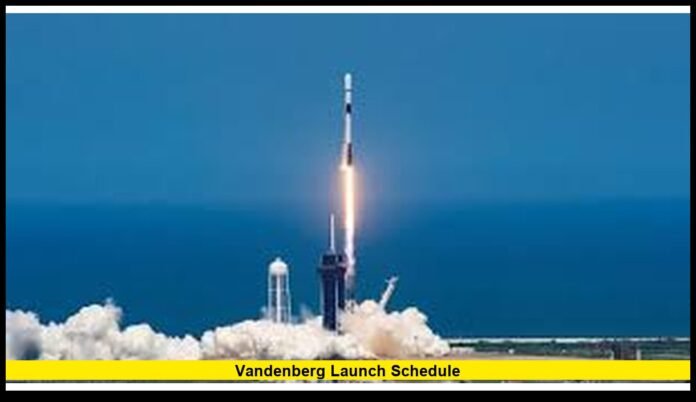

Vandenberg launch schedule remains a central point of interest for anyone following U.S. spaceflight activity, defense readiness, and commercial satellite deployment. As of today, Vandenberg Space Force Base continues to operate as one of the most active and strategically important launch sites in the country. The schedule reflects confirmed missions that have already flown, launches that are currently in active preparation, and a steady pipeline of upcoming operations that demonstrate how essential this West Coast spaceport has become to modern space operations.
Situated along California’s Central Coast, Vandenberg Space Force Base supports missions that demand precision, safety, and unique orbital access. Unlike launch sites designed for equatorial trajectories, Vandenberg enables rockets to fly southward over the Pacific Ocean, making it ideal for polar and sun-synchronous orbits. This capability shapes the structure and importance of the Vandenberg launch schedule and explains why so many government, commercial, and international missions rely on it.
Current State of Launch Operations at Vandenberg
The present status of the Vandenberg launch schedule reflects consistent operational readiness and high launch cadence. Throughout the year, the base has supported multiple successful missions without prolonged interruptions. Launch activity has remained steady, with careful coordination between launch providers, range safety teams, and federal agencies responsible for airspace and maritime clearance.
Each mission listed on the schedule represents months of preparation, integration, and testing. Payloads are processed in secure facilities, rockets undergo extensive inspections, and final countdown procedures are rehearsed repeatedly before liftoff approval is granted. This structured approach ensures that every launch meets strict safety and performance standards.
The current operational tempo also highlights how Vandenberg has adapted to increased demand without compromising reliability.
Why the Vandenberg Launch Schedule Holds National Importance
The Vandenberg launch schedule is closely watched because it directly reflects the health of U.S. space infrastructure. Launches from this base support national security systems, environmental monitoring platforms, scientific research missions, and commercial communications networks.
Many satellites launched from Vandenberg provide data that affects daily life across the United States. Weather forecasting, wildfire tracking, agricultural planning, and disaster response all depend on spacecraft placed into orbit from this site. Defense-related missions also rely on Vandenberg for deploying assets that support global awareness and strategic monitoring.
As a result, the schedule is not just informative. It is foundational to understanding how space-based systems support the nation.
Launch Vehicles Featured on the Vandenberg Launch Schedule
Several launch vehicles regularly appear on the Vandenberg launch schedule, with reusable rockets playing a dominant role. These vehicles are designed for efficiency, rapid turnaround, and reliability. Their ability to return to land after completing a mission has transformed how launches are planned and executed.
Reusable boosters frequently land back at designated zones near the launch site, producing sonic booms that are often heard across the surrounding region. These recoveries allow launch providers to reduce costs and maintain a higher launch cadence.
In addition to reusable systems, Vandenberg also supports vehicles tailored for specialized payloads, including those serving defense and research objectives.
Launch Infrastructure and Complex Operations
Vandenberg Space Force Base includes multiple launch complexes, each configured for specific vehicle types and mission requirements. These complexes allow parallel processing, meaning one rocket can be launching while another is being prepared nearby.
The most active complex supports high-frequency missions and is equipped with advanced fueling systems, lightning protection, and autonomous flight termination technology. Other complexes support smaller rockets or missions with unique security needs.
This infrastructure flexibility allows the Vandenberg launch schedule to remain resilient even as mission requirements evolve.
Satellite Deployment and Constellation Missions
Satellite constellation deployment has become a defining feature of the Vandenberg launch schedule. These missions involve launching groups of satellites designed to work together as part of a larger network.
Each launch adds capacity, improves coverage, and enhances performance for global users. The satellites are carefully deployed into precise orbits, where they begin coordinated operations shortly after separation from the rocket.
The consistency of these missions demonstrates how Vandenberg supports large-scale space systems that require frequent and reliable access to orbit.
Earth Observation Missions and Data Collection
Earth observation remains one of the most critical mission categories supported by the Vandenberg launch schedule. Satellites launched for this purpose collect detailed imagery and sensor data that inform policy decisions, scientific research, and emergency response.
These spacecraft often operate in sun-synchronous orbits, allowing them to observe the same regions under consistent lighting conditions. This consistency is essential for tracking changes over time, such as deforestation, ice melt, and urban expansion.
Vandenberg’s location makes it uniquely suited for deploying these high-value assets.
Defense and National Security Missions
National security missions form a significant portion of the Vandenberg launch schedule. These launches are conducted with enhanced security protocols and limited public disclosure.
While specific payload details are often classified, the presence of these missions underscores Vandenberg’s role in maintaining space-based defense capabilities. These assets support communication, navigation, surveillance, and early warning systems that are critical to national defense.
The launch schedule reflects careful coordination to ensure these missions proceed safely and successfully.
Launch Windows and Orbital Precision
Launch windows are a defining feature of the Vandenberg launch schedule. Each mission has specific timing requirements based on orbital mechanics, payload needs, and ground safety considerations.
Some launches require precise timing down to the second, while others allow broader windows. These constraints influence countdown procedures and can result in delays if conditions are not optimal.
The ability to manage these variables effectively is a testament to the operational expertise at Vandenberg.
Weather and Environmental Factors
Weather plays a crucial role in shaping the Vandenberg launch schedule. Wind speeds, cloud cover, and atmospheric conditions are closely monitored throughout the countdown process.
Even minor deviations can result in a scrub, as safety margins are strictly enforced. Environmental stewardship is also a priority, with measures in place to protect local wildlife and coastal ecosystems.
Launch operations are planned to minimize environmental impact while maintaining mission integrity.
Schedule Adjustments and Real-Time Changes
Changes to the Vandenberg launch schedule are common and expected. Technical inspections, weather assessments, and range coordination can all influence launch timing.
When adjustments occur, they are communicated promptly to ensure transparency and public awareness. These changes reflect a commitment to safety rather than operational weakness.
The ability to adapt quickly is one of the strengths of Vandenberg’s launch operations.
Public Interest and Community Awareness
The Vandenberg launch schedule attracts significant public interest, especially when launches occur during visible hours. Residents across California often witness rocket ascents and booster landings.
Community outreach and public notifications help manage expectations and ensure safety. The relationship between the base and surrounding communities remains an important aspect of launch operations.
Public enthusiasm continues to grow as spaceflight becomes more visible and accessible.
Economic and Technological Impact
Launch activity at Vandenberg contributes to the regional and national economy. Each mission supports jobs, technological innovation, and infrastructure development.
The base also serves as a testing ground for new technologies, including advanced propulsion systems and autonomous operations.
These advancements influence the broader aerospace industry and reinforce the United States’ leadership in space.
Looking Forward: Future Activity on the Schedule
The forward-looking portion of the Vandenberg launch schedule shows sustained demand and long-term planning. Upcoming missions include additional satellite deployments, research platforms, and defense-related payloads.
Infrastructure upgrades and operational improvements continue to support this growth. The base is positioned to handle increased launch frequency while maintaining safety and reliability.
Future missions will further expand the scope and impact of Vandenberg’s role in spaceflight.
Operational Reliability and Proven Performance
Decades of experience underpin the reliability of the Vandenberg launch schedule. The base has supported a wide range of missions across multiple generations of launch technology.
Lessons learned from past operations inform current procedures, reducing risk and improving efficiency.
This history of success provides confidence to mission planners and payload customers alike.
The Strategic Role of Vandenberg in Space Policy
Beyond individual launches, the Vandenberg launch schedule reflects broader strategic priorities. It highlights investments in space infrastructure, international cooperation, and technological advancement.
The base supports policies aimed at strengthening national security, advancing scientific knowledge, and expanding commercial space capabilities.
Its continued activity demonstrates how space remains a critical domain for the United States.
Conclusion
The Vandenberg launch schedule stands as a clear indicator of America’s ongoing commitment to space exploration, security, and innovation. Each mission represents coordinated effort, advanced technology, and precise execution.
As launch activity continues and future missions take shape, Vandenberg Space Force Base remains a cornerstone of U.S. space operations on the West Coast.
Share your perspective below and stay engaged as the next wave of launches from Vandenberg continues to shape the future of spaceflight.