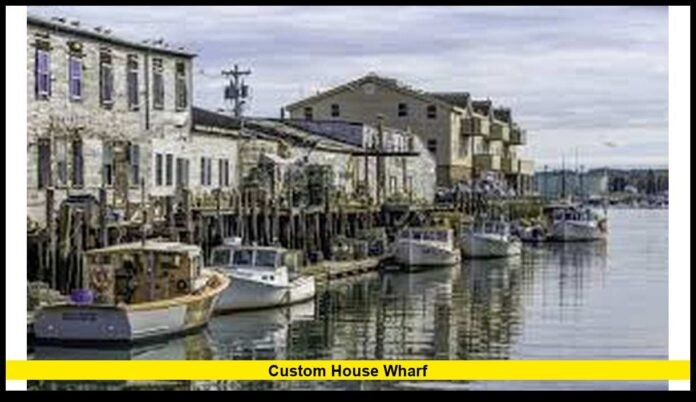

Custom House Wharf stands at the center of Portland, Maine’s waterfront story today, drawing national attention as one of the city’s most historic and economically vital maritime locations. Custom House Wharf has become a focal point for public discussion following a major emergency response that unfolded along Commercial Street, underscoring both the importance and the vulnerability of aging waterfront infrastructure in active U.S. harbor cities. This moment has renewed interest in the wharf’s history, its present-day role, and the path forward for one of New England’s most recognizable working piers.
Why Custom House Wharf Commands Attention Now
Custom House Wharf occupies a strategic position along Fore River, where land-based commerce meets the working harbor. The recent emergency response placed the wharf under intense public scrutiny, not because it is new to challenges, but because it represents a rare example of a preserved, functioning waterfront in a modern American city.
Unlike redeveloped piers that have lost maritime function, this wharf continues to support fishing, seafood commerce, hospitality, and pedestrian traffic simultaneously. That blend makes it economically powerful, culturally symbolic, and operationally complex. Any disruption at this location resonates well beyond the immediate shoreline.
Understanding the Recent Emergency Response
The large-scale emergency response at Custom House Wharf required a rapid, coordinated effort due to the dense layout of structures and the proximity of neighboring piers. Fire crews escalated operations quickly, recognizing the risk of fire spread along connected wooden decking and aging support pilings.
Access challenges shaped the response. Narrow pier widths, limited vehicle space, and waterfront exposure demanded specialized tactics. Crews focused on containment, structural protection, and safeguarding adjacent businesses while maintaining public safety.
As of today, confirmed updates indicate that officials remain focused on inspections, safety assessments, and operational reviews. No speculative causes or unverified damage estimates have been released, keeping the focus squarely on confirmed facts and recovery planning.
The Historic Foundations of Custom House Wharf
Custom House Wharf traces its origins to Portland’s rise as a maritime trade center in the 19th century. The wharf developed alongside the nearby Custom House building, which once played a central role in regulating goods entering and leaving the port.
At its height, the wharf supported cargo vessels, fishing fleets, and coastal traders moving goods throughout New England and beyond. Its location allowed for efficient oversight of maritime commerce while anchoring economic activity close to the city center.
Unlike many historic piers that were dismantled or abandoned as shipping patterns changed, Custom House Wharf adapted. Fishing operations remained active, and new commercial uses gradually filled spaces once reserved solely for trade.
Evolution Into a Multi-Use Waterfront
Over time, Custom House Wharf evolved into a mixed-use waterfront without losing its maritime core. Seafood markets, restaurants, and marine-access businesses emerged alongside fishing operations.
This evolution was not accidental. City planning decisions emphasized maintaining a working waterfront rather than replacing it with purely residential or retail development. That approach preserved jobs and ensured continued harbor activity.
The result is a wharf that operates year-round, serving fishermen at dawn and diners by evening. This layered use adds economic resilience but also increases operational complexity during emergencies.
Architectural Character and Structural Challenges
The physical character of Custom House Wharf reflects its age and history. Wooden pilings support structures that were built long before modern building standards existed. Electrical systems, access points, and fire suppression features often require upgrades to meet contemporary safety expectations.
Preserving historic character while enhancing safety is a delicate balance. Changes must respect architectural integrity while addressing modern risks. This challenge has shaped ongoing discussions about maintenance, funding, and long-term planning.
The recent emergency response highlighted these realities, reinforcing the importance of proactive infrastructure investment.
The Role of the Working Waterfront Today
Custom House Wharf remains a designated part of Portland’s working waterfront, a classification that protects marine-dependent uses from displacement. This designation ensures that fishing vessels, seafood processing, and marine services continue to operate in a high-value urban area.
The working waterfront supports regional food systems and maritime employment. It also anchors Portland’s identity as a harbor city rather than a purely tourist destination.
Maintaining this balance requires policy support, community engagement, and sustained investment. Events affecting the wharf bring renewed attention to the importance of that commitment.
Economic Significance for Portland
The economic footprint of Custom House Wharf extends beyond its physical boundaries. Businesses located on the wharf employ workers, attract visitors, and support supply chains throughout Maine.
Seafood operations connect local fishermen with regional and national markets. Restaurants draw tourism revenue that flows into surrounding neighborhoods. Marine services support vessels that fuel broader harbor activity.
Disruptions at the wharf can ripple through these systems, making recovery efforts a priority for both public and private stakeholders.
Impact on Workers and Daily Operations
For workers on Custom House Wharf, the recent events introduced uncertainty and disruption. Daily routines depend on access, safety clearance, and operational continuity.
Fishing schedules, deliveries, and service operations require precise timing. Even temporary interruptions can affect income and logistics. That reality underscores the importance of clear communication and coordinated recovery planning.
Historically, waterfront workers in Portland have shown resilience in the face of storms, economic downturns, and infrastructure challenges. That resilience remains a defining trait of the community.
Public Safety and Emergency Preparedness
The response at Custom House Wharf placed a spotlight on emergency preparedness along historic waterfronts. Fire response strategies must account for limited access, combustible materials, and exposure to water and weather.
Preparedness efforts often include regular inspections, updated response plans, and coordination between land-based and marine units. These measures aim to reduce response time and limit damage during emergencies.
Ongoing evaluations following the recent incident are expected to inform future preparedness strategies.
Environmental Considerations Along the Waterfront
Any major incident along a working harbor raises environmental concerns. Waterfront responses prioritize protecting surrounding waters from debris, runoff, and contamination.
Fore River supports marine life and commercial activity, making environmental protection a key component of response and recovery. Cleanup and monitoring efforts focus on minimizing long-term impact.
As assessments continue, environmental safeguards remain an integral part of recovery planning.
Preservation Efforts and Future Planning
Custom House Wharf’s future depends on thoughtful planning that honors its past while preparing for modern challenges. Preservation efforts aim to maintain historic character without compromising safety or functionality.
Potential priorities include structural reinforcement, updated utilities, and enhanced fire suppression systems. Each improvement requires careful review to ensure compatibility with historic features.
Public agencies, property owners, and community groups all play a role in shaping these decisions.
Community Connection and Cultural Identity
For many Portland residents, Custom House Wharf is more than a place of business. It represents shared memory, local tradition, and daily life along the harbor.
Families visit the wharf for seafood, waterfront views, and seasonal events. Workers pass through it as part of their daily routines. Visitors experience it as an authentic expression of Maine’s coastal culture.
This emotional connection strengthens community interest in the wharf’s preservation and future.
Tourism and the Visitor Experience
Tourism plays a significant role at Custom House Wharf, but it exists alongside working operations rather than replacing them. Visitors often see fishing boats unloading catch just steps from dining tables.
This authenticity distinguishes Portland from other coastal destinations. It offers visitors a glimpse into a living waterfront rather than a curated replica.
Protecting that experience requires maintaining both access and operational integrity.
Challenges Facing Historic Wharves Nationwide
Across the United States, historic wharves face similar pressures. Aging infrastructure, rising maintenance costs, and climate exposure all threaten long-term viability.
Custom House Wharf illustrates both the risks and rewards of preservation. Its continued operation demonstrates what is possible when cities prioritize working waterfronts.
Lessons learned here may influence policies in other harbor communities seeking to protect maritime heritage.
Infrastructure Investment and Policy Support
Sustaining Custom House Wharf requires ongoing investment. Infrastructure improvements must address safety, durability, and operational needs.
Policy tools such as zoning protections, funding programs, and public-private partnerships play a critical role. These mechanisms help balance economic pressures with preservation goals.
Recent events may accelerate discussions about funding priorities and long-term planning.
Looking Ahead: Recovery and Renewal
The path forward for Custom House Wharf involves careful assessment, transparent communication, and coordinated action. Recovery efforts focus on restoring operations while addressing vulnerabilities.
Renewal does not mean replacement. It means strengthening what already exists so it can continue serving the city for generations.
This approach aligns with Portland’s broader commitment to preserving its waterfront identity.
Why Custom House Wharf’s Story Matters Nationally
Custom House Wharf reflects a broader national conversation about heritage, resilience, and economic balance. It shows how historic infrastructure can remain relevant in modern cities.
The attention it has received underscores public interest in preserving places that connect people to history, labor, and community.
Its story continues to unfold, shaped by choices made today.
A Waterfront That Endures
Custom House Wharf has weathered decades of change, from shifting trade patterns to evolving urban development. Its endurance speaks to the value of thoughtful stewardship and community commitment.
As Portland moves forward, the wharf remains a reminder that history and progress do not have to compete. They can coexist, strengthening one another.
As developments continue, Custom House Wharf will remain a defining part of Portland’s waterfront story, and readers are encouraged to share their views and stay connected as the next chapter takes shape.